

Table of Contents
Chlorella is a nutrient-packed green algae that many of you may know as that green powder most commonly used to cleanse the body. It is rightfully becoming a popular supplement, as scientists have long known that it packs a wealth of beneficial active ingredients. With them go hand in hand many health benefits. How does science look at its impact on health today and is it beneficial to take?
In this article you will read about the effects of chlorella on these specific areas:
What is chlorella?
Chlorella is a freshwater green algae that has been touted for years for its nutritional composition and health benefits. It is also considered a superfood, thanks to its high concentrations of nutrients and bioactive compounds. In the last century, scientists have even promised it as a source of sustenance for people who were struggling with hunger. Today, this seaweed is mainly spoken about as a supplement for cleansing and detoxifying the body. It was first produced and consumed in Asia, particularly in Japan. Two species – Chlorella vulgaris and Chlorella pyrenoidosa – are used in food supplements. Both have comparable properties and nutrient content. [2]
Chlorella belongs to the group of so-called green superfoods, where together with it you can also find seaweed spirulina, green barley or spinach, for example.

What health benefits and effects does chlorella have?
1. Helps with detoxification of the body
Chlorella is perhaps the most widely used in order to cleanse and detoxify the body. Studies also show that it can play an interesting role in this. For example, it can bind heavy metals (e.g. mercury) and other toxins and thus help to remove them from the body.
In scientific studies, it is equally shown to help the body get rid of the infamous dioxins. These are substances produced by industrial activity that are a known pollutant of the environment. In doing so, they are quickly absorbed into the body and are easily deposited in the liver, making it difficult to get them out of the body afterwards. This significantly increases the risk of not only liver problems, but also, for example, cancer and other diseases. Chlorella can thus be a helpful supplement to assist in removing them from the body.
This green algae does not help the liver or kidneys with their basic detoxification processes that run 24/7, but it can still be useful in cleansing the body. It fits as one of the pieces in the mosaic in that one tries to achieve good health. Chlorella can help get rid of some of the toxins that enter the body from the environment. It may also be useful for people who work in industry and in polluted environments. [12]
If you are interested in how detoxification of the human body works, don’t overlook our article Detoxification and Cleansing of the Body: What is it Exactly and How to Support It Naturally?
What can chlorella be combined with for maximum effect?
- Spirulina and green barley act similarly to chlorella, i.e. they also help to remove various harmful substances from the body.
- Milk thistle is a plant extract that, according to scientists, has a positive effect on the liver and its functions. [11]
- Complex supplements combine multiple active ingredients to help take care of your liver health and thus support the body’s natural detoxification.
You might be interested in these products:
2. Lowers cholesterol levels
Chlorella can bind not only heavy metals and other toxins, but also other substances. Thus, it can trap, for example, fats and bile acids, which helps to reduce the level of cholesterol and fats (triacylglycerols) in the blood. Already present in the small intestine, it can trap fat from food, thus reducing its absorption. Subsequently, in the large intestine, it binds bile acids. These are made up of cholesterol, and so their excretion forces the body to reach into its cholesterol stores for the formation of new bile acids. Through this process, cholesterol levels in the blood are lowered.
Thus, research suggests that chlorella is one dietary supplement that may be useful in preventing hypercholesterolaemia (elevated blood cholesterol levels). However, it may also be useful in the treatment of high cholesterol itself. [2,7]
What can chlorella be combined with for maximum effect?
- Fibre, such as glucomannan or psyllium, can also bind fat and bile acids to help lower cholesterol.
- Chitosan is a soluble fibre, which forms a gel-like consistency in the intestines and helps to slow down the absorption of fat. [16]
- Omega-3 fatty acids are beneficial for heart and vascular health.

3. Has antioxidant effects
Chlorella contains many substances that belong among the antioxidants. These include vitamins, carotenoids and the green pigment chlorophyll. These substances are what gives chlorella its antioxidant abilities and thus help it to fight free radicals that are caused by oxidative stress. [2]
Chlorella’s antioxidant action may help protect your overall health from diseases related to oxidative stress. These include cancer or metabolic diseases such as type 2 diabetes. Japanese researchers have also pointed to a positive effect of taking chlorella on Alzheimer’s disease. It could also be useful in the prevention of premature ageing and be part of an anti-ageing approach. [2,9]
What can chlorella be combined with for maximum effect?
- Vitamins that belong among the antioxidants are for example, vitamin E or vitamin C, which is also useful for immunity or collagen production. [16]
- Selenium, contributes to normal sperm production. [16]
- Zinc, in addition, is needed for healthy nails or hair. Men will also appreciate its effect on normal testosterone levels. [16]
- Bioactive substances with antioxidant properties, such as quercetin or resveratrol.
- Complex supplements that offer a combination of multiple antioxidants.
4. Helps lower blood pressure
Studies also talk about the effect of chlorella on blood pressure levels. This green algae helps to lower it mainly due to the combined effects of the substances contained.
- Arginine promotes the production of nitric oxide (NO), which causes blood vessels to dilate (vasodilation). This in turn leads to lower blood pressure.
- Omega-3 fatty acids and other substances with an anti-inflammatory effect have a positive effect on cardiovascular health and blood vessels.
- Potassium is an important mineral that helps regulate blood pressure.
- The effect on cholesterol levels is automatically related to blood pressure. In fact, the build-up of cholesterol (and other blood components) in the walls of blood vessels can lead to atherosclerosis (hardening of the blood vessels) and narrowing of the blood vessels, causing increased blood pressure. [2]
What can chlorella be combined with for maximum effect?
Chlorella can be combined with substances that are beneficial for overall cardiovascular health, such as the aforementioned omega-3 fatty acids. However, a healthy lifestyle focusing on these areas is very important for optimal blood pressure levels.

5. It has an immunomodulatory effect
Chlorella also has a positive effect on the immune system through a variety of mechanisms.
- It has been shown to act on the production of cytokines, which are substances that affect inflammatory processes in the body.
- It can thus help relieve inflammatory processes in the body.
- It appears to increase the activity of some immune cells.
- It also acts on the optimal composition of the intestinal microbiome. It is now well known that the correct composition of microorganisms in the gut is important for immune function. [2,6,8]
To have a healthy and well functioning immunity, you need to do a lot more than just take supplements. Chlorella, however, thanks to its properties, can be an interesting addition in taking care of your immune system. It could thus complement a proper diet, exercise, quality sleep and other important factors.
If you are wondering how else you can boost your immunity, read our article 15 Ways to Boost Your Immune System and Protect Your Health.
What can chlorella be combined with for maximum effect?
- Vitamin C, vitamin D and folic acid have shown to have a positive effect on immune function.
- Ginger, echinacea and other herbal supplements where scientists point to an effect on the body’s defences.
- Probiotics, which take care of the proper composition of the intestinal microbiome.
- Complex supplements are a combination of several active ingredients that help you take care of the performance of your immunity.
What other benefits does chlorella have?
Other promising health effects are also shown in scientific papers investigating chlorella.
- Apparently it helps lower blood sugar. [2]
- It also seems to be helpful for digestion. [2]
- It can also help with aerobic exercise. These are endurance activities such as running, cycling or swimming. Scientists explain this effect as saving glycogen stores and at the same time influencing the production of NO, which dilates blood vessels. This allows the body to perfuse the muscles more and perform better. [7]
- Studies also describe positive effects on hepatocytes (liver cells) and liver health. [2]
- Scientific research also says that it increases the production of collagen in the skin. [2,5]

What does chlorella contain?
Chlorella is particularly exceptional due to its diverse range of macronutrients, micronutrients and other bioactive substances. It is rich in protein, but also boasts fibre and healthy fats. It also contains virtually all vitamins.
Protein
Protein makes up the largest proportion of this green algae. On average, it contains up to 60 g/100 g, while at the same time it has a broad spectrum of essential amino acids. These amino acids have to be taken in through food, as the body cannot create them on its own. At the same time, it is necessary to make sure that the correct proportion of these amino acids is present in the food you eat, because only then can the body use them efficiently to make body proteins. The spectrum of amino acids in chlorella is close to this correct ratio. It is even better than that of soy, which is considered to be the highest quality plant source of protein. [2,3]
Fat
Chlorella, on the other hand, is relatively low in fat. It contains only about 10 g fat/100 g. Of this, roughly 70% is made up of healthy polyunsaturated fatty acids (PUFA). The largest proportions are alpha-linolenic acid (ALA) and linoleic acid. Although algae are also typically rich in EPA (eicosapentaenoic acid) and DHA (docosahexaenoic acid), chlorella, unlike spirulina, does not contain these fatty acids. [2,3]
Carbohydrates
Carbohydrates make up a fairly low proportion of the composition of chlorella. It is about 15 g/100 g, with up to about 65 % of its content made up of indigestible fibre. [2,3]
Average macronutrient content of chlorella
Nutrient content | |
|---|---|
| Protein | 60 g |
| Fats | 10 g |
| Carbohydrates | 15 g |
| Fibre | 9 g |
Vitamins
This green freshwater algae is exceptional for its broad range of vitamins. It contains B vitamins such as thiamine (vitamin B1), riboflavin (vitamin B2), niacin (vitamin B3) or pyridoxine (vitamin B6). It is also rich in biotin, vitamin C, tocopherol (vitamin E) or vitamin K.[2]
It is particularly renowned for its folic acid content, which is important for normal blood formation and tissue development, for example. It contains up to around 2,5 mg/100 g. At the commonly recommended dose of 6 g, this is roughly 150 μg, which is about half the daily dose for an adult. This makes it a great source of folic acid, as it is not common for this vitamin to be present in such concentrated amounts in food. [2,15]
Chlorella may also contain a significant proportion of vitamin B12. This is needed for the normal function of the nervous system or immunity, for example. However, this is a variable amount that can range from 0 to 500 μg. It is therefore always advisable to read the labels of the supplements you take. If chlorella contains this vitamin, it can quite easily cover the daily recommended dose of 4 μg. This makes it a great source of this vitamin for vegans, as it is only found in animal foods. [2,13]
Interestingly, this green algae also contains vitamin D, which is otherwise found mainly in animal foods. While animal sources contain vitamin D3 (cholecalciferol), algae and mushrooms contain vitamin D2 (ergocalciferol). Both of these forms are important, for example, for good bone mineralisation.
Minerals
Similarly to vitamins, minerals are abundant in chlorella. In particular, it boasts a high iron and potassium content. However, it is also rich in calcium, phosphorus, copper and magnesium.
It also contains significant amounts of selenium. This is a substance that is an important part of the body’s antioxidant protection. Foods are relatively poor in this substance, but chlorella can contain up to around 300 μg of selenium/100 g. A dose of 6 g of chlorella can therefore contain roughly 18 μg, which is almost a third of the daily recommended dose of selenium. [2,15]
Other bioactive substances
Chlorella is a mixture of countless active substances, each with its own specific properties. Today, scientists still do not know about all the beneficial substances hidden in chlorella. However, they are clearer on some of these than on others.
- Beta-carotene or lutein are effective antioxidants. [10]
- Beta-glucans are useful for the immune and digestive systems. [10]
- Chlorophyll is the green pigment that gives chlorella its colour, yet boasts antioxidant properties. [1]
How to take chlorella?
There is no exact dosing protocol, but typically it is recommended to supplement with 6-10 g of chlorella per day. You can take it in powder, tablet or extract form. [18]
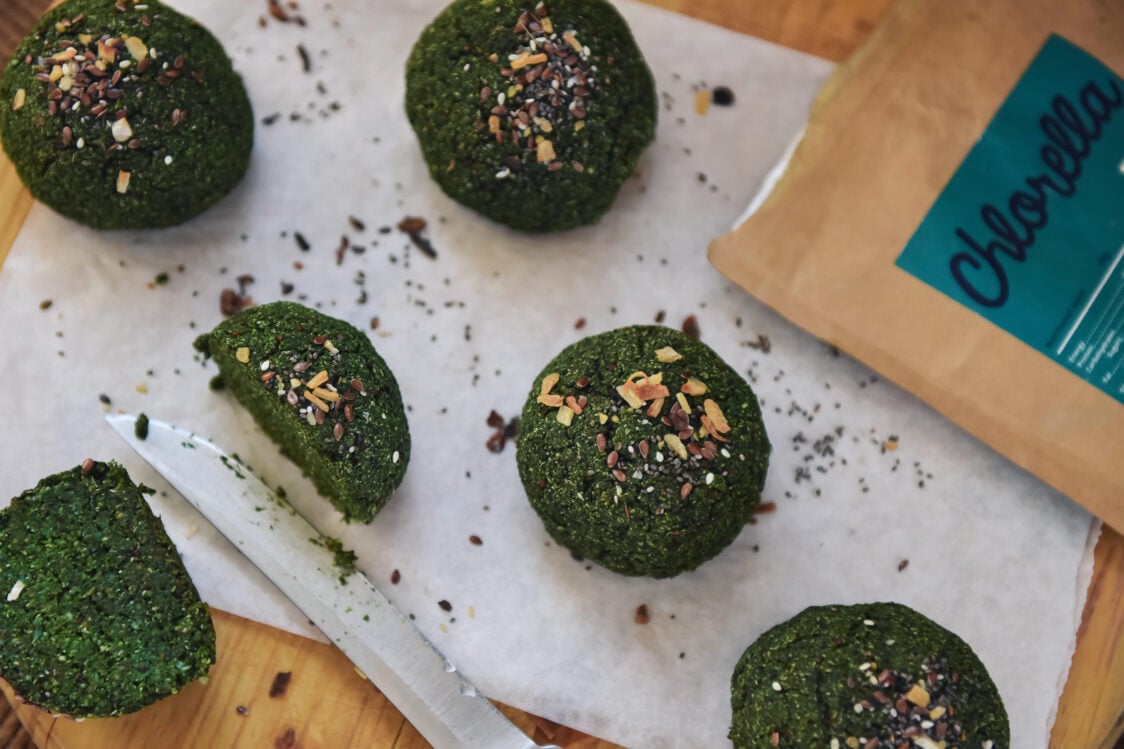
In case you choose the tablets, just wash them down with water or another favourite beverage. If you opt for the powder, you can mix it in water, but feel free to add it to food or drinks as well. For example, it can be used in vegetable or fruit smoothies, but you can also use it to make cakes, muffins or pancakes.
Chlorella can be taken at the recommended dose at any time of the day. However, it is better not to take it when fasting, so that the more sensitive among you do not unnecessarily cause yourselves digestive problems.
Does chlorella have adverse effects?
Chlorella is not known to have significant side effects. However, digestive problems such as nausea, vomiting, cramps or flatulence may occur in more sensitive people. These unpleasant conditions have been observed even at recommended doses, but are not common. [14]
For whom is chlorella not suitable?
Chlorella is generally a safe supplement, but there are still groups of people who should avoid it for various reasons.
- People who take blood thinners such as warfarin. [17]
- Allergy sufferers should also be cautious as there are cases of seaweed allergy. [4]
- Pregnant and breastfeeding women should consult their doctor to be sure.
What should you remember?
Chlorella is a popular supplement packed with protein, vitamins, minerals and other bioactive substances. It is these that bestow it with numerous health benefits. Although chlorella has yet to be studied by scientists to get an idea of all its properties, we now know that it is useful for example for immunity or cholesterol levels. When combined with a quality diet and an overall healthy lifestyle, it can be a great addition to taking care of your health.
Did today’s article catch your interest? Then feel free to share it with your friends and family.
[1] AMPOFO, J. - ABBEY, Lord Microalgae: Bioactive Composition, Health Benefits, Safety and Prospects as Potential High-Value Ingredients for the Functional Food Industry. – https://www.ncbi.nlm.nih.gov/pmc/articles/PMC9222421/
[2] BITO, T. et al. Potential of Chlorella as a Dietary Supplement to Promote Human Health. – https://www.ncbi.nlm.nih.gov/pmc/articles/PMC7551956/
[3] CANELLI, G. et al. Biochemical and Nutritional Evaluation of Chlorella and Auxenochlorella Biomasses Relevant for Food Application. – https://www.frontiersin.org/articles/10.3389/fnut.2020.565996
[4] JAMES, C. et al. Edible algae allergenicity – a short report. – https://link.springer.com/article/10.1007/s10811-022-02880-2
[5] JANUSZEWSKI, J. et al. Nutritional Supplements for Skin Health-A Review of What Should Be Chosen and Why. – https://pubmed.ncbi.nlm.nih.gov/38256329/
[6] – 6 JIN, J.B. et al. Supplementation with Chlorella vulgaris, Chlorella protothecoides, and Schizochytrium sp. increases propionate-producing bacteria in in vitro human gut fermentation. In Journal of the Science of Food and Agriculture . 2020. Vol. 100, no. 7, s. 2938–2945. .
[7] KIM, S. et al. A dietary cholesterol challenge study to assess Chlorella supplementation in maintaining healthy lipid levels in adults: a double-blinded, randomized, placebo-controlled study. – https://onlinelibrary.wiley.com/doi/abs/10.1002/jsfa.10321
[8] KWAK, J.H. et al. Beneficial immunostimulatory effect of short-term Chlorella supplementation: enhancement of Natural Killer cell activity and early inflammatory response (Randomized, double-blinded, placebo-controlled trial). – https://www.ncbi.nlm.nih.gov/pmc/articles/PMC3511195/
[9] MIYAZAWA, T. et al. Ingestion of Chlorella reduced the oxidation of erythrocyte membrane lipids in senior Japanese subjects. – https://pubmed.ncbi.nlm.nih.gov/24200934/
[10] MORAIS, M.G. DE et al. Biologically Active Metabolites Synthesized by Microalgae. – https://www.ncbi.nlm.nih.gov/pmc/articles/PMC4538420/
[11] NAULT, D. Milk Thistle Research Analysis. – https://examine.com/supplements/milk-thistle/
[12] PANAHI, Y. et al. A randomized controlled trial of 6-week Chlorella vulgaris supplementation in patients with major depressive disorder. – https://www.sciencedirect.com/science/article/pii/S0965229915001016
[13] WATANABE, F. et al. Vitamin B12-Containing Plant Food Sources for Vegetarians. In Nutrients . – https://www.ncbi.nlm.nih.gov/pmc/articles/PMC4042564/
[14] A comprehensive review on chlorella-its composition, health benefits, market and regulatory scenario. – https://www.thepharmajournal.com/archives/?year=2018&vol=7&issue=7&ArticleId=2319
[15] Dietary Reference Values | DRV Finder. – https://multimedia.efsa.europa.eu/drvs/index.htm
[16] EU Register of nutrition and health claims made on foods (v.3.6). – https://ec.europa.eu/food/safety/labelling_nutrition/claims/register/public/?event=search
[17] Chlorella - PubMed. – https://pubmed.ncbi.nlm.nih.gov/30000882
[18] Research Breakdown on Chlorella - Examine. – https://examine.com/supplements/chlorella/research/#yQZy12O-sources-and-composition
Add a comment