
Table of Contents
As the weather cools down and changes, we enter a season when viruses and bacteria flourish, seeking to turn our bodies into their temporary Airbnb and put us to bed. These infectious agents become more active at low temperatures, aided by moisture and various other factors. It’s no wonder that this period really tests the immune system, which acts as the guardian of our health. Its job is to protect the body from harmful substances, pathogens, and cellular changes that could lead to illness. Though it may not wear a superhero cape, it does a fantastic job of fighting off pathogens and harmful external influences. [1 – 2]
To ensure our immunity works like a well-oiled machine, we must take care of it and provide all the necessary resources. Of course, the basics remain the same: plenty of sleep, an optimal amount of exercise, and stress management. On top of that, a healthy, balanced diet is essential, providing enough nutrients, vitamins, and minerals. Whether you’re looking for a home remedy for your throat, overall immune support, vitamins, or adaptogens, supplements can take your protection to the next level, and we’ll discuss the best ones in this article.

1. Vitamins and Minerals
Vitamins are essential substances involved in many biological processes in our bodies. The right amount of vitamins is crucial for the proper functioning of the body, providing energy, aiding recovery, supporting the nervous system, digestion, and many other processes, including the immune system. The same goes for minerals, which the body uses in numerous reactions, including metabolic processes. They play a role in cognitive functions, testosterone levels, and optimal immune function. [3 – 4]
Our bodies cannot produce vitamins on their own, so it’s important to get them through diet or supplements, which can be an excellent way to keep our immunity as strong as Captain America’s shield.
You might be interested in these products:
1.1 Top Vitamin Supplements for Immune Support
Popular vitamin supplements for immunity include vitamins C, D, and A in the form of capsules or tablets, as well as other specialised forms. Here are the top picks:
- Vitamin C is considered the king of immunity support. It contributes to the proper functioning of the immune system, even during intense physical activity and afterwards. Studies have shown that a regular dose of vitamin C (up to 2,000 mg) can reduce cold symptoms and shorten the duration of a cold. This makes it a great ally for boosting immunity, not just for everyday people but also for athletes and active lifestyle enthusiasts who care about their health. Additionally, vitamin C helps protect cells from oxidative stress, assists in regenerating the reduced form of vitamin E, and improves iron absorption, further supporting the immune system. Vitamin C comes in various forms, so everyone can find what suits them best. Those looking for a quick and convenient solution can opt for tablets or highly absorbable liposomal forms in capsules. If you prefer to sip your vitamin C with a refreshing taste, there are powders and effervescent tablets. There’s even organic (BIO) vitamin C with a vegan formula or special micro-capsules with slow release throughout the day that are appealing even visually. [5 – 6]
- Vitamin D is known for its ability to activate T lymphocytes and regulate B lymphocytes, both of which are crucial to the body’s immune defence. It can help protect against viruses and bacteria, and a deficiency in vitamin D is associated with increased susceptibility to infections. The body produces vitamin D when exposed to sunlight, so its deficiency typically occurs from autumn to spring when sunny days are scarce. In these periods, you can rely on diet or supplements in various forms, just like with vitamin C. Convenient options include capsules, but the spray form, which has a pleasant taste, is a great alternative for those who find swallowing capsules difficult. For children, chewable tablets, with a fruity flavour make taking vitamin D fun, and they won’t even notice the difference between these and regular sweets. [7]
- Vitamin A plays a role in the development of the immune system and participates in the body’s immune responses and various immune processes. It also helps maintain healthy mucous membranes, including those in the respiratory system, which serve as one of the first lines of defence against infections and viruses. Capsules are the most popular form of vitamin A. [8]
- Folate (Vitamin B9) plays a key role in maintaining a healthy immune balance. A deficiency of this vitamin can negatively affect our immune response, which could be compared to having a shield against viruses with holes in it. Folate also contributes to proper blood formation, which includes white blood cells – the body’s warriors in the bloodstream, ready to fight off various threats in the form of viruses and bacteria. Vitamin B12 works in a similar way. [9 – 10] [12]
- Vitamin B6 aids chemical reactions in the immune system, helping it function optimally. In addition to supporting the immune system, it contributes to the formation of red blood cells, which are responsible for transporting oxygen throughout the body. A deficiency in vitamin B6 is associated with a weakened immune response, which can make you more vulnerable to illness. [11]

1.2 Top Mineral Supplements for Immune Support
The list of top supplements for immunity wouldn’t be complete without magnesium, zinc, and iron. The specific recommendations are as follows:
- Zinc was the subject of a study conducted by researchers at the Fred Hutchinson Cancer Research Center. They found that this mineral is essential for the proper development of a specialised type of immune cells. Zinc supports the activity of white blood cells, which can fight bacteria and viruses. Additionally, it works alongside immune cells known as macrophages, helping them to engulf foreign and potentially dangerous particles. Zinc also encourages the immune system to regenerate after damage and is classified as an antioxidant, helping protect the body against oxidative stress. Furthermore, it plays a role in the metabolism of vitamin A, which we discussed earlier. Zinc is commonly available in capsule form, but highly absorbable chelated versions are particularly effective. [13, 37]
- Iron is crucial for the production of red blood cells. According to researchers from the University of Florida, it also plays a significant role in protecting us against viruses by regulating the immune system, particularly in the gut. A deficiency in iron can lead to the development of inflammatory bowel diseases or other immunological disorders. [14]
- Magnesium is among the minerals essential for the optimal functioning of the immune system. It plays a role in inflammation and has a positive effect on sleep, which is also crucial for a properly functioning immune system. Magnesium is involved in the activity of immune cells, including B and T lymphocytes as well as macrophages. [15]
- Selenium is a key component in the formation of selenoenzymes, which makes it important in inflammation control and immune system function. A deficiency in selenium can impair immune cells and is directly linked to autoimmune conditions. [16]
- Copper is an important piece of the immune system puzzle, particularly in fighting infections at the microbial level. A deficiency in copper is linked to low levels of white blood cells, specifically neutrophils, which fight off infections. This deficiency can make you more prone to catching infectious diseases. [17 – 18]

2. Antioxidants
You can think of antioxidants as a specialized squad fighting terrorists in the form of free radicals. These are reactive oxygen species that have fun attacking and damaging body cells. Oxidative stress, caused when these radicals are in excess, is associated with various diseases, such as cardiovascular problems, diabetes, and cancer. Antioxidants are here to keep free radicals in check, protect the cells, and help you avoid health problems. [19]
2.1 Top Antioxidant Supplements for Immune Support
Among the best antioxidants for the immune system are various plant extracts, such as:
- Berberine is a plant extract from the root of Indian barberry (Berberis aristata). It is often used in traditional Chinese medicine and has been found in studies to have anti-inflammatory effects. It inhibits inflammatory pathways and reduces the production of inflammatory cytokines. As a result, it can help reduce inflammatory reactions associated with a weakened immune system. [20]
- Quercetin is one of the best-known antioxidants that do an excellent job of capturing free radicals. It also has the ability to stimulate the immune system, shows promising anti-inflammatory properties, and based on studies, it has applications in treating allergic conditions. [21]
- Resveratrol is commonly found in grapes, peanuts, and mulberries. It is interesting in relation to immunity because it can be beneficial in combating chronic diseases linked to inflammation, such as diabetes, certain types of cancer, obesity, and cardiovascular diseases. It can target various inflammatory components and has immunomodulatory effects on immune cells. [22]
- Rutin can be found in various plants and is particularly known for its pharmacological effects. It has antioxidant properties, and according to a 2022 study, it also has antibacterial and anti-inflammatory effects, while protecting immune cells. [23]
- Citrus Bioflavonoid Complex is a comprehensive antioxidant supplement derived from citrus fruits. It contains diosmin, hesperidin, rutin, naringin, bioperine, and synephrine. This is ideal for anyone who wants to try the effects of a broader spectrum of antioxidants in two convenient capsules.
3. Probiotics
Hippocrates, one of the most significant physicians of all time, once said that all diseases begin in the gut. And it’s not a coincidence. While modern research shows this is not always 100% true, more and more diseases are directly linked to the ecosystem of microorganisms residing in our intestines. The gut microbiota is a vital component of immune system development. A healthy microbiome is characterized by a higher amount of beneficial bacteria, which can be achieved through diet, but also with probiotic supplements. [24]
3.1 Top Probiotic Supplements for Immune Support
Among the best supplements containing live cultures for gut care are comprehensive probiotic solutions. They help maintain a balance between beneficial and harmful bacteria in the gut. Additionally, they can support the activity of immune cells, thereby contributing to the overall defense of our body. [35]
The best probiotic supplements include:
- ProbioTen is a supplement containing ten strains of probiotic bacteria with an effective quantity of 10 billion CFU for optimal care of the gut microbiome, a cornerstone of our immunity. Its composition is further enriched with soluble fibre in the form of inulin, which serves as food for beneficial gut bacteria.
- Probiotic Yummies contain probiotic bacteria of the Bacillus coagulans strain, which are beneficial for gut flora. Each serving contains an effective amount of 5 billion live cultures (5 x 10⁹ CFU). Their advantage over other supplements is their gummy form, which you’ll love for their taste.
- Probiotics Lactospore contain 5 billion live cultures (5 x 10⁹ CFU). Additionally, they are formulated to be suitable for vegetarians, vegans, and individuals on a gluten-free diet.
- Probio Pink is a probiotic with 10 strains of probiotic bacteria, providing a total effective amount of 10 billion CFU. In addition, it is enriched with other natural extracts, such as chamomile and fennel, as well as turmeric, which is one of the antioxidants mentioned above, further boosting your immunity.
- Probio Complex is a blend of probiotics, prebiotics, and digestive enzymes DigeZyme®. It contains 3 strains of beneficial probiotic bacteria: Lactobacillus acidophilus, Bifidobacterium longum, and Bacillus coagulans. It also adds inulin and galactooligosaccharides, which serve as food for beneficial bacteria.

4. Plant Extracts
Before the advent of modern medicines as we know them today, people primarily relied on plants to support their health. As a result, we now know a vast variety of flora that can have a positive impact on our health, including immune support. Some of the most well-known include Aloe Vera, dandelion, echinacea, and various mushroom extracts. If you want to boost your immune system with them, luckily, you no longer need to grab a herbarium and venture into the nearest forest with a machete. Dietary supplements, often in convenient capsule form, now contain extracts from these plants.
4.1 Top Supplements Containing Plant Extracts for Immune Support
Among the best supplements containing plant extracts are:
- Aloe Vera is included in a wide range of supplements, foods, ointments, tinctures, and gels. It’s the subject of various studies, which have found that it can be helpful in the front line against pathogens. In addition, it can strengthen the immune response, has a strong antioxidant potential, and its activity can also contribute to fighting cancer. Based on this, it can be an effective ally for the immune system and an aspect of overall health care. [25]
- Dandelion is the subject of numerous studies showing that it can strengthen the immune system. An example is a 2021 Italian research review, which states that dandelion has antibacterial, antioxidant, and antiviral properties. [26]
- Echinacea is another very popular herb for immune support, with its medicinal properties recognized as early as the 18th century. Native American tribes used it as a home remedy for vocal cords, colds, insect or snake bites. In modern times, it has been shown that echinacea contains active substances that can stimulate immunity. [27]
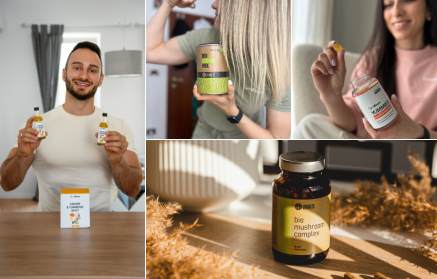
- Mushroom Extract (BIO Mushroom Complex) is a comprehensive supplement containing medicinal mushrooms associated with numerous health benefits. Their impact on the immune system is no exception. For instance, reishi, which is present in the complex, has anti-inflammatory properties and can enhance cellular immunity. [28]
- Ginger Shot is a highly concentrated, cold-pressed ginger juice complemented by honey, lemon juice, and coconut water, creating a refreshing combination for lovers of spicy flavors. Moreover, ginger is an excellent source of vitamins and minerals, including vitamin C, B6, and magnesium, which we discussed earlier for their importance to immunity. Ginger also helps alleviate cold symptoms and is used as a home remedy for vocal cords or sore throats. [29]
5. Superfoods
We can think of superfoods as the Avengers of the food world. They don’t need Thor’s hammer, Spider-Man powers, or Tony Stark’s high-tech armor. Their superpowers lie in their high content of beneficial substances, including vitamins, minerals, antioxidants, and other biologically active compounds that can boost our immune system and provide various other health benefits.
For a more in-depth overview of superfoods for health and immunity, check out this article.

5.1 Top Superfoods for Immune Support
Among the best superfood supplements are extracts from fruits, vegetables, algae, green foods, nuts and seeds, and also protein powders:
- Fruits are well-known for their high content of vitamins and minerals that benefit the immune system. A great example is raspberries, which support immunity thanks to polyphenols, known antioxidants that give them anti-inflammatory and antioxidant properties. The same applies to blueberries, black currants, strawberries, and acai, which can stimulate the immune system. [30 – 31]
- Vegetables like beets positively impact immunity with their anti-inflammatory and antioxidant properties. You can also opt for fermented vegetables, such as kimchi, known for its high content of probiotics and prebiotics discussed earlier. Supplements from dark leafy greens, like spinach or kale extracts, also play a role in supporting immunity.
- Matcha is a type of green tea rich in bioactive compounds. It has anti-inflammatory and antioxidant properties, and regular consumption has been shown in studies to help prevent various diseases. [32]
- Chlorella, a green algae, is noteworthy for its pharmacological properties. It acts as an antioxidant, has a positive impact on immunity, and is associated with benefits for eye and liver health. [33]
- Colostrum also known as foremilk or beestings, comes from cow’s milk and is packed with beneficial nutrients. It is considered one of the most nutritious beverages in the world and has a positive effect on both the immune system and overall health throughout life. Learn more in our dedicated article on colostrum. [34]
- Whey protein boasts a high protein content. Proteins are the building blocks not only for muscles but also for white blood cells, which, as mentioned earlier, help the immune system by fighting off threats like viruses and bacteria. Therefore, sufficient protein intake, which can be supported by whey protein, is essential for the defense of the body. [36]
Conclusion
Our protective shield, the immune system, faces challenges throughout the year and across different seasons. This is why it’s important to take care of our immunity and support it in every possible way. Examples include the aforementioned vitamins and minerals, antioxidants, probiotics, plant extracts, or superfoods with powerful beneficial compounds. We hope that everyone can find their ideal supplement in this list and that these products will help your immune system function like clockwork.
[1] L. Guo, Z. Yang, L. Zhang, S. Wang, T. Bai, Y. Xiang, E. Long – Systematic review of the effects of environmental factors on virus inactivation: implications for coronavirus disease 2019 – https://www.ncbi.nlm.nih.gov/pmc/articles/PMC8286163/
[2] How does the immune system work? – https://www.ncbi.nlm.nih.gov/books/NBK279364/
[3] Tyler Barker – Vitamins and Human Health: Systematic Reviews and Original Research – https://www.ncbi.nlm.nih.gov/pmc/articles/PMC10346564/
[4] Ryan Andrews – All About Vitamins & Minerals – https://www.precisionnutrition.com/all-about-vitamins-minerals
[5] Common colds: Research summaries – Does vitamin C prevent colds? – https://www.ncbi.nlm.nih.gov/books/NBK279544/
[6] Vitamin C – https://examine.com/supplements/vitamin-c/research/#KJmmVJ7-inflammation-and-immunology
[7] Cynthia Aranow – Vitamin D and the Immune System – https://www.ncbi.nlm.nih.gov/pmc/articles/PMC3166406/
[8] Zhiyi Huang, Yu Liu, Guangying Qi, David Brand, Song Guo Zheng – Role of Vitamin A in the Immune System – https://www.ncbi.nlm.nih.gov/pmc/articles/PMC6162863/
[9] Kathleen Mikkelsen, Vasso Apostolopoulos – Vitamin B12, Folic Acid, and the Immune System – https://link.springer.com/chapter/10.1007/978-3-030-16073-9_6
[10] Functions of blood: its role in the immune system – https://www.blood.co.uk/news-and-campaigns/the-donor/latest-stories/functions-of-blood-its-role-in-the-immune-system/
[11] Bingjun Qian, Shanqi Shen, Jianhua Zhang, Pu Jing – Effects of Vitamin B6 Deficiency on the Composition and Functional Potential of T Cell Populations – https://www.ncbi.nlm.nih.gov/pmc/articles/PMC5358464/
[12] Kamila S Batista, Vanessa M Cintra, Paulo A F Lucena a kol. – The role of vitamin B12 in viral infections: a comprehensive review of its relationship with the muscle-gut-brain axis and implications for SARS-CoV-2 infection – https://pubmed.ncbi.nlm.nih.gov/34791425/
[13] Lorenzo Iovino, Kirsten Cooper, Paul deRoos, Sinéad Kinsella, Cindy Evandy a kol. – Activation of the zinc-sensing receptor GPR39 promotes T-cell reconstitution after hematopoietic cell transplant in mice – https://ashpublications.org/blood/article/139/25/3655/484500/Activation-of-the-zinc-sensing-receptor-GPR39
[14] Sarah Carey – UF researchers discover iron plays key role in immune system health – https://ufhealth.org/news/2023/uf-researchers-discover-iron-plays-key-role-in-immune-system-health
[15] Sumel Ashique, Shubneesh Kumar, Afzal Hussain, Neeraj Mishra, Ashish Garg, B H Jaswanth Gowda, Arshad Farid, Gaurav Gupta, Kamal Dua, Farzad Taghizadeh-Hesary – A narrative review on the role of magnesium in immune regulation, inflammation, infectious diseases, and cancer – https://pubmed.ncbi.nlm.nih.gov/37501216/
[16] Zhi Huang, Aaron H. Rose, Peter R. Hoffmann – The Role of Selenium in Inflammation and Immunity: From Molecular Mechanisms to Therapeutic Opportunities – https://www.ncbi.nlm.nih.gov/pmc/articles/PMC3277928/
[17] Xue Liu, Xinghua Li – Copper regulates the host innate immune response against bacterial infection via activation of ALPK1 kinase – https://www.pnas.org/doi/full/10.1073/pnas.2311630121
[18] Copper – https://lpi.oregonstate.edu/mic/minerals/copper
[19] Atil Arnarson – Antioxidants Explained in Simple Terms – https://www.healthline.com/nutrition/antioxidants-explained#what-they-are
[20] Paromita Sarbadhikary, Blassan P. George, Heidi Abrahamse – Inhibitory Role of Berberine, an Isoquinoline Alkaloid, on NLRP3 Inflammasome Activation for the Treatment of Inflammatory Diseases – https://www.mdpi.com/1420-3049/26/20/6238
[21] Jiri Mlcek, Tunde Jurikova, Sona Skrovankova, Jiri Sochor – Quercetin and Its Anti-Allergic Immune Response – https://www.ncbi.nlm.nih.gov/pmc/articles/PMC6273625/
[22] Lucia Malaguarnera – Influence of Resveratrol on the Immune Response – https://www.ncbi.nlm.nih.gov/pmc/articles/PMC6566902/
[23] Zhiwei Lan, Hong Wang, Shuqi Wang, Tong Zhu, Siqi Ma, Yang Song, Cancan Cui, Mingchun Liu, Chunlian Tian – Rutin protects against cyclophosphamide induced immunological stress by inhibiting TLR4-NF-κB-mediated inflammation and activating the Nrf2- mediated antioxidant responses – https://www.sciencedirect.com/science/article/pii/S2667142522000951
[24] Dexter Shurney – The Gut Microbiome: Unleashing the Doctor Within – https://www.ncbi.nlm.nih.gov/pmc/articles/PMC6506970/
[25] Arshad H. Rahmani, Yousef H. Aldebasi, Sauda Srikar, Amjad A. Khan, Salah M. Aly – Aloe vera: Potential candidate in health management via modulation of biological activities – https://www.ncbi.nlm.nih.gov/pmc/articles/PMC4557234/
[26] Agnese Di Napoli, Pietro Zucchetti – A comprehensive review of the benefits of Taraxacum officinale on human health – https://bnrc.springeropen.com/articles/10.1186/s42269-021-00567-1
[27] Juliet Parker – Echinacea and the immune system – https://www.nottingham.ac.uk/biosciences/documents/burn/2006/echinacea-and-the-immune-system--juliet-parker.pdf
[28] Reishi – https://examine.com/supplements/reishi/research/?srsltid=AfmBOorurpqz9WB5DmFNk2OwkGlOo_RS0c9tpqXs7TJ9ZrqEDYb6kARe
[29] Suzanne Savage – 5 Health Benefits of Ginger – https://www.nkch.org/blog/5-health-benefits-of-ginger
[30] Md Abdullah Al Mamun, Ahmed Rakib, Mousumi Mandal – Polyphenols: Role in Modulating Immune Function and Obesity – https://www.mdpi.com/2218-273X/14/2/221
[31] Acai - Uses, Side Effects, and More – https://www.webmd.com/vitamins/ai/ingredientmono-1109/acai
[32] Joanna Kochman, Karolina Jakubczyk, Justyna Antoniewicz, Honorata Mruk – Health Benefits and Chemical Composition of Matcha Green Tea: A Review – https://www.ncbi.nlm.nih.gov/pmc/articles/PMC7796401/
[33] Yunes Panahi, Behrad Darvishi, Narges Jowzi, Fatemeh Beiraghdar, Amirhossein Sahebkar – Chlorella vulgaris: A Multifunctional Dietary Supplement with Diverse Medicinal Properties – https://pubmed.ncbi.nlm.nih.gov/26561078/
[34] Oligosaccharides and glycoconjugates in bovine milk and colostrum – https://www.cambridge.org/core/journals/british-journal-of-nutrition/article/oligosaccharides-and-glycoconjugates-in-bovine-milk-and-colostrum/AEE563ECA87CF534049AD99B9846B38E
[35] The benefits of probiotics bacteria – https://www.health.harvard.edu/staying-healthy/the-benefits-of-probiotics
[36] Josée Beaulieu, Claude Dupont, Pierre Lemieux – Whey proteins and peptides: beneficial effects on immune health – https://www.openaccessjournals.com/articles/whey-proteins-and-peptides-beneficial-effects-on-immune-health.pdf
[37] King Janet, Brown Kenneth, Gibson Rosalind, Krebs Nancy, Lowe Nicola, Siekmann Jonathan, Raiten Daniel – Biomarkers of Nutrition for Development (BOND)—Zinc Review – https://www.sciencedirect.com/science/article/pii/S0022316623005837?via%3Dihub
Add a comment