

Table of Contents
Spirulina is a blue-green cyanobacterium packed with many nutrients. This superfood is gaining popularity around the world thanks to its overall health benefits. It is so revered that it has even made it into space, where it is used by astronauts.[1]
However, you don’t have to wander through the galaxy to discover the great properties of spirulina. You can indulge yourself even with the solid ground beneath your feet. Available in the form of practical tablets or versatile powders that will enrich your diet with a wealth of beneficial nutrients.
In this article you will read about the effect of spirulina on the following:
What is spirulina?
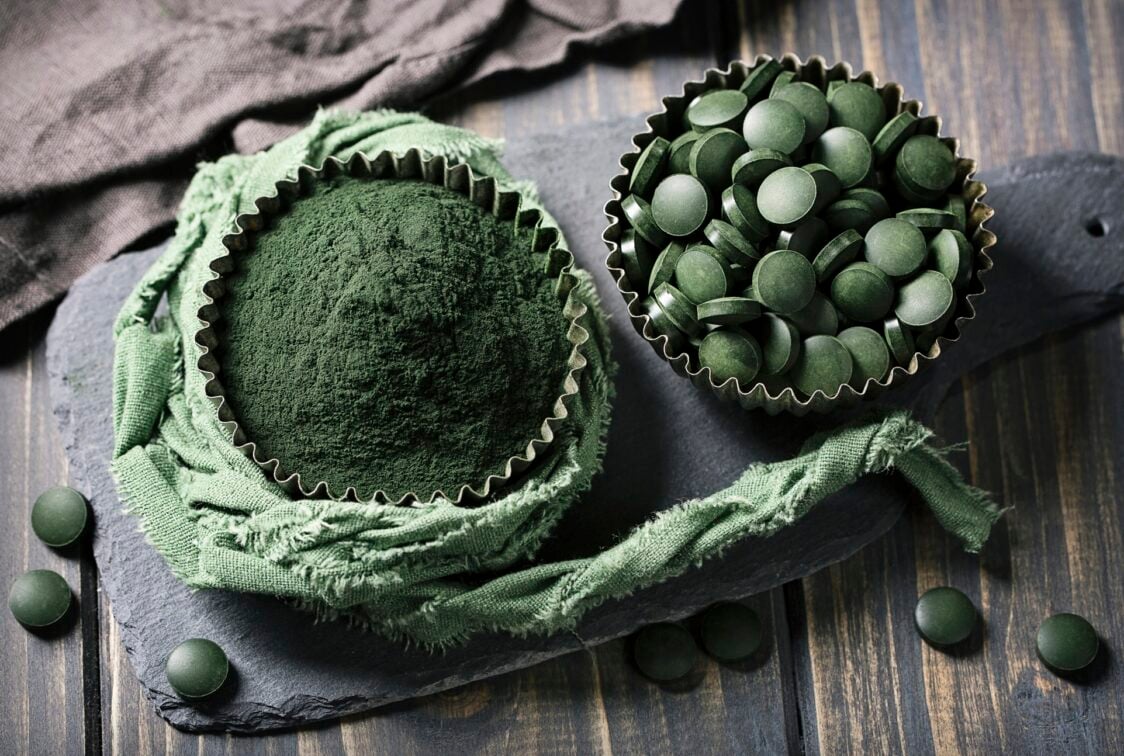
Spirulina is a cyanobacterium found in both fresh and salt water. It is also known as blue-green algae, a term preserved from the past when scientists mistakenly classified it as algae. Today, it is used as a dietary supplement in either powder or tablet form and is popular for its many health benefits. Due to its beneficial effects and its content of many nutrients and bioactive substances, it is even classified as a superfood.[32]
Spirulina has been part of the human diet since the 16th century, when French scientists documented its consumption in dried form by the indigenous African population in what is now the Republic of Chad. According to some evidence, it was also collected and traded by the Aztecs in Central America during this period. [20]
Spirulina belongs to the group of so-called green superfoods, where together with it you will also find seaweed chlorella, green barley and spinach.
What health benefits and effects does spirulina have?
1. Has antioxidative effects
One of the main components of spirulina is a substance called phycocyanin. This, together with chlorophyll, is most responsible for its blue-green colour. Spirulina has been shown in studies to have antioxidant effects, and it is this abundance of phycocyanin that attributes to some of these properties. Spirulina can thus help the body fight free radicals that are produced by oxidative stress [2, 3]
As a result, spirulina may be helpful in promoting overall health and protecting against diseases related to oxidative stress. This can be responsible for the development of health problems that can lead to cancer or metabolic diseases. [24]
What to combine spirulina with for maximum effect?
- Vitamins that belong among the antioxidants – for example, vitamin C, which is also useful for immunity, or vitamin E.
- Selenium – contributes to normal sperm production.
- Zinc – is also beneficial in maintaining the health of hair and nails. Men appreciate its effect on maintaining normal testosterone levels.
- Bioactive substances that have antioxidant properties, such as quercetin, astaxanthin or resveratrol.
- Complex supplements that offer a combination of multiple antioxidants.
2. It has an immunomodulatory effect
Spirulina also acts on the immune system in several ways. The phycocyanin contained in spirulina also appears to have anti-inflammatory properties. In fact, it acts on the production of cytokines, which are substances that influence the inflammatory processes in the body. Spirulina also has a beneficial effect on the intestinal microbiome thanks to the substances it contains. It is now well known that the microbiome plays an important role in the body’s immune functions. Spirulina also contains B vitamins such as vitamin B6 or B12, vitamin A, zinc and iron, which are some of the substances that contribute to the proper functioning of the immune system. [2]
What to combine spirulina with for maximum effect?
- Vitamin C, vitamin D and folic acid – have proven positive effects on the body’s defences.
- Omega-3 amino acids – are anti-inflammatory and help white blood cells fight pathogens.
- Probiotics – take proper care of the composition of the intestinal microbiome.
- Ginger, echinacea and other herbal supplements – have a beneficial effect on the immune system.
- Complex multivitamins and multiminerals – combine several active substances that will help with immunity.
You might be interested in these products:
3. Positive effect on cardiovascular health
This blue-green cyanobacterium (algae) also has a positive effect on heart health. Studies show that it can help lower triacylglycerols (the most common type of fat in the human body) and LDL (bad) cholesterol levels, and conversely increase HDL (good) cholesterol levels, which in turn helps to maintain proper functioning and health of the cardiovascular system. [3]
In addition, it also has a positive effect on the heart thanks to its ability to lower blood pressure. Scientists have found that taking between 1-8 g of spirulina daily over a period of 2 and 12 weeks lowered both the systolic and diastolic blood pressure, especially in people with high blood pressure. This is supported by the findings of a team of scientists from the University of Salerno, who found that spirulina may be beneficial in people with hypertension (high blood pressure) and hyperlipidaemia (elevated levels of fats in the blood, including cholesterol and triglycerides). [6, 23]
What to combine spirulina with for maximum effect?
- Omega-3 amino acids – are beneficial for heart and vascular health.
- Fibre such as psyllium or glucomannan – can bind fat and bile acid to help lower cholesterol.
- Chitosan – soluble fibre, which takes on a gel-like consistency in the intestines and thus helps to slow the absorption of fat.
- A healthy lifestyle, which includes a varied and balanced diet, regular exercise, a sufficient and good quality sleep and stress management, is also important for optimal blood pressure levels.
- Citrulline a arginine – due to their properties and influence on nitric oxide (NO) production, they can be helpful in regulating blood pressure.
4. Improves symptoms of allergic rhinitis
Spirulina may also be helpful in reducing the symptoms of allergic rhinitis. According to current research, this is a worldwide health problem affecting approximately 10-25% of the population. As studies show, taking this green-blue cyanobacterium (algae) can improve symptoms such as sneezing, runny nose or uncomfortable itching. [7]
Interestingly, one study found that spirulina was more effective than the drug cetirizine, an antihistamine used for allergies. However, there are many factors that may have influenced the results of the study and therefore this effect of spirulina cannot be generalised. At the same time, it is always necessary to consult a doctor about any medical condition. [8]
What to combine spirulina with for maximum effect?
- Vitamins that have a proven effect on the immune system, such as vitamin C or vitamin D.
- Zinc – helps in taking care of the body’s defences.
- The antioxidant quercetin – shown to stabilise histamine release. [27]
- Curcumin – this substance has also been attributed to positive effects in reducing allergy symptoms. [28]
- Bromelanin – can help relieve symptoms of allergic rhinitis, has mucolytic properties, and can help relieve blocked sinuses. [29]
5. May be beneficial in the treatment of anaemia
Research suggests that spirulina may also be beneficial for the treatment of anaemia. Anaemia is a condition characterised by a decrease in the number of red blood cells in the blood and can cause a variety of health complications, including prolonged fatigue or weakness. It is most often caused by an iron deficiency, but also of other micronutrients such as vitamin B12. However, other factors, such as chronic inflammation, can also contribute to anaemia. [25]
Anaemia occurs predominantly (but not exclusively) in the elderly. Other groups of people at risk include pregnant women, children, women with heavy menstrual bleeding, frequent blood donors or people with gastrointestinal disorders such as coeliac disease, ulcerative colitis or Crohn’s disease. [25]
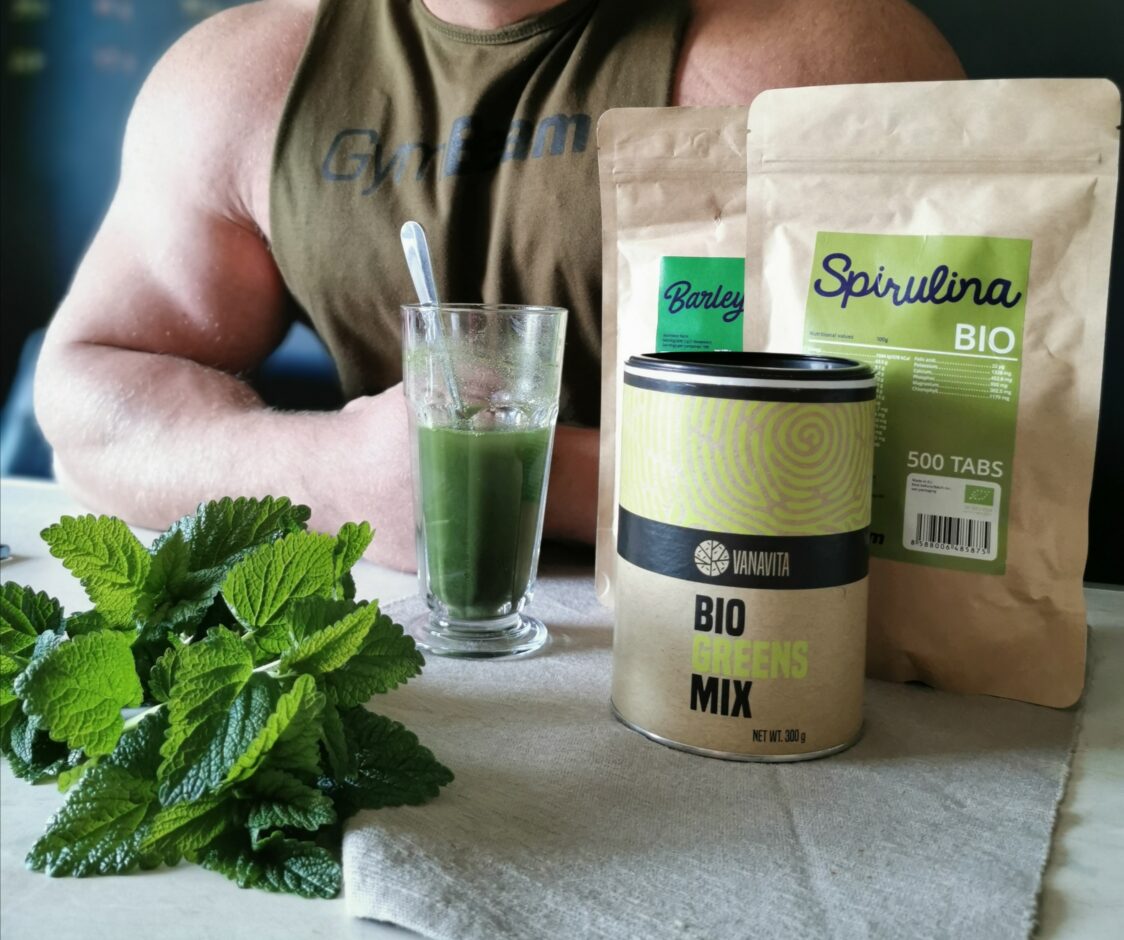
Spirulina contains a significant amount of iron and does not contain substances that would hinder its absorption. It can therefore help to ensure optimal iron intake and is also a suitable source of this mineral for people who rely solely on plant sources for their iron intake. [9, 19]
What to combine spirulina with for maximum effect?
- In addition, there are also other vitamins and minerals that contribute to the production of red blood cells and haemoglobin, such as vitamin B12, iron, and folic acid.
- Vitamin C – increases iron absorption
6. Can positively affect strength and sports performance
It seems that spirulina may also be helpful when working out and performing sports. It turns out that supplementation of this green-blue cyanobacterium (algae) can positively affect and increase muscle strength and endurance. One study found that spirulina supplementation was able to improve oxygen uptake during exercise on a manual bicycle, and thus could act as an ergogenic aid to enhance athletic performance. This is because the greater the amount of oxygen you are able to take in and utilise, the greater the endurance performance you can deliver. [10 – 11]
Another study examined the effects of supplementation in cyclists for 21 days. It showed that spirulina contributed to a reduction in lactate levels and heart rate while increasing both peak and average power output. [5]
What to combine spirulina with for maximum effect?
- Creatine – can help increase physical performance during intense exercise because it promotes the restoration of ATP, which is the source of energy for muscles.
- Caffeine – will help stimulate you prior to a workout and maintain concentration and alertness.
- Arginine and citrulline – can help prepare and kick-start your muscles for a workout.
- Beta-alanine – carnosine is produced from it, which helps regulate muscle hyperacidity during exercise.
- Complex pre-workouts contain a combination of substances to help prepare the body for exercise.
7. Can help maintain blood sugar levels
Some research also points to spirulina’s association with lowering blood sugar (glycaemia). A meta-analysis of several studies has shown that spirulina in doses ranging from 0.8 to 8 g per day can help lower blood sugar levels in people with type 2 diabetes. The results of current research show that consuming spirulina is associated with a positive effect on glycaemic control. According to a team of Italian researchers, spirulina may be beneficial for people with diabetes and could thus be another component in an overall approach to the management of type 2 diabetes. [4, 12, 23]
What to combine spirulina with for maximum effect?
- Fibre – such as psyllium or glucomannan, can slow the absorption of sugar into the bloodstream.
- Beta-glucans – from oats or barley, help to curb the rise in blood sugar levels after eating a meal.
- Arginine – helps with blood sugar regulation. [30]
- Chromium – contributes to the maintenance of normal blood sugar levels.
8. Promotes skin health
Spirulina also has beneficial effects on skin health. It contains quite a significant amount of iodine, which contributes to the maintenance of the skin’s normal condition. It also appears that spirulina can delay the signs of skin ageing. One reason for this is that it helps to increase collagen production, but its antioxidant properties also play a role. Thus, it seems that spirulina may be beneficial in the context of healthy ageing and anti-ageing. [13 – 14]
What to combine spirulina with for maximum effect?
- Collagen – it has a beneficial effect on skin health.
- Vitamin C – contributes to normal collagen production.
- Vitamins that support skin health, such as biotin (vitamin B7), niacin (vitamin B3), riboflavin (vitamin B2) and vitamin A.
- Zinc – has a positive effect on the condition of the skin.
What other benefits does spirulina have?
- Helps in natural detoxification of the body – spirulina is often taken to cleanse the body. However, as modern science points out, more research is needed in this regard. However, some studies suggest that spirulina may be helpful in removing heavy metals from the body. As one study showed, spirulina together with zinc was helpful in removing arsenic in patients with chronic poisoning by this toxic semi-metallic element. In addition, it has been shown that spirulina can help with liver health care, which may support the natural cleansing processes, as the latter is one of the body’s main detoxification organs. [15 – 16]
- Promotes brain health – research also points to the positive effect of spirulina in supporting normal brain function and nervous system development. [17]
- May be beneficial for yeast infections – spirulina may also be helpful in the treatment of candida yeast overgrowth in the body, which leads to yeast infections. [18]
- Contributes to thyroid health – spirulina contains a significant amount of iodine, which helps in the production of thyroid hormones and for its normal function.
- Helps reduce fatigue – thanks to its content of minerals such as iron and magnesium, as well as some B vitamins such as vitamin B12, spirulina can also be beneficial in reducing fatigue and tiredness.
What does spirulina contain?
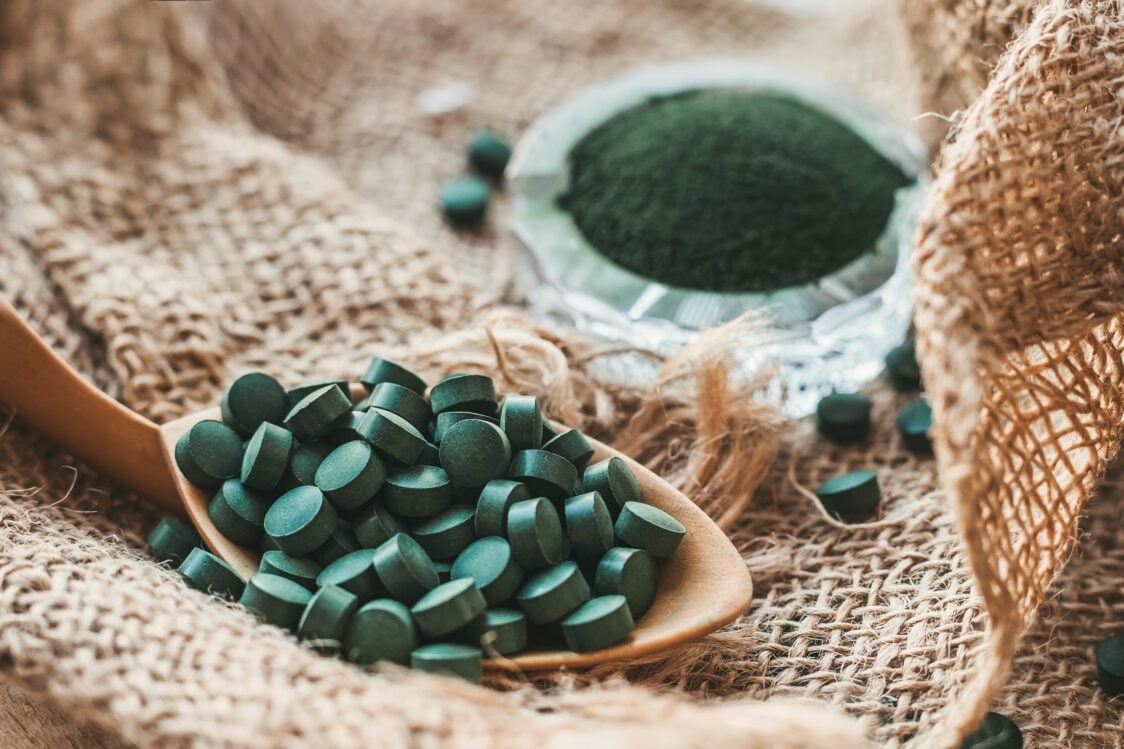
Spirulina is characterised by a diverse range of macronutrients, micronutrients and other bioactive substances. It contains a significant amount of protein and also boasts a varied proportion of minerals and vitamins. The specific nutrient content depends on a number of factors, such as the type of spirulina, but also where it was grown. Below we will present their average values.
Protein
It is this macronutrient that spirulina contains the most. Protein makes up on average 55-70% of its dry weight. It is a high quality plant-based protein with high biological value and absorption. These proteins boast a high quality amino acid spectrum. They contain all the essential amino acids that the body needs to receive through the diet or supplements. [19 – 20]
Fats
Spirulina is relatively low in fat. This macronutrient makes up approximately 9 – 15% of its dry weight. Polyunsaturated fatty acids (PUFA) are also found in spirulina. It is also a source of omega-3 fatty acids (FA) in the form of linolenic acid, omega-6 FA gamma-linolenic acid and unsaturated FA oleic acid.[19 – 20]
Carbohydrates
Carbohydrates make up a fairly low proportion of the composition of spirulina. This macronutrient makes up on average 10 – 19% of the dry weight of spirulina. It also contains fibre, on average approximately 3 – 4 g/100 g. [20]
Average micronutrient content of spirulina
The values refer to spirulina powder
Nutrient values | 100 g |
|---|---|
| Energy values | 290 kcal |
| Protein | 57.5 g |
| Carbohydrates | 23.9 g |
| Fat | 7.7 g |
| Fibre | 3.6 g |
Vitamins
Spirulina is rich in vitamins. It contains B vitamins such as vitamin B1, B3, B6 and B12. Among these, it stands out in particular for its vitamin B12 content, which is usually found mainly in foods of animal origin. This makes spirulina a suitable source of this vitamin for vegans. Spirulina is also a good source of beta-carotene, which is transformed into vitamin A after absorption. In addition, it also contains vitamin K. [19]
Minerals
Spirulina is also rich in minerals. The most important of these inorganic nutrients are iron, calcium and phosphorus. It is a great plant-based source of iron for people who do not consume animal foods. While other plant-based sources of iron also contain phytates and oxalates, which reduce its absorption, spirulina does not, and so will help with the intake of this mineral. 100 g contains about 87 mg of iron. Spirulina is also characterised by a relatively high amount of iodine, which is beneficial for thyroid health. In addition, spirulina also contains other minerals such as magnesium, zinc, selenium, potassium and sodium. [19]
Other bioactive substances
This popular blue-green cyanobacterium (algae) also boasts a content of active ingredients. These include, for example, the aforementioned antioxidant phycocyanin, but also other antioxidants such as chlorophyll and carotenoids such as beta-carotene or zeaxanthin. [19]
How to take spirulina?
There is no exact dosing protocol for taking spirulina, but typically it is recommended to supplement with 2-10 g of spirulina per day. You can take it in tablet or powder form. [20]
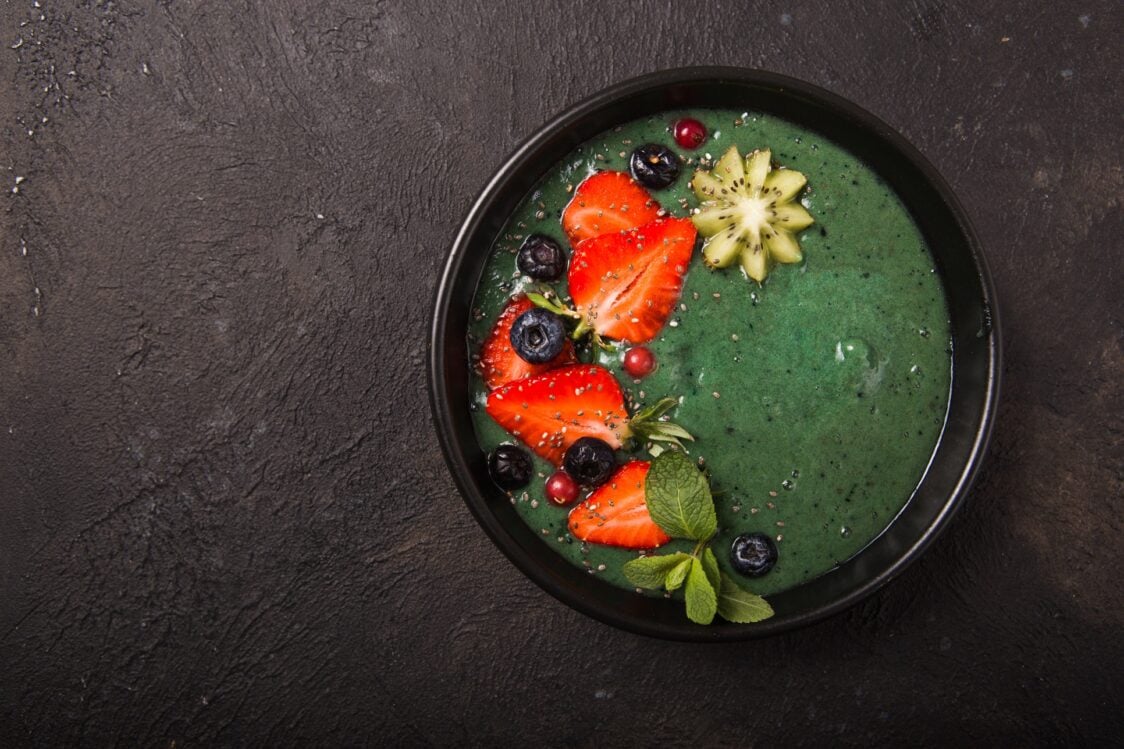
What makes spirulina so popular, besides its health benefits, is its versatility. For example, spirulina powder can be incorporated into a variety of recipes to enrich your diet. Here are some tips:
- mix spirulina powder with water or fruit juice,
- you can add it to fruit or vegetable smoothies,
- add it to yoghurt or breakfast porridge,
- it is also suitable for sprinkling on salads, soups or other dishes,
- mix it into homemade pudding,
- It can also be used to prepare sweet recipes such as muffins, pancakes or other treats.
In case you opt for tablets, you can simply drink them with water.
Does spirulina have side effects?
Spirulina is generally considered a safe dietary supplement. Research shows that taking it does not pose a health risk. However, it may be contaminated with substances that could pose a risk. Therefore, care should be taken with the quality. Poor quality spirulina contaminated with substances such as heavy metals, pesticides or impurities from the water could cause digestive problems such as nausea, vomiting or flatulence. [20]
For whom is spirulina not suitable?
Even though spirulina is generally a safe supplement, there are groups of people who should avoid it for various reasons:
- people who take blood-thinning medications,
- allergy sufferers,
- pregnant and breastfeeding women,
- people with autoimmune diseases,
- people who should avoid excessive iodine intake (e.g. those with certain thyroid diseases). [21 – 22,31]
What should you remember?
Spirulina is a popular dietary supplement packed with protein, vitamins, minerals and other bioactive nutrients. Thanks to these, this green-blue algae boasts many health benefits and effects. Although its properties and health effects are still being investigated by scientists, we now know that spirulina has a positive effect on immunity, the cardiovascular system and on reducing cholesterol and blood sugar levels. When combined with a balanced and varied diet, it can be a great addition to your overall health.
Do you have any experience with spirulina? Is it part of your supplementation or recipes? If you found this article interesting, share it with your friends so that they can learn about the many health benefits of spirulina. And who knows, maybe you’ll inspire them to go that extra mile for their health.
[1] FAIS, G., MANCA, A., BOLOGNESI, F., BORSELLI, M., CONCAS, A., BUSUTTI, M., BROGGI, G., SANNA, P., CASTILLO-ALEMAN, Y.M., RIVERO-JIMÉNEZ, R.A., BENCOMO-HERNANDEZ, A.A., VENTURA-CARMENATE, Y., ALTEA, M., PANTALEO, A., GABRIELLI, G., BIGLIOLI, F., CAO, G., GIANNACCARE, G. Wide Range Applications of Spirulina: From Earth to Space Missions. – https://www.ncbi.nlm.nih.gov/pmc/articles/PMC9143897/
[2] GROVER, P., BHATNAGAR, A., KUMARI, N., BHATT, N. A., NISHAD, K. D., PURKAYASTHA, J. C-Phycocyanin-a novel protein from Spirulina platensis- In vivo toxicity, antioxidant and immunomodulatory studies. – https://www.ncbi.nlm.nih.gov/pmc/articles/PMC7938138/
[3] NAEINI, F., ZAREZADEH, M., MOHITI, S., TUTUNCHI, H., MAMAGHANI, E.M., OSTADRAHIMI, A. Spirulina supplementation as an adjuvant therapy in enhancement of antioxidant capacity: A systematic review and meta-analysis of controlled clinical trials. – https://pubmed.ncbi.nlm.nih.gov/34235823/
[4] LYMPAKI, F., GIANNOGLOU, M., MAGRIPLIS, E., BOTHOU, D.L., ANDREOU, V., DIMITRIADIS, G.D., MARKOU, G., ZAMPELAS, A., THEODOROU, G., KATSAROS, G., PAPAKONSTANTINOU, E. Short-Term Effects of Spirulina Consumption on Glycemic Responses and Blood Pressure in Healthy Young Adults: Results from Two Randomized Clinical Trials. – https://www.ncbi.nlm.nih.gov/pmc/articles/PMC9787962/
[5] GURNEY, T., BROUNER, J., SPENDIFF, O. Twenty-one days of spirulina supplementation lowers heart rate during submaximal cycling and augments power output during repeated sprints in trained cyclists. – https://pubmed.ncbi.nlm.nih.gov/34399066/
[6] MACHOWIEC, P., RĘKA, G., MAKSYMOWICZ, M., PIECEWICZ-SZCZĘSNA, H., SMOLEŃ, A. Effect of Spirulina Supplementation on Systolic and Diastolic Blood Pressure: Systematic Review and Meta-Analysis of Randomized Controlled Trials. – https://www.ncbi.nlm.nih.gov/pmc/articles/PMC8468496/
[7] CINGI, C., CONK-DALAY, M., CAKLI, H., BAL, C. The effects of spirulina on allergic rhinitis. – https://pubmed.ncbi.nlm.nih.gov/18343939/
[8] NOUROLLAHIAN, M., RASOULIAN, B,, GAFARI, A., ANOUSHIRAVANI, M., JABARI, F., BAKHSHAEE, M. Clinical comparison of the efficacy of spirulina platensis and cetirizine for treatment of allergic rhinitis. – https://www.ncbi.nlm.nih.gov/pmc/articles/PMC7416373/
[9] SELMI, C., LEUNG, P.S., FISCHER, L., GERMAN, B., YANG, C.Y., KENNY, T.P., CYSEWSKI, G.R., GERSHWIN, M.E. The effects of Spirulina on anemia and immune function in senior citizens. – https://www.ncbi.nlm.nih.gov/pmc/articles/PMC4012879/
[10] KALAFATI, M., JAMURTAS, A.Z., NIKOLAIDIS, M.G., PASCHALIS, V., THEODOROU, A.A., SAKELLARIOU, .G.K., KOUTEDAKIS, Y., KOURETAS, D. Ergogenic and antioxidant effects of spirulina supplementation in humans. – https://pubmed.ncbi.nlm.nih.gov/20010119/
[11] GURNEY, T., SPENDIFF, O. Spirulina supplementation improves oxygen uptake in arm cycling exercise. – https://www.ncbi.nlm.nih.gov/pmc/articles/PMC7674321/
[12] HATAMI, E., GHALISHOURANI, S.S., NAJAFGHOLIZADEH, A., POURMASOUMI, M., HAD,I A., CLARK, C.C.T., ASSAROUDI, M., SALEHI-SAHLABADI, A., JOUKAR, F., MANSOUR-GHANAEI, F. The effect of spirulina on type 2 diabetes: a systematic review and meta-analysis. – https://www.ncbi.nlm.nih.gov/pmc/articles/PMC8212345/
[13] LIU, P., LEE, M.K., CHOI, J.W., CHOI, Y.H., NAM, T.J. Crude protein from spirulina increases the viability of CCD‑986sk cells via the EGFR/MAPK signaling pathway. – https://www.ncbi.nlm.nih.gov/pmc/articles/PMC6317665/
[14] SHARAFELDEIN, K., AYESH, H., SALAMA, S. et al. The collagen enhancement by Spirulina extract in intrinsic and extrinsic skin aging in albino rat. – https://basicandappliedzoology.springeropen.com/articles/10.1186/s41936-023-00347-5#citeas
[15] MISBAHUDDIN, M., ISLAM, A.Z., KHANDKER, S., IFTHAKER-AL-MAHMUD, ISLAM, N., ANJUMANARA. Efficacy of spirulina extract plus zinc in patients of chronic arsenic poisoning: a randomized placebo-controlled study. – https://pubmed.ncbi.nlm.nih.gov/16615668/
[16] MAZOKOPAKIS, E.E., PAPADOMANOLAKI, M.G., FOUSTERIS, A.A., KOTSIRIS, D.A., LAMPADAKIS, I.M,, GANOTAKIS, E.S. The hepatoprotective and hypolipidemic effects of Spirulina (Arthrospira platensis) supplementation in a Cretan population with non-alcoholic fatty liver disease: a prospective pilot study. – https://www.ncbi.nlm.nih.gov/pmc/articles/PMC4188938/
[17] SORRENTI, V., CASTAGNA, D.A., FORTINGUERRA, S., BURIANI, A., SCAPAGNINI, G., WILLCOX, D.C. Spirulina Microalgae and Brain Health: A Scoping Review of Experimental and Clinical Evidence. – https://www.ncbi.nlm.nih.gov/pmc/articles/PMC8224803/
[18] SOLTANI, M., KHOSRAVI, A.R., ASADI, F., SHOKRI, H. Evaluation of protective efficacy of Spirulina platensis in Balb/C mice with candidiasis. – https://pubmed.ncbi.nlm.nih.gov/23518167/
[19] GUTIÉRREZ-SALMEÁN, G., FABILA-CASTILLO, L., CHAMORRO-CEVALLOS, G. Nutritional And Toxicological Aspects Of Spirulina (Arthrospira). – https://pubmed.ncbi.nlm.nih.gov/26262693/
[20] Spirulina. – https://examine.com/supplements/spirulina/
[21] Blue-Green Algae. – https://medlineplus.gov/druginfo/natural/923.html
[22] JAMES, C.A., WELHAM, S. & ROSE, P. Edible algae allergenicity – a short report. – https://link.springer.com/article/10.1007/s10811-022-02880-2#citeas
[23] PRETE, V., ABATE, A.C., DI PIETRO, P., DE LUCIA, M., VECCHIONE, C., CARRIZZO, A. Beneficial Effects of Spirulina Supplementation in the Management of Cardiovascular Diseases. – https://www.mdpi.com/2072-6643/16/5/642
[24] Zaric, B.L., Macvanin, M.T., Isenovic, E.R. Free radicals: Relationship to Human Diseases and Potential Therapeutic applications. – https://www.sciencedirect.com/science/article/abs/pii/S1357272522001911?via%3Dihub
[25] Iron. – https://ods.od.nih.gov/factsheets/Iron-HealthProfessional/
[26] U.S. DEPARTMENT OF AGRICULTURE, food data central – https://fdc.nal.usda.gov/
[27] JAFARINIA, M., SADAT HOSSEINI, M., KASIRI, N., FAZEL, N., FATHI, F., GANJALIKHANI HAKEMI, M., ESKANDAR,I N. Quercetin with the potential effect on allergic diseases. – https://www.ncbi.nlm.nih.gov/pmc/articles/PMC7227109/
[28] HAFTCHESHMEH, S.M., MIRHAFEZ, S.R., ABEDI, M., HEYDARLOU, H., SHAKERI, A., MOHAMMADI, A., SAHEBKAR, A. Therapeutic potency of curcumin for allergic diseases: A focus on immunomodulatory actions. – https://www.sciencedirect.com/science/article/pii/S0753332222010356
[29] Manzoor, Z., Nawaz, A., Mukhtar, H., Haq, I. Bromelain: Methods of Extraction, Purification and Therapeutic Applications. – https://www.scielo.br/j/babt/a/sqJsWgp9PVL9XN3k7R6yT5G/?lang=en#
[30] Arginine. – https://examine.com/supplements/arginine/research/#8lrKB29-interactions-with-glucose-metabolism
[31] FAREBROTHER, J. et al. Excess iodine intake: sources, assessment, and effects on thyroid function. – https://onlinelibrary.wiley.com/doi/abs/10.1111/nyas.14041.
[32] Taxon: Spirulina. – https://acir.aphis.usda.gov/s/cird-taxon/a0u3d000000ZjdmAAC/spirulina
Add a comment