
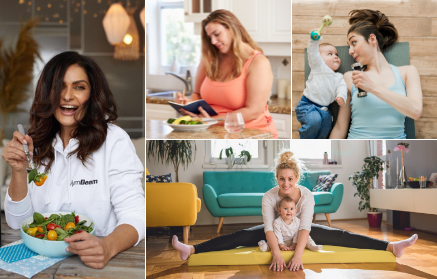
Table of Contents
The post-partum period is one of the most beautiful but also the most challenging of a woman’s life. It needs enough time to recover and create a new daily routine. This is also a period when a lot of women embark on a journey to lose the kilos they gained during pregnancy.
In the beginning, the weight drops by itself, possibly due to breastfeeding. But then the spontaneous weight loss stops, and the impatient mum starts looking for ways to get moving again. Adjusting your diet, exercise regimen and rest whenever possible can help effectively. However, shedding excess kilos after pregnancy has specifics to keep in mind. This is therefore the main topic of today’s article.
How many kilograms is it common to gain during pregnancy?
How to properly lose weight after childbirth will be shown by the example of new mum Alice. During her pregnancy, she was worried about the baby getting all the important nutrients, so she took the unfortunate advice that she should eat for two. Before giving birth, she was 20 kg heavier than her normal weight. Because of this, she put herself in a position where she gained 4.1 kg more than would have been appropriate according to BMI recommendations prior to pregnancy. [1-2]
By giving birth, Alice lost 5.5 kg (3.5 kg baby, 1 kg placenta, 1 kg amniotic fluid). That left her with an extra 14.5 kg. Some of this consists of an enlarged uterus, more blood in the body, and also enlarged breasts (growth of the mammary glands). This extra weight reaches a maximum of 5.5 kg and decreases naturally in the post-partum period. The remaining 9 kg is made up of fatty tissue that Alice would like to get rid of gradually and get back to a healthy weight. [1]
Recommended weight gain during pregnancy according to pre-pregnancy BMI:
BMI before pregnancy | Recommended weight gain |
|---|---|
| Under 18.5 (underweight) | 12.7 – 18.1kg |
| 18.5 – 24.9 (normal weight) | 11.4 – 15.9kg |
| 25.0 – 29.9 (overweight) | 6.8 –11.3kg |
| 30 and over (obesity) | 5–9kg |
Ten Tips for Losing Weight After Pregnancy
Weight loss after childbirth is similar to normal weight reduction, but it has specifics that need to be taken into account. New mums at this time face a number of new challenges that affect their entire lives. Nothing is impossible, and if you stick to a few simple rules, you will gradually shed the excess kilos and get to your original weight. Everything takes time and patience.
1. Give your body time to recover
Every mum needs some recovery time after giving birth. This time may be different for each and depends mainly on the course of delivery. During this, hormone levels start to adjust to normal levels, the uterus returns to its pre-pregnancy state and often there is bleeding, which gradually lessens. In addition, some mums have abdominal diastasis (separation of the abdominal muscles) after giving birth. [3]
After childbirth, the core of the body is weakened (made up of the abdominal muscles, the spine, pelvic floor muscles and the diaphragm), sometimes causing urine leakage or a prolapse in the pelvic organs. A woman may also see poorer joint stability after childbirth. This is due to the effects of the hormone relaxin, which is involved in softening of the ligaments that connect the joints, thereby improving mobility during childbirth. The level of this hormone can still be increased in a woman’s body five to twelve months after giving birth. [3-4]
During this period, greater fatigue, sleep deprivation, mood swings or indigestion are no exceptions. Therefore, there is no hurry and it is appropriate to give your body sufficient space to regenerate. Alice felt very weak after she was released from the hospital. The first few weeks with the baby were very difficult for her. After six weeks, she developed a solid daily routine and slowly began to master longer walks and home exercise.

2. Set real goals and monitor progress
When losing weight, it is important to set a goal at the beginning. Alice, too, is already beginning to wonder how quickly she could lose the nine kilos that separate her from her original weight. She’d like to make it as soon as possible, ideally in a month. Often women who want to look good in a summer dress or swimsuit are trying to lose weight as quickly as possible. Losing 9 kg per month is real, but achieving it would mean going on a drastic diet that would very likely disrupt her daily life and overall health. Moreover, it is certainly not a long-term sustainable plan and the lost kilograms would be substantially made up of body water. Alice would probably gain the kilos back in no time.
Smaller goals are far preferable in this respect, leading to bigger ones over time. Weight loss is recommended at a rate of 0.5 – 1 kg per week. Alice can reach her original weight in as little as three months. It will go at a slower pace than she would like, but she will be rewarded with long-term sustainable results. [5-6]
Body weight isn’t the only indicator Alice should be monitoring. Once or twice a month (at the same time, under the same conditions, in underwear) she could add waist, abdominal, buttock and thigh measurements into her weigh ins. She can then compare the results not only numerically, but also with pictures and the feeling that her clothes fit better. Great indicators of progression are also easier handling of everyday activities, better mood and improved physique. [6]
If you’re interested in setting goals and keeping motivated, read our article Five Tips to Staying Active, Motivated and Keep Working Out at Home.
You might be interested in these products:
3. Take advantage of the energy demands of breastfeeding and promote weight loss
Breastfeeding has a number of advantages for both mother and baby. Breast milk provides the baby with the most important nutrients and energy it needs for healthy development in the first months of life. It also contains substances that support its immune system. According to studies, breastfeeding even reduces a child’s future risk of developing certain diseases (obesity, diabetes, heart and blood vessel diseases). Breastfeeding also strengthens the bond between the child and its mother. The WHO recommends breastfeeding for a minimum of six months. From around four to six months, food should be added to breast milk. [7-8]
The production of breast milk (lactation) is a complex process that increases a mother’s energy expenditure by up to 500 kcal per day. Just for comparison, that’s the amount of calories a 60 kg woman burns in an hour of slow jogging. Breastfeeding thus increases the energy expenditure involved in normal activities from waking up in the morning, to strolling with a pram, to changing the baby, to taking care of the household, to going to sleep. [9–11]
New mum Alice is busy from morning till night. She goes for walks, breastfeeds, cooks and cleans. Also, because she has an overall high-quality diet, she can also enjoy an ice cream or other sweets once in a while, yet she is slowly losing weight. If you want to learn more about how to diet while losing weight, read our article Caloric Deficit: How to Lose Weight and Have a Life?
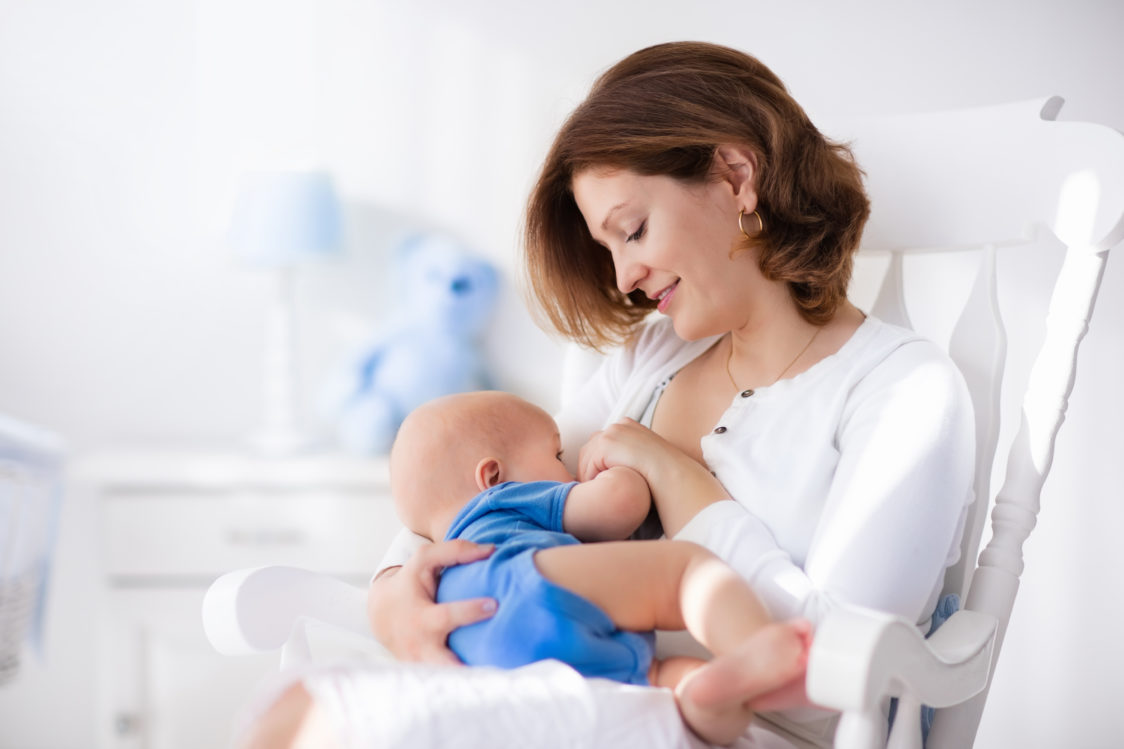
4. Eat healthily while breastfeeding, but be careful about your caffeine or fish intake
A good diet provides the body with valuable nutrients that are indispensable for it to function properly. It’s so important at any stage of life. While breast-feeding, Alice and other mums should be careful about certain foods. What they eat may not affect the quality of their breast milk as much, but some substances from the food (caffeine, alcohol) can get into it.
What not to eat while breastfeeding, and what are the nutritional recommendations for breast-feeding mums?
- Restrict foods that your child has been shown to have an allergy to (such as citrus, dairy products) [12]
- In the case of alcohol, it is safest to cut it out completely for the sake of your child. [10]
- Keep an eye on your caffeine intake, which should be no more than 200mg. This corresponds to two to three cups of coffee. Caffeine is also found in black, green or matcha tea and some soft drinks. [10]
- Avoid fish that contain higher levels of mercury. As a rule, it is larger fish such as shark, swordfish or pike. Instead, choose salmon, cod, sardines, tilapia or trout. [13]
- Avoid unpasteurised dairy products, mouldy cheese, as well as undercooked meat, fish and eggs. These foods pose a higher risk of maternal infectious disease caused by bacteria or viruses. They should not endanger the baby through breast milk. [10]
- Foods that contain a lot of fibre, such as legumes, do not necessarily need to be eliminated from your diet. However, if you have difficulty tolerating it and it causes digestive problems, you can choose other foods that are rich in fibre (fruit, vegetables, whole grains). Foods that cause bloating do not get into breast milk. [12]
- Maintain an adequate intake of foods with important vitamins and minerals for child development.
- iodine (iodized salt, seafood)
- iron (meat, fish, eggs, legumes)
- vitamin B12 (butter, dairy products, eggs)
- vitamin D (fatty fish, eggs, fortified food)
- calcium (dairy products, kale, broccoli, fortified foods) [14]
- Increase fluid intake by about 700ml. Breast milk is approximately 87% water, and a woman produces on average 750ml per day. The most available indicator of adequate hydration is the colour of your urine. Too dark indicates lack of fluids and too light hyperhydration. The colour of light straw is considered healthy. [15]
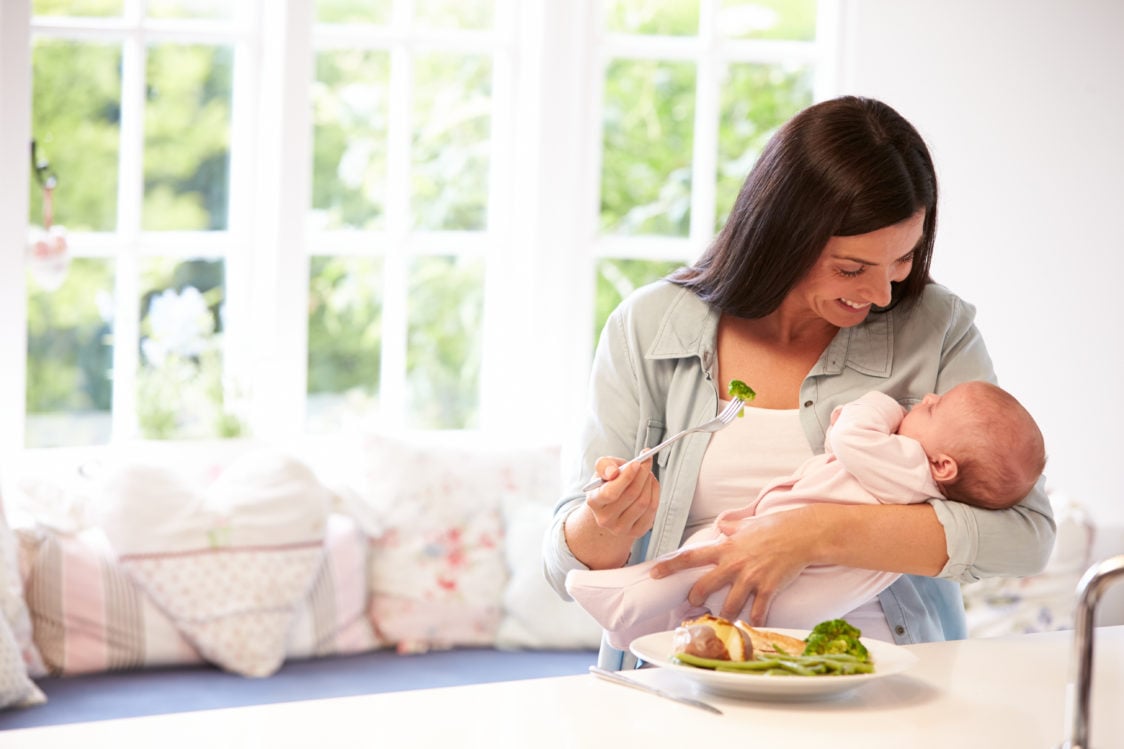
5. Cut down on foods that are high in sugar and fat
When losing weight, it is not necessary to cut out gluten, carbohydrates or all fat sources immediately. Overly restrictive diets and various detoxes are more likely to be a way to fail and damage a healthy relationship with food. Alice herself has tried different types of diets in the past, like low-carb or keto diets. Her energy intake made her lose weight quickly, but she was dealing with enormous fatigue and headaches. Unfortunately, this triggered a round of starvation and overeating. She had recently thought of this time and told herself that this time she would do it differently and better. She started by cutting down on her favourite ice cream, sweet pastries, sweetened cappuccino and other foods that have a lot of calories but low nutritional value. This spontaneously reduced her energy intake without the need for calorie counting. [5, 16]
What foods to avoid when losing weight?
- biscuits, chocolate, sweet pastries (croissants, donuts), lollies and other sweets
- cakes, tarts, cupcakes, ice cream
- chips, fries and other fried foods
- pre-prepared products (frozen pizza, meatballs), fast food snacks
- smallgoods, sausages, salami, fatty meat
- sugar, honey, maple or agave syrup
- muesli, granola and other high sugar breakfast cereals
- fat cheese, heavy cream, creamy yoghurts
- mayonaise dressings
- lemonades, juices, sweetened coffee or tea, alcohol, energy drinks
Other foods that you should look out for can be found in our article 10 Foods That Only Seem Healthy.
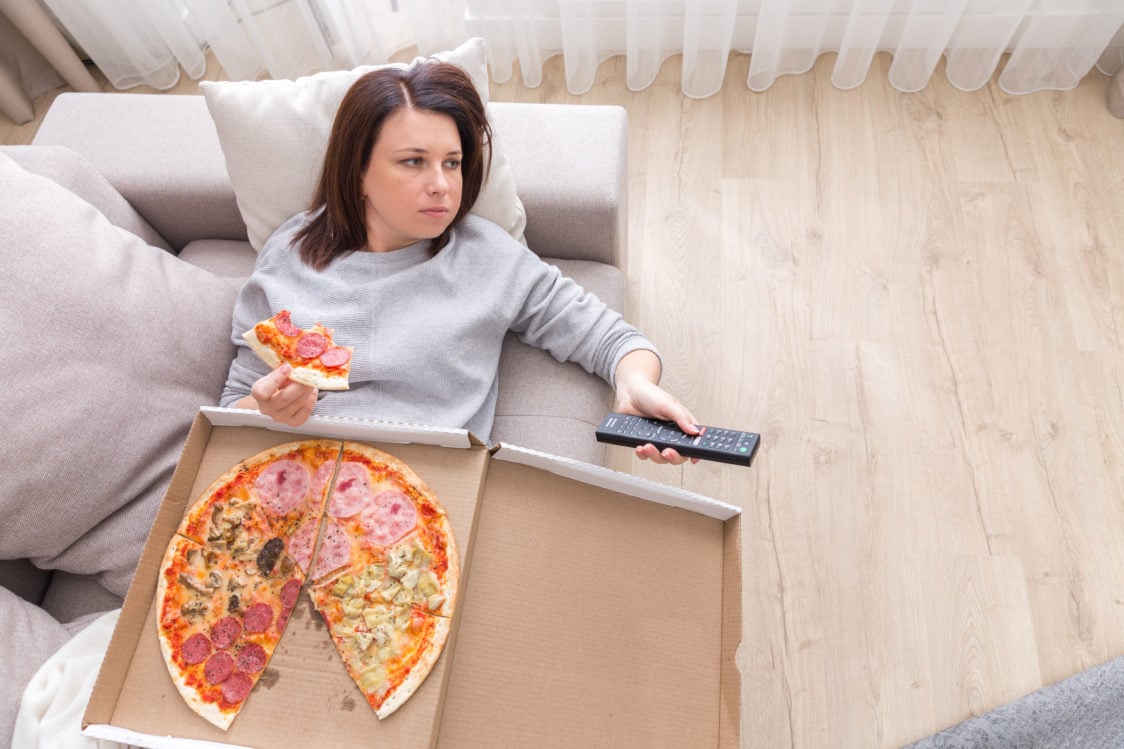
6. Focus on quality food
After eliminating high-fat and high-sugar foods, Alice should focus on the food choices she makes for breakfast, lunch, dinner and snacks. Simple healthy diet rules will help her do this. If she learns to combine foods correctly, she will have wholesome meals that fill her up and she won’t have as many cravings or the need to fill up on sweets.
How to eat healthily?
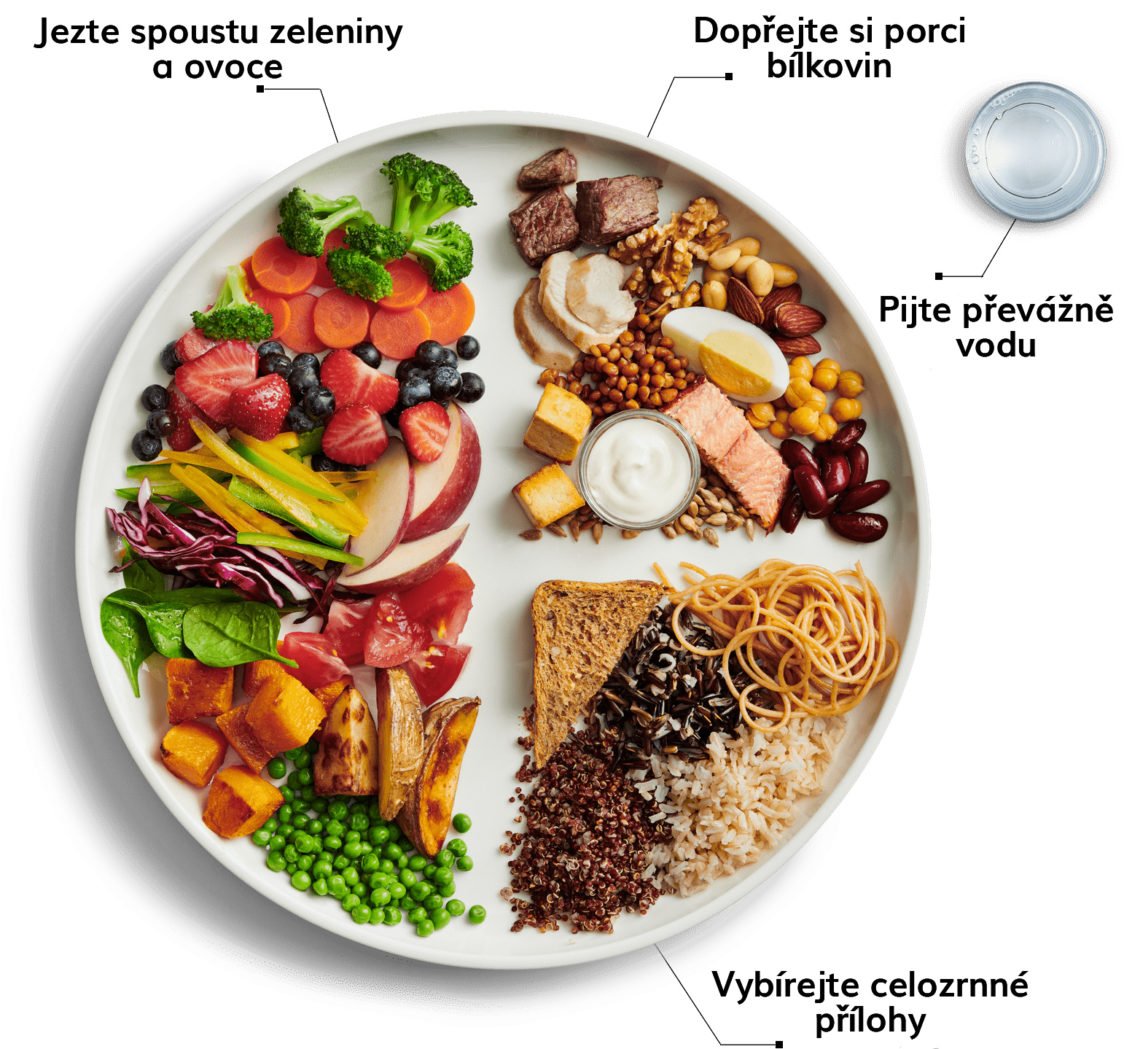
- Add vegetables or fruit to every meal, with the idea that these superfoods should make up about ½ of the plate. Then eat 500 – 600g of these foods over the course of the day, especially vegetables.
- Have protein in every meal. You can alternate lean meat, fish, eggs, dairy products, tofu, tempeh and seitan. Protein should make up approximately 1⁄4 plate.
- Choose complex carbohydrates. Pick from for oats, wholemeal bread, rice, pasta, quinoa, buckwheat, bulgur, couscous, potatoes or legumes. These foods should make up about ¼ of your plate.
- Focus on healthy fats. These include vegetable oils (olive, rapeseed, avocado, pumpkin), nuts, seeds and nut butter. Their portion size is about the size of your thumb, two at the most.
- Drink unsweetened beverages such as fresh water and tea. To enhance your water intake, you can make water tastier with lemon or a no-calorie sweetener. Drink about 30-45 ml of water per kilogram body weight per day. Add an extra 700ml while breastfeeding. Alice currently weighs 75 kg, which means she should drink at least 3 litres in a day. [17]
If you are interested in the benefits of healthy eating, read our article What Is a Healthy Diet and How to Learn to Eat Healthily?
7. Plan and prepare meals in advance
With a newborn, it’s not entirely easy to find time to prepare fresh food every day. Alice learnt to prepare her meals in advance so that she could always have a serving of balanced food available. She tries to make the most of the time her child sleeps or is cared for by her partner.
How to make food preparation easier for weight loss?
- Try to plan what you will eat for the next two to three days and shop accordingly.
- Always cook several portions at once. Cook several servings of side dishes, meats and other protein sources two to three days in advance. Divide individual meals into boxes and store in the refrigerator. Simply reheat the box and top up the meal with fresh vegetables before eating. If you don’t mind eating the same meals multiple days in a row, cook several servings of at least two meals to have for lunch and dinner.
- Freeze your extra food. You don’t have to throw away a portion you can’t eat. In the freezer, the food stays fresh for a long time. You can then use it after thawing when there is no time to cook.
- Choose foods that are easy to prepare. For example, couscous with tofu sautéed in a pan with vegetables can be ready in ten minutes. Other quick meals include pasta with roast chicken or a tortilla with ham and mozzarella.
- Prepare your snacks. Sometimes there may not be time for a hot meal. Have healthy snacks available to keep you full. Wholemeal bread with fish spread, ham or cheese, white yoghurt with muesli, mixed nuts with a portion of fresh fruit or a banana with a spoonful of cashew butter could be useful.
- Keep a supply of fresh vegetables at home. Feel free to cut carrots, cucumber, peppers and other vegetables for one to two days ahead. Place in sealable boxes or jars filled with clean water. This way, sliced vegetables stay fresh and crisp for longer. You’ll have a great source of fibre on hand to help with hunger at any time. [18-19]
You can find inspiration for meals that you can prepare in boxes in our article Sample Meal Prep Plan For 2000 kcal.
8. Choose the right exercise for you
Exercise not only has a number of benefits in the post-partum period. It helps with weight loss as well as strengthening the whole body. It is also a great form of relaxation and a great way to get away from everyday worries, making you better able to handle stress and sleep better. Alice takes thirty minute walks every day, does pelvic floor strengthening exercises and works out twenty to thirty minutes at home with her body weight twice a week.
How do you start exercising again after giving birth?
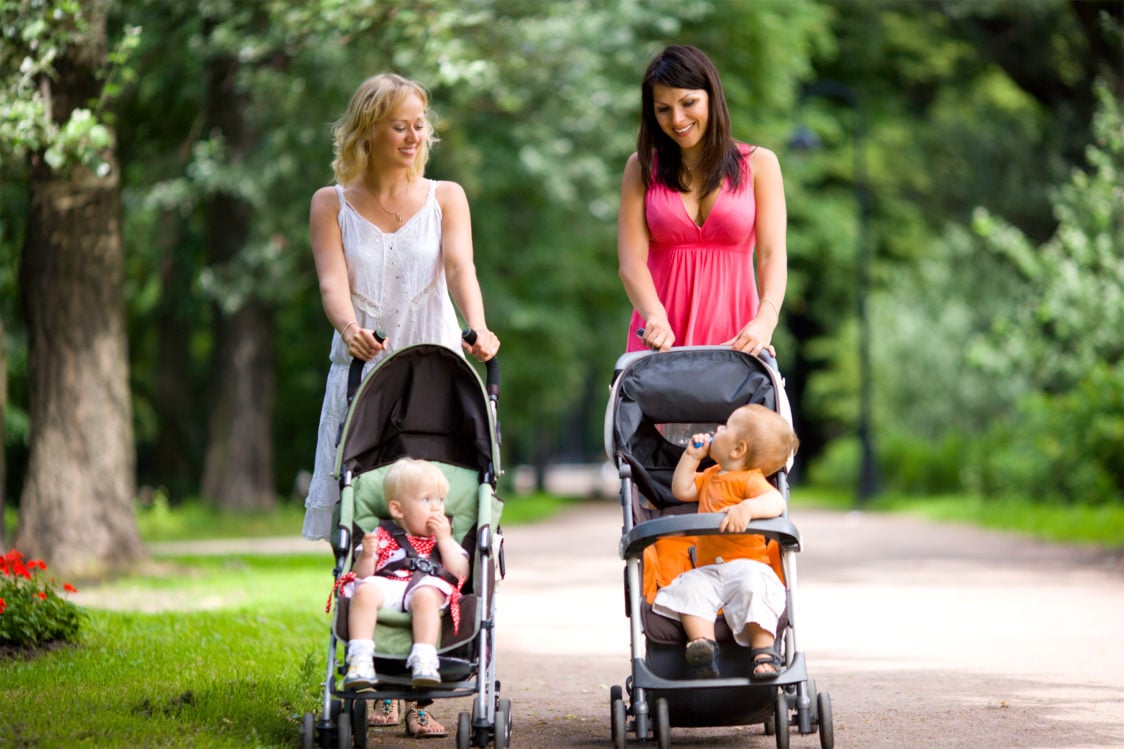
- Begin with walks. The extra load in the form of a pram will burn more calories than a normal walk. [20]
- Add exercises to strengthen the pelvic floor (Kegel exercises). In these, the muscles in the pelvic area contract and relax in a controlled manner. It is usually possible to start them as early as a few days after giving birth, except in women who have had a Caesarean section. These exercises will help prevent the decline of abdominal organs as well as incontinence and improve your sex life. [21-22]
- If you are diagnosed with diastasis (separation of the abdominal muscles), see a physiotherapist, who will help you choose the appropriate exercises and get rid of the problem as quickly as possible. Don’t try classic sit-ups. [21-22]
- After six weeks or when you feel ready, add more forms of movement. Choose an activity that will keep you motivated and start with it slowly. You don’t have to run tens of kilometres a week like you used to before you got pregnant. Increase the intensity and duration of exercise gradually. [20]
- Try yoga, Pilates, cycling, riding stationary bike or swimming (once the bleeding stops).
- You may still have unstable joints six months after giving birth, so beware of jumping and lifting heavy weights. [20]
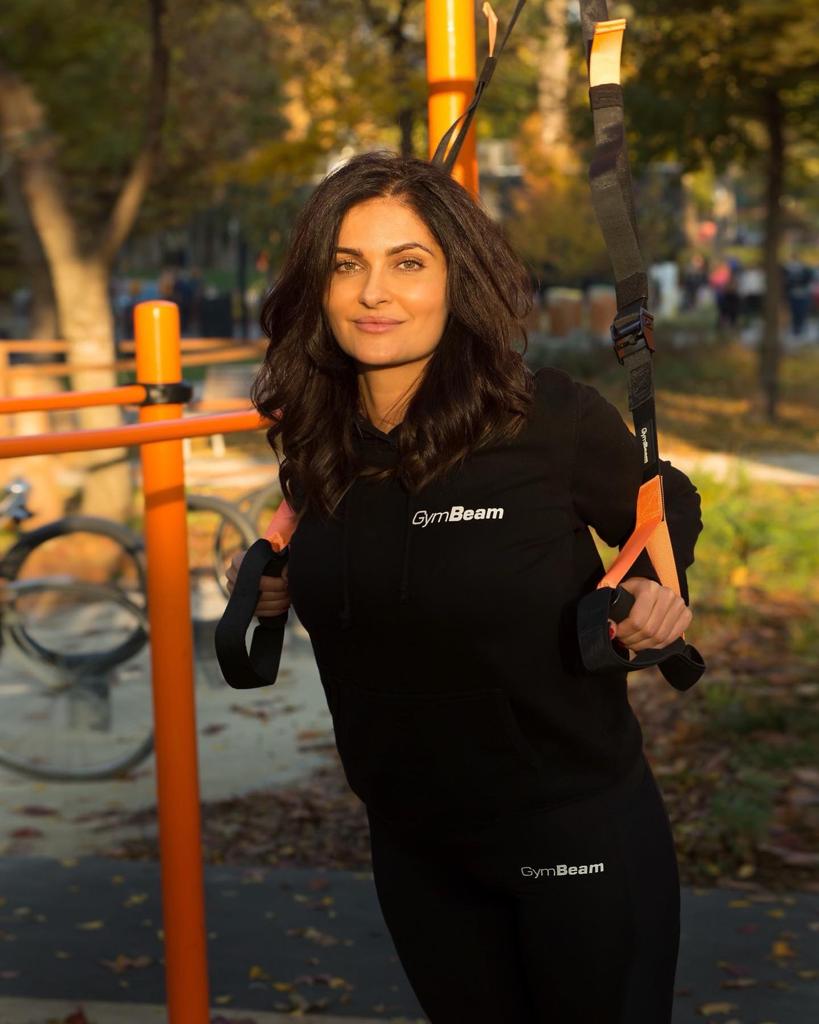
- Try working out at home. It saves time and you can start whenever you find a few minutes for yourself. In the beginning, exercises with your own body weight will suffice. As you get stronger, you can then add weights, kettlebell, resistance bands or use a suspension training system.
- Try to spend a minimum of thirty minutes daily being active. Shorter ten minute blocks of exercise that you can do several times a day count too.
- When exercising, be careful of proper technique and follow your body’s signals as well. If you find any exercise unpleasant, you’d better skip it for now.
Find inspiration for body weight exercises in our article 12 Body-Weight Exercises that Will Get You in Shape.
9. Get some rest
Good quality sleep and rest is as important in weight loss as is diet and exercise. With a newborn, you may not get five hours of sleep at night. Then try to make up for the sleep deficit as much as possible during the day with naps together with the baby or when someone else is babysitting.
If you have trouble sleeping, be careful about your caffeine intake in the afternoon and evening. It can also be disrupted by heavy meals shortly before bedtime. Before sleep, also avoid browsing the Internet or watching TV. Swap your smart phone for a book to help you create a relaxing atmosphere to fall asleep.
If you get a moment to yourself during the day, go for a massage, have a bubble bath, read or visit a friend. If you’re physically and mentally rested enough, things will run a little easier.
You can read more about the benefits of sleep in our article Sleep: the Most Effective Kickstarter and Fat Burner.

10. Share your journey with a friend and don’t compare yourself to anyone
It is sometimes challenging to combine childcare, home care, exercise, cooking, partner and family relationships and not go crazy. Alice has a lot of help from her friend Patricia, who she works out with and shares all her doubts and accomplishments. You don’t have to start taking group lessons and meeting new people when you don’t really want to do it. Just find someone to share and support your journey with, and motivate and inspire each other.
Beware of over-comparisons, whether with friends or celebrities. Each of us is different. Just because a famous actress had her pregnancy kilos off a month after giving birth doesn’t mean she went about it in a healthy and sustainable way. Focus purely on yourself and your progression.
What should you remember?
Losing weight after pregnancy has its specifics, which are important to take into account. If you are a new mum, you need to adjust your diet depending on whether you are breastfeeding, and eliminate foods that are high in fat and sugar. Creates an eating plan consisting of quality foods according to the principles of healthy eating. Add some walks, exercises to strengthen the pelvic floor and gradually you can start to return to your favourite sports. Challenging days will be then well compensated (as is possible) with sufficient sleep and rest to support your efforts overall.
Do you have a new mum amongst your friends who’s trying to lose weight? Share this article with her as the advice can help her with weight loss.
[1] Miller, S. G. The Best Ways to Lose Weight After Pregnancy. – https://www.livescience.com/53768-how-to-lose-weight-after-pregnancy.html
[2] Weight Gain During Pregnancy. – https://www.acog.org/en/clinical/clinical-guidance/committee-opinion/articles/2013/01/weight-gain-during-pregnancy
[3] Schiedel, B. 17 mind-blowing ways your body changes after giving birth. – https://www.todaysparent.com/baby/postpartum-care/mind-blowing-ways-your-body-changes-after-giving-birth/
[4] Relaxin: Pre- and Postnatal Exercise Considerations. – https://www.acefitness.org/education-and-resources/professional/expert-articles/6980/relaxin-pre-and-postnatal-exercise-considerations/
[5] Better Health Channel. Weight loss—A healthy approach.– https://www.betterhealth.vic.gov.au/health/healthyliving/weight-loss-a-healthy-approach
[6] 6 proven strategies for weight-loss success. Mayo Clinic. – https://www.mayoclinic.org/healthy-lifestyle/weight-loss/in-depth/weight-loss/art-20047752
[7] WHO. Breastfeeding. – https://www.who.int/westernpacific/health-topics/breastfeeding
[8] Benefits of breastfeeding. – https://www.nhs.uk/conditions/baby/breastfeeding-and-bottle-feeding/breastfeeding/benefits/
[9] Compendium of Physical Activities. – https://sites.google.com/site/compendiumofphysicalactivities/Activity-Categories/runnin
[10] ACOG.Breastfeeding Your Baby. – https://www.acog.org/en/womens-health/faqs/breastfeeding-your-baby
[11] Tahir, M. J., Haapala, J. L., Foster, L. P., Duncan, K. M., Teague, A. M., Kharbanda, E. O., McGovern, P. M., Whitaker, K. M., Rasmussen, K. M., Fields, D. A., Harnack, L. J., Jacobs, D. R., & Demerath, E. W. Association of Full Breastfeeding Duration with Postpartum Weight Retention in a Cohort of Predominantly Breastfeeding Women. – https://doi.org/10.3390/nu11040938
[12] Jeong, G., Park, S. W., Lee, Y. K., Ko, S. Y., & Shin, S. M. Maternal food restrictions during breastfeeding. – https://doi.org/10.3345/kjp.2017.60.3.70
[13] FDA. Advice about Eating Fish. – https://www.fda.gov/food/consumers/advice-about-eating-fish
[14] UpToDate. Patient education: Maternal health and nutrition during breastfeeding (Beyond the Basics).– https://www.uptodate.com/contents/maternal-health-and-nutrition-during-breastfeeding-beyond-the-basics/print
[15] Hydration in pregnancy and breastfeeding. – https://www.hydrationforhealth.com/en/hydration-science/hydration-lab/hydration-pregnancy-and-breastfeeding/
[16] Nhs.Uk. Eating processed foud.– https://www.nhs.uk/live-well/eat-well/what-are-processed-foods/
[17] Canada Food Guide. Make healthy meals with Canada’s food guide plate. – https://food-guide.canada.ca/en/tips-for-healthy-eating/make-healthy-meals-with-the-eat-well-plate/
[18] Precision Nutrition. Infographic Weekly meal prep: Mastered. Here’s how to have healthy food ready when you need it. – https://www.precisionnutrition.com/weekly-meal-prep-infographic
[19] Bulletproof. How to Meal Prep: A Beginner’s Guide for Perfect Make-Ahead Meals. – https://www.bulletproof.com/diet/healthy-eating/how-to-meal-prep-beginners-guide/
[20] Nhs.Uk. Keeping fit and healthy with a baby. – https://www.nhs.uk/conditions/baby/support-and-services/keeping-fit-and-healthy-with-a-baby/
[21] ACOG. Exercise After Pregnancy. – https://www.acog.org/womens-health/faqs/exercise-after-pregnancy
[22] MedicineHealth. Kegel (Pelvic Floor) Exercises After Birth: How to Do & When. – https://www.emedicinehealth.com/when_to_start_kegel_exercises_after_birth/article_em.htm
Add a comment