

Table of Contents
Maybe you also work shifts and have experienced first-hand that it is often difficult to maintain a normal life with such a schedule. When you add to that the effort to eat right and live healthily, sometimes it borders on the superhuman. The vision of a healthy lifestyle often melts away over time. Not to mention the fact that this lifestyle is also commonly reflected in gradual weight gain. Even so, it’s not impossible to get your eating habits under control when working nights. When you do, your body and your health will thank you.
Why is it so important to be in control of your nutrition when working shifts?
Those of you who work shifts will know that it is not easy to combine this work schedule with healthy eating. A job that alternates between morning and afternoon shifts is not nutritionally problematic. However, we are referring to work involving night shifts (or night work only). It is the workload that we will be looking at in today’s article, as it brings with it the greatest nutritional woes.
In fact, regular night work is characterised by many inconveniences, and most of the time it is quite a challenge to live a healthy lifestyle. It is too variable and irregular, and the natural biorhythms of your body are disrupted. Nature has arranged it so that we are evolutionarily set to sleep at night and be awake during the day. When this need is disturbed for a long time, the body makes its dissatisfaction known not only through fatigue and a lack of energy, but also through complex health problems.
This is indeed not just a triviality as it can be seen in a number of studies that talk about a higher risk of various diseases in people working night shifts. They show a higher likelihood of sleep or digestive problems, mental illness, cardiovascular problems, cancer or even diseases of the female reproductive system. [2]

What are circadian rhythms and how are they affected by nocturnal changes?
Biorhythms are processes in the body that are regularly cyclical and often adapted to environmental factors. It is thus a kind of biological clock that also functions according to external events. The most well-known are the so-called circadian rhythms, which repeat daily and are influenced by the alternation of day and night. Thus, from an evolutionary perspective, we are set up in such a way that it is healthy for us to sleep at night and stay awake during the day. This is also evident in the physiological processes of your body. For example, depending on the alternation of day and night, the levels of certain hormones fluctuate, body temperature changes or the performance of the digestive tract changes.
When working night shift, however, the natural circadian rhythms are disrupted, which can result in an increased risk of the above-mentioned health problems. This makes it all the more important to maintain a healthy lifestyle in the form of a well-balanced diet, physical activity and rest. Although this is complicated and challenging when it comes to night shifts, it is a factor that you can control and can help to mitigate the negative effects of night shifts on your body.
You might be interested in these products:
How to eat healthily while working night shifts?
In order to get your diet right and to be able to fit it in with your night shifts, there are a few important factors to keep in mind. What are these?
1. Maintaining the regularity of daily meals
A healthy diet often stands and falls on its regularity. Success may therefore depend on whether you can manage to eat a similar number of meals repeatedly at roughly the same time of day. Without this, it is quite difficult to prevent hunger and sweet cravings or to control your total daily calorie intake.
What are some regularity mistakes you might be making?
- Eating too often. Night shifts are typically accompanied by more hunger or cravings for sweets. This is partly due to a disturbed sleep pattern. This is because it changes the levels of hormones that signal hunger (ghrelin) and satiety (leptin) in our brains. Thus, this can result in excessive calorie intake. People also commonly fight off fatigue with food, especially sugar-laden food, because it provides them with an immediate energy boost. [3]
- The opposite problem is when you unnecessarily skip meals at night. Whether it’s the belief that it’s the right thing to do or a lack of time, it’s not okay. Purposefully denying yourself daytime meals is usually not a good idea. It can catch up with you sooner or later in the form of extreme hunger or sweet cravings. In such cases, you typically eat everything you can get our hands on. In addition, insufficient caloric intake is a perfect recipe for fatigue, which you probably don’t want to add to during your night shift. When you’re working at night, you need food.
How to do this correctly?
- You need to find a compromise between eating too much and eating too little.
- It is important to plan your meals to coincide with any breaks you are allowed at work.
- Determine the number of meals you will have at work, as well as their approximate time.
- Try to follow this plan repeatedly to give your body a chance to get used to it.
- A day that includes a night shift should classically include 3 main meals per day. Have them before your shift starts (e.g. in the evening at 9 pm), at the end of your shift (approx. 5:30 am – 6 am) and then after you wake up (approx. 3 pm – 4 pm).
- Supplement main meals with 2 – 3 snacks. Two of them should be eaten during your shift at night and the third one can be eaten during the evening, e.g. at about 7 pm (depending on your hunger).

2. Meal prep and planning
If you leave your diet to fate and chance, not only is it difficult to maintain the regularity mentioned above in a working environment, it can be quite a challenge to get healthy and balanced meals. If you don’t take food from home, you often have no choice but to reach for what is available. Biscuits from the vending machine or sandwich from the local buffet are common choices, as well as a variety of fast food. And this can be one of the major stumbling blocks.
What mistakes might you be making?
- You don’t have a plan to make it easier for you to follow a healthy eating pattern.
- You don’t prepare food in advance.
- You only think about food when you start to feel hungry.
- When you’re hungry, you reach for what’s readily available first.
- You buy your food at work from the canteen or vending machine.
How to do it right?
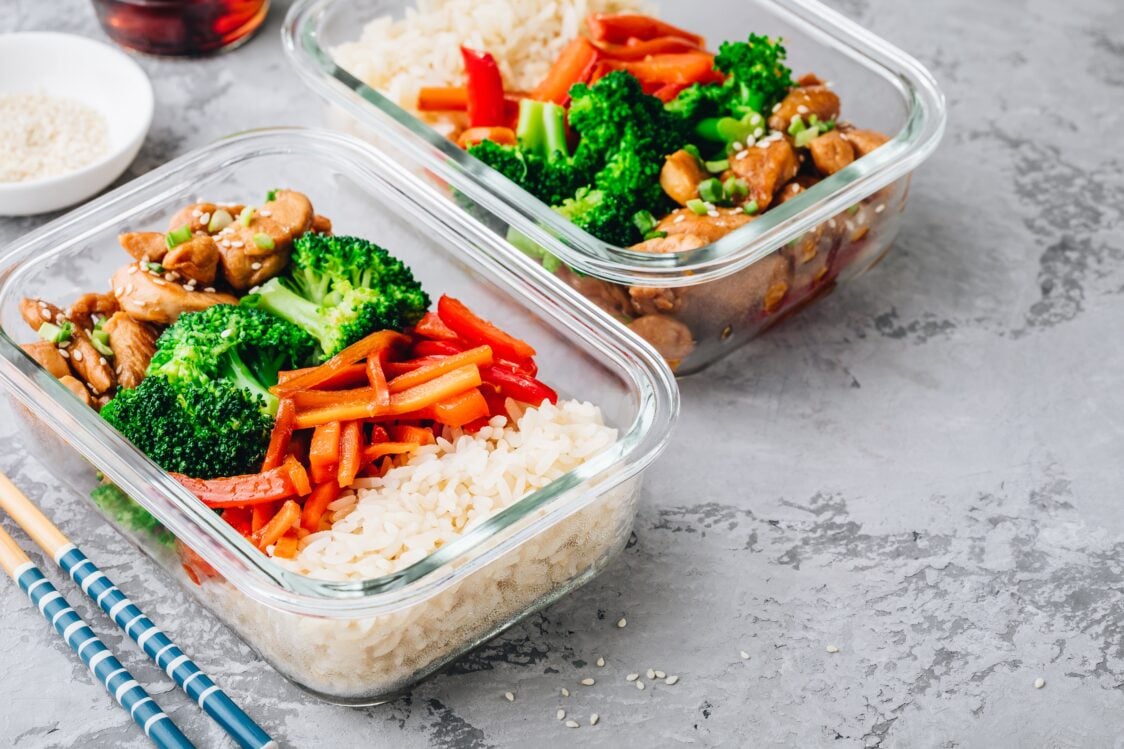
The key to success is to be prepared. Therefore, it may come as no surprise that the ideal is to plan and prepare meals ahead of time. When you take your own snack to work, you won’t have to reach for chocolate or a sandwich from the vending machine. That way, you’ll be in control of how much energy and what nutrients you’re getting. What steps not to forget?
- Plan your diet for a few days in advance, ideally for the whole week.
- Make a list and go food shopping.
- Cook food for a few days in advance. Start preparing food on Wednesdays and Sundays, for example, and on the other days, you can just take food from your prepared supply.
- Box it up. Whatever you prepare, you can pack in a lunch box and take it with you.
- Don’t forget to pack a snack too. Ideally you should have 2 small meals during a single night shift.
- For a snack, dairy products such as yoghurt, kefir or acidophilus milk or skyr are suitable. Fresh or lyophilized fruit or a handful of nuts are also suitable. Various protein bars and crackers are also a good choice, and jerky can be an interesting option.
- If you can’t manage to eat, a protein powder or, for example, a food supplement containing a complex mixture of nutrients can help.
3. Food selection
It’s not always easy to put together a proper diet when you’re dependent on what you can buy at work. That’s why the aforementioned preparation and planning is important. However, in order for these activities to have the right effect, you need to know what to choose and prepare.
What mistakes might you be making with your food choices?
- Reaching for vending machine food, fast food, or indulging in a croissant, doughnut or other sweet pastry.
- You choose high-calorie foods full of sugar and fat that have minimal nutritional value.
- You forget about foods with an adequate protein content, such as dairy products, ham, eggs, etc.
- You neglect your fibre intake from whole grains, vegetables or fruit.
All these shortcomings can lead to a vicious circle where hunger, fatigue or sweet cravings lead to an even greater need for sweets and other unsuitable foods.
How to do it right?
- Avoid sweets, soft pastries and sugary drinks. These may give you an immediate burst of energy in the form of sugar and fat, but it wears off after a while. The result is often just another urge to reach for a similar food again.
- Base your diet on protein and complex carbohydrates with plenty of fibre and healthy fats. These nutrients will ensure that you feel fuller and are much less likely to feel hungry and crave sweets.
- Don’t forget to pack a lunch box of vegetables. This is a great food that has minimal calorie value, fills your stomach and helps with keeping you satiated.
- Learn more about how to prepare a healthy diet in our article What Is a Healthy Diet and How to Learn to Eat Healthily?
Which foods to select and which to avoid?
Suitable foods | Less suitable foods |
|---|---|
| White yoghurt, quark, skyr, kefir milk, acidophilus milk, buttermilk, cottage cheese, hard cheese, mozzarella, sardines, tinned tuna, ham with a high meat content, hard-boiled eggs, vegetables, fruit, wholemeal bread, crisp bread, oats, porridge, pasta, protein bars, dried meat, nuts | confectionery (chocolate bars, biscuits, etc.), puff pastries (croissants, strudels, etc.), baguettes full of dressing and mayonnaise, flavoured dairy products, sweetened beverages, fast food, salami and other fatty cured meats |

4. Fluids intake
Feeling tired and performance is not only dependent on nutrition, but the quantity and quality of fluids consumed also play an important role. The feeling of not having enough energy can be hidden by, for example, mild dehydration of the body. Hydration plays an important role in how you will feel during your night shift.
What hydration errors might you be making?
- Not drinking enough fluids. This is a common problem in general, which is often compounded by your workload. In fact, it is common that you simply don’t remember to drink or neglect to drink because you don’t feel thirsty. If this is the case for you, you should take heed, because the absence of thirst does not mean that you do not need to drink.
- You are not choosing the right fluids. The biggest pitfall is drinking sweetened beverages. They may give you an instant boost of energy thanks to their simple sugar content, but you’ll probably need another load in a little while. Sugar quickly raises your blood sugar (glycaemia), which is accompanied by that familiar energy boost feeling. However, the faster your glycaemia rises, the faster it falls, and this fall is in turn accompanied by feelings of tiredness, lack of energy or sweet cravings.
How to do it right?
- Drink sufficient fluids even during your night shift. You need fluid to maintain your performance during the night.
- According to the EFSA (European Food Safety Authority), both men and women should drink at least 2 litres of fluids a day. Another recommendation says that you should drink 30-45 ml of fluid per kg of body weight per day. The need for fluids is increased by physical activity or harsh weather conditions. [5]
- Ideally, have at least a litre bottle or jug ready at work during your night shift.
- Keep fluids in sight so you don’t forget to drink. Some people like to set an alarm or timer to remind them to drink regularly.
- The basis of your hydration for example should be water, mineral water or unsweetened tea. You can also have mineral water flavoured with sweeteners to make it more pleasant. You can also flavour your water yourself, for example with lemon or herbs.
- Avoid energy drinks.
Which drinks are suitable and which to avoid?
Suitable drinks | Unsuitable drinks |
|---|---|
| pure water, sparkling mineral waters, unsweetened tea, water flavoured with herbs, lemon, berries, etc. | sugar-sweetened beverages, energy drinks, alcoholic beverages |

How about coffee? Is it suitable for night shift?
Most of us can’t imagine our day without coffee. Not only do we love the taste, but it’s a lifesaver when you need a pick-me-up or a wake-up call. Since night shifts commonly go hand in hand with fatigue, it’s natural that you may be inclined to reach for this drink on a regular basis.
A healthy adult can consume 400 mg of caffeine per day, which is equivalent to about 4–5 cups of coffee (depending on the amount of caffeine in a particular beverage). Therefore, one might assume that we can indulge in this pleasure whenever we like. However, this is not a good idea as caffeine can have a negative effect on your sleep. On average, it takes the body about 4–6 hours to completely rid itself of the substance. Slow metabolisers of caffeine can take even longer. So, if you indulge in coffee moments before bedtime, it may be responsible for your reduced sleep quality. [4,7]
Night shift work is commonly associated with insufficient or poor-quality sleep, so it would be a shame to make it worse with coffee and caffeine. So it’s a good idea to have your coffee at the start of your night shift. If you have a coffee around 11 pm, your body will have had time to get rid of the caffeine by the time you go to bed in the morning.
You can find out what effects insufficient drinking has on the body in our article How Insufficient Hydration Affects Your Health.
Sleep is not, at first glance, a nutritional problem. However, when sleep is not in order, it is often due to various complications in the diet. Thus, to be able to maintain a healthy diet, it is practically essential to keep your sleep under control. Again, if you work night shifts, your sleep requires even more attention.
5. Sleep routine
Sleep is not, at first glance, a nutritional problem. However, when sleep is not in order, it is often due to various complications in the diet. Thus, to be able to maintain a healthy diet, it is practically essential to keep your sleep under control. Again, if you work night shifts, your sleep requires even more attention.
What sleep mistakes might you be making?
- You simply neglect sleep. You don’t go to sleep straight after a night shift, but watch TV, your mobile phone or computer screen.
- You always go to bed at a different time. Sometimes you get to bed at seven o’clock, for instance, and sometimes at eight o’clock.
- You are not taking care of your sleep hygiene. You sleep in noise, with the light on, or after drinking the coffee mentioned above.
All of us know that insufficient and poor quality sleep goes hand in hand with fatigue and reduced performance. When you’re sleep-deprived, you don’t feel like working, exercising or actually functioning in general. In addition, poor sleep patterns are also responsible for greater hunger pangs or sweet cravings. It is the previously mentioned changes in hormone levels that are its consequence. Thus, due to insufficient and poor quality sleep, you may experience changes in your appetite, such as increased hunger and decreased satiety. Not surprisingly, poor sleep can lead to weight gain and has long been linked by researchers to a higher risk of being overweight and obese.
How to do it right?
- Even with a sleep routine, make sure to follow it regularly so that your body gets used to it.
- Go to bed as soon as possible after coming home from work.
- Don’t reach for your mobile phone or turn on the TV or computer, and go straight to sleep.
- Sunglasses can come in handy after your night shift to reduce your eyes’ exposure to daylight radiation.
- Your sleeping conditions should resemble those at night. Get blinds or blackout curtains to ensure darkness. You can also use an eye mask for this.
- Earplugs help bring silence to your ears.
- If possible, do not allow yourself to be disturbed. Turn off your phone or ask your family not to disturb you during the hours you need to sleep.
- As a final aid, you may also find nutritional supplements useful. For example, Valerian, Ashwagandha or the popular nootropic GABA can be used to calm the body before bedtime. You can also reach for complex supplements that combine several active ingredients to produce a greater effect.
- Last but not least, taking melatonin can help. It helps to reduce the time it takes to fall asleep and can help overall to induce physiological conditions that resemble those of the night. [6]
If you are interested in more detailed information on what helps towards a healthy sleeping pattern, open our article How to Fall Asleep Fast? Try Our Simple Tips for a Better Night’s Sleep.

What exactly might a day with a night shift look like?
Night shifts in different professions can look quite different. Even so, they are similar in many ways, so a general approach that you can possibly adapt to your own preferences might be helpful. Here’s an example of a night shift that starts at 10 pm and finishes at 6 – 6:30 am.
- At home, about an hour before your shift starts, treat yourself to a large main meal. This will keep you full for quite a long time, even during your working hours.
- This meal should be the largest meal of the day and should contain all the important nutrients in the form of protein, complex carbohydrates, healthy fats and fibre. A classic meal of meat (or a plant-based alternative) and a side dish, supplemented with vegetables, is a good example.
- Have 2 lighter meals at night. You can reach for a yoghurt with fruit, a fermented milk drink with nuts or a piece of wholemeal bread with ham, cheese and vegetables. A protein bar or flapjack with a piece of fruit is also good.
- Have your last meal before you leave work or when you get home. However, it is preferable to have it at work (around 5:30 – 6 pm), as this will give your body time to partially digest it before you go to sleep.
- Food before going to bed should be light and easily digestible so that your sleep is not disturbed by its digestion.
- You should ideally sleep 7–9 hours a day. However, getting that much sleep during the day when your family or friends are awake and you have other responsibilities is quite challenging. Therefore, aim to give yourself at least 6 hours of sleep. In fact, anything less is considered to be significantly insufficient sleep. [1]
- When you wake up, treat yourself to another main meal. Again, it should be full-fledged, loaded with all the nutrients.
What should you remember?
Working night shifts while trying to maintain a healthy diet is not easy. After all, working at night disrupts the body’s natural circadian rhythms, which plays havoc not only with feelings of hunger and fullness, but also with your overall health. Even so, it is fortunately possible to get your nutrition under control. The important thing is to set a regular eating pattern, choose appropriate foods and plan your meals in advance. But don’t forget about hydration and get as much quality sleep as possible.
If you found our article useful, don’t forget to share it with your friends and family.
[1] HIRSHKOWITZ, M. et al. National Sleep Foundation’s updated sleep duration recommendations: final report. – https://pubmed.ncbi.nlm.nih.gov/29073398/
[2] SILVA, I. - COSTA, D. Consequences of Shift Work and Night Work: A Literature Review. – https://www.ncbi.nlm.nih.gov/pmc/articles/PMC10218650/
[3] TAHERI, S. et al. Short Sleep Duration Is Associated with Reduced Leptin, Elevated Ghrelin, and Increased Body Mass Index. – https://journals.plos.org/plosmedicine/article?id=10.1371/journal.pmed.0010062.
[4] Caffeine’s Connection to Sleep Problems. In Sleep Foundation – online]. 2009. [cit. 2023-06-23]. [https://www.sleepfoundation.org/nutrition/caffeine-and-sleep
[5] Dietary Reference Values | DRV Finder. – https://multimedia.efsa.europa.eu/drvs/index.htm
[6] EU Register of nutrition and health claims made on foods (v.3.6). – https://ec.europa.eu/food/safety/labelling_nutrition/claims/register/public/?event=search
[7] Scientific Opinion on the safety of caffeine | EFSA. – https://www.efsa.europa.eu/en/efsajournal/pub/4102
Add a comment