
Table of Contents
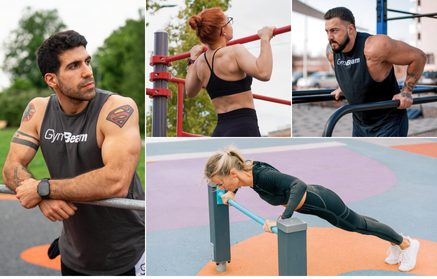
You’ve probably experienced this too. You walk past an outdoor gym and see those ripped guys effortlessly doing one-handed pull-ups as if it were the simplest thing in the world. You just sigh and think this is simply another universe. But what if I told you that they also started somewhere and that the path to such strength is more accessible than it first appears? That the foundation isn’t any secret, but honest training based on gradually mastering the best tool you have available – your own body. You don’t need any gym, and that’s where the magic of callisthenics lies.
What is Callisthenics?
Callisthenics is an effective training style that primarily uses your own body weight to build strength, conditioning, and an aesthetic physique. Forget about gym machines and heavy barbells. Your main tool is your body itself and natural movement patterns. The foundation of callisthenics consists of push-ups, pull-ups, or squats, which comprehensively engage multiple muscle groups simultaneously and lead to the development of functional strength that you’ll use in everyday life. [4]
The name itself perfectly captures the philosophy of this exercise style. It comes from the ancient Greek words kalos (beauty) and sthenos (strength). The goal is therefore not just amazing strength, but also an attractive physique that embodies physical fitness and elegance of movement. [5]
Callisthenics isn’t just about mindless exercising at a workout park. The real magic lies in progressive improvement and gradually mastering increasingly challenging exercises and their variations. Today, you might start with knee push-ups, but with regular training, you can work your way up to classic push-ups, dips on parallel bars, and one day perhaps even advanced skills like handstands or muscle-ups. It’s a journey of constantly discovering your body’s limits and overcoming them.

Main Benefits of Callisthenics
If you’re still hesitating whether bodyweight training is right for you, the following benefits will surely convince you. Callisthenics offers much more than just good-looking muscles.
1. You’ll Improve Functional Strength
Unlike isolated exercise on machines, callisthenics focuses on natural movement patterns such as pushing or pulling, thereby building functional strength. This strength then easily transfers to common daily activities like carrying groceries, lifting heavy objects, and also forms an excellent foundation for any other sport. [1, 3]
2. You’ll Strengthen Your Physique and Build Muscle
Most callisthenic exercises, such as pull-ups or squats, engage several muscle groups simultaneously. This leads to more efficient training and even muscle development as well as physique strengthening. Instead of isolating one muscle group, you build overall strength and a symmetrical physique, which is key for comprehensive body development. [1, 3]
More benefits and examples of compound exercises can be found in the article The 10 Best Compound Exercises for Muscle Growth, Strength and Fat Loss.

3. You Can Exercise Outdoors, at Home, and while Travelling
One of the biggest advantages of callisthenics is its minimal space requirements. It’s an effective way to strength train at home without weights. This bodyweight exercise can be done at home in the living room or bedroom, and in summer, you can move to the garden or outdoor workout park, fully immersing yourself in the culture called street workout. At the beginning, you don’t need any equipment. Your body is your gym, which is open 24/7.
If you want maximum results from home training, you can’t do without a systematic approach to exercise. The article How to Create an Effective Home Workout Plan? will help you with a home training plan.
4. You’ll Support Joint Mobility and Body Coordination
Bodyweight exercises performed through a full range of motion are an excellent tool for improving mobility and overall joint function. With each pull-up or deep squat, you also strengthen small stabilising muscles that are crucial for overall balance. This constant emphasis on core strengthening and maintaining balance significantly improves your coordination and body awareness in space (proprioception). In practice, this means more confident movement in everyday life, so you won’t easily lose balance and significantly reduce the risk of falling. [2]
If your goal is to work on your stability, exercises from the article 10 Best Balance Half-Ball Exercises to Improve Balance, Strengthen Your Back and Entire Body will also help you.
5. It’s Suitable for Beginners and Advanced Practitioners
One of the greatest advantages of callisthenics is its scalability. Every basic exercise has its simpler variations, so even complete beginners can find something suitable. They can start with knee push-ups or assisted pull-ups, gradually build strength and work their way up to more advanced versions of the exercise.
But experienced athletes who have been training for some time will also find their place. For them, callisthenics presents a challenge in the form of new skills like single-leg squats or handstands, which require enormous strength and body control. Moreover, it can serve as an excellent variation to classic strength training in the gym and bring new stimuli for muscle growth.

How to Start with Callisthenics?
Everyone started once, and even that guy from the workout playground who effortlessly does one muscle-up after another had to work his way to such strength with small steps.
- Start with the basics: First, masterfully handle basic callisthenics exercises such as squats, push-ups, low bar pull-ups, or plank. This will build you a solid strength foundation, and then you can move on to more challenging variations.
- Don’t be afraid to use equipment: Equipment is a smart tool for faster progress. Especially resistance bands (expanders) are ideal helpers for learning pull-ups or dips, as they take off part of your weight and allow you to focus on the movement.
- Focus on technique, not repetition count: Quality is more important than quantity. One repetition performed correctly and through the full range of motion is always better than ten half-reps.
You might be interested in these products:
How to Increase Exercise Difficulty in Callisthenics?
If beginner callisthenics is too easy for you and you’ve already mastered all basic exercise variations, you can move on to more challenging variants. This way, you’ll constantly move forward and give your muscles new stimulus. Use the principle of progressive overload in one of the following ways:
- Increase the number of repetitions or sets: If you can handle 3 sets of 8 repetitions, next time try adding repetitions or an entire extra set. This simply increases the total training volume.
- Choose a more challenging exercise variation: Once you can easily handle a certain number of basic exercise variations, for example, 12, move on to a harder version or add load in the form of a vest, ankle weights, or a belt with weights. Exercises on rings or a suspension training system that you can hang on a pull-up bar are also challenging.
- Slow down the eccentric (lowering) phase: Deliberately slow down the phase of movement when the muscle lengthens (e.g., lowering to the ground during a pull-up). This increases time under tension, which is an excellent stimulus for muscle growth.

Callisthenics for Beginners and Advanced: 15 Effective Full-Body Exercises
Below you’ll find a collection of the best callisthenic exercises from which you can create a full-body workout. Whether you’re starting with exercise or looking for new challenges to spice up your strength training, you’ll definitely find something in this list. For each exercise, you’ll find both the basic variation and tips for simplifying or making it more difficult. This way, everyone will truly find something suitable. The exercises are designed so you can comprehensively train your entire body from arms, back and abs to glutes and legs.
Before you start the actual training, never forget a thorough warm-up. A few minutes of jumping rope or jumping jacks to warm up the muscles is enough. Then pay attention to dynamic stretching and mobilising all major joints with circular movements. This prepares your body for the load and reduces the risk of injury.
For starters, you don’t need to choose all exercises. It’s enough to choose 1-2 exercises for each body part, approximately 4-6 exercises per workout. Proper technique is always key, so focus on slow and controlled execution. For each exercise, try to stay in the range of 6-12 repetitions in 2-4 working sets. Don’t forget about breaks between exercises and sets, which should last about 30-90 seconds.
1. Push-ups
- Starting position: Kneel on the ground and move into a plank position with extended arms. Place your palms with spread fingers under your shoulders at a distance slightly wider than their span. Your shoulders should point down away from your ears, pull shoulder blades should be pulled together, and your elbows should form approximately 45 degrees with your body. Activate your core and try to keep your body in a straight line. Don’t arch your back, especially in the lower back area.
- Execution: After inhaling, perform a push-up, and in the bottom position, try to lightly touch the ground with your chest. Then exhale and push with your entire palm into the surface, return to the starting position and perform another repetition.
- Common mistakes: Small range of motion, arching the back (especially in the lower back area), unstable shoulder blades, and elbows pointing away from the body.

Alternative variations:
1. Knee Push-ups
Perform this easier variation by keeping your knees on the surface and continuing to exercise the same way as with basic push-ups.

2. Weighted Push-ups
You can increase difficulty by adding load in the form of a weight vest or a plate placed on your back.
2. Pike Push-ups
- Starting position: Kneel on the ground and move into a plank position with extended arms. Lift your pelvis and walk your hands closer to your feet, getting into a pike position. Keep your legs slightly bent at the knees, heels lifted off the surface. Support points are the tips of your feet and palms with fingers. Activate your core and try to keep your back in natural curvature.
- Execution: After inhaling, start bending your elbows and slowly lower your head toward the ground (between your palms or slightly in front of them) in a controlled manner. Try to get your head as close to the surface as possible, then exhale, straighten your elbows and return to the starting position. The closer your palms are to your feet, the more you increase the exercise difficulty.
- Common mistakes: Small range of motion, arching the back, and uncontrolled movement.

Alternative variations:
1. Box Pike Push-up
You can increase difficulty by having your feet in an elevated position, placed, for example, on a box, bench, or low wall. Support yourself with your hands on the ground, place one and then the other foot on the box. Lift your pelvis and move your hands closer to the box. The closer you get, the more you increase the exercise difficulty. Then, exercise the same way as with the basic variation.
3. Parallel Bar Dips
- Starting position: Make a support position on parallel bars, arms extended at the elbows. You can slightly bend your legs, elbows point slightly outward. The back remains in natural curvature.
- Execution: Inhale, bend your elbows and lower yourself down in a controlled manner until your shoulders are approximately in the same plane as your elbows or slightly lower. Then exhale and, using activation of chest and arm muscles, return to the starting position. Immediately continue with another repetition.
- Common mistakes: Pressing elbows to the body, uncontrolled movement, arching the back, small range of motion.

Alternative variations:
1. Dips with Resistance Band
If parallel bar dips are too challenging, you can make the exercise easier using a long resistance band. Attach one end of the band to the parallel bar and tuck the other end under your arm. Then make a support position on the parallel bars and kneel on the stretched band with one or both legs. Using chest muscle contraction, start doing dips. The greater the resistance that the resistance band has, the easier the exercise will be.
2. Weighted Dips
If bodyweight dips are too easy for you, add load. Use a belt on which you can hang a plate or even a kettlebell.
3. Ring Dips
If you don’t have parallel bars available or want to spice up your training, you can try dips on rings. On them, the exercise is somewhat more challenging, mainly from a stability point of view. You can make it easier again using a resistance band that you attach to them.
4. Tricep Dips on Low Bar
- Starting position: Sit on the ground or kneel with your back to a low bar, parallel bars, barbell suspended on a rack, bench, or box. Place your hands behind you on the bar, barbell, or parallel bars and bend them at the elbows to approximately 90 degrees. Use the bar as support and lift your pelvis off the ground. Legs are extended or slightly bent at the knees, and heels remain supported on the surface. Pull your shoulders down away from your ears and engage your core.
- Execution: Exhale and, using tricep contraction, straighten your arms at the elbows. Then inhale and return to the starting position in a controlled manner and repeat the exercise. Focus on the movement coming only from your arms and elbows pointing backwards, not to the sides.
- Common mistakes: Pulling shoulders toward ears, arching the back, uncontrolled movement, and insufficient range of motion.

Alternative variations:
1. Weighted Tricep Dips
If you want to make this exercise more difficult, bend your knees and place weight on your thighs. You can use a plate, kettlebell, or dumbbell and exercise the same way as without weight.
5. Bar Tricep Extensions
- Starting position: Stand facing a low bar or set a barbell in a power rack at about hip height. Grip it with an overhand grip at shoulder width or narrower. Stand with feet hip-width apart and take a step back to get into a support position with extended arms. The farther your feet are from the bar, the more you increase the exercise difficulty. Activate your core, pull your shoulder blades together, and push your shoulders down away from your ears.
- Execution: As you inhale, start bending your elbows in a controlled manner and lower your body forward until your elbows form approximately 90 degrees. Keep your elbows as close together as possible and maintain maximum body tension throughout the downward movement. As you exhale, push your palms into the axis, activate your triceps, and return to the starting position with straight arms. Then proceed with the next repetition.
- Common mistakes: Arching the back, movement originating from the shoulders instead of the elbows, elbows pointing too far out to the sides, shoulders hunching towards the ears, and insufficient range of motion.

6. Pull-Ups
- Starting position: Hang from the pull-up bar with an overhand grip (palms facing away from you), grip wider than shoulder width. You can let your legs hang or bend them at the knees and cross them. Activate your core.
- Execution: Pull your shoulder blades down and, as you exhale, activate your back and arm muscles and start pulling yourself up. Direct your chest towards the bar. Once your head is slightly above the bar level, slowly lower yourself down while inhaling. Return to the starting position without releasing your shoulder blades and repeat the pull-up.
- Common mistakes: Swinging, insufficient range of motion, rounding the back in the top position, releasing the shoulder blades, and using leg momentum for assistance.

Alternative variations:
1. Assisted Pull-Ups with Resistance Band
Attach the resistance band to the top of the pull-up bar structure. Hook one or both feet into it and then perform the exercise as in the basic version.

2. Weighted Pull-Ups
You can make the exercise more challenging using a weight vest or weights placed between your knees or attached to a belt. You can attach a weight plate or a kettlebell to it.
Want to do a complete pull-up bar workout? Find more exercises in the article Learn How to Exercise on a Pull-Up Bar with These 10 Exercises for Beginners and Advanced Athletes.
7. Chin-Ups
- Starting position: Hang from the pull-up bar with an underhand grip (palms facing you), grip approximately shoulder-width apart. You can let your legs hang or bend them at the knees and cross them. Activate your core.
- Execution: Pull your shoulder blades down and, as you exhale, activate your back and arm muscles and start pulling yourself up. Direct your chest towards the bar. Once your head is slightly above the bar level, slowly lower yourself down while inhaling. Return to the starting position without releasing your shoulder blades and repeat the chin-up.
- Common mistakes: Swinging, insufficient range of motion, rounding the back in the top position, releasing the shoulder blades, and using leg momentum for assistance.

Alternative variations:
1. Assisted Chin-Ups with Resistance Band
Attach the resistance band to the top of the pull-up bar structure. Hook one or both feet into it and then perform the exercise as in the basic version.

2. Weighted Chin-Ups
You can make the exercise more challenging using a weighted vest or a small dumbbell placed between your knees or ankles, or attach a kettlebell or weight plate to your belt.
You can perform many exercises on the pull-up bar with a resistance band. Find the best ones in the article 11 Resistance Band Exercises on the Pull-Up Bar for Strong Arms, Back and Core.
8. Inverted Rows (Bodyweight Rows)
- Starting position: Stand at a low pull-up bar or set a barbell in a power rack at about waist height. Grab it with an overhand grip with straight arms and position yourself under the bar so it’s approximately above your stomach. The deeper you are under the bar, the more challenging the exercise becomes. Keep your legs straight and rest on your heels. Raise your hips so your body forms a straight line from head to heels.
- Execution: With an exhale, smoothly pull your chest to the bar. The movement primarily comes from your back muscles and arms, focus on pulling your shoulder blades together. Hold for a second at the top position, then slowly lower yourself back to the starting position with fully extended arms while inhaling. Keep your body tight throughout the movement.
- Common mistakes: Insufficient range of motion, dropped hips and arching the back, jerky movement, shoulders hunching towards the ears.

9. Biceps Bar Curls
- Starting position: Stand at a low pull-up bar or set a barbell in a power rack at about waist height. Grab it with an underhand grip with straight arms and position yourself under the bar so it’s approximately above your stomach. The deeper you are under the bar, the more challenging the exercise becomes. Keep your legs straight and rest on your heels. Raise your hips so your body forms a straight line from head to heels.
- Execution: With an exhale, smoothly pull your chest to the bar. The movement primarily comes from your back muscles and biceps, focus on pulling your shoulder blades together. Hold for a second at the top position, then slowly lower yourself back to the starting position with fully extended arms while inhaling. Keep your body tight throughout the movement.
- Common mistakes: Insufficient range of motion, dropped hips and arching the back, jerky movement, shoulders hunching towards the ears.

10. Hollow Hold
- Starting position: Lie on your back with arms extended overhead. Keep your legs straight and lift them approximately 20-30 centimetres off the ground.
- Execution: Breathe normally and try to maintain this position for at least 10 seconds. The exercise becomes easier if you bend your legs more and lift them higher. It becomes more challenging if you keep your legs straight and lower. After holding the position, rest your limbs, take a short break, and proceed with the next repetition.
- Common mistakes: Insufficient hold duration, lifting the lower back off the mat.

Alternative variations:
1. Weighted Hollow Hold
You can make this exercise more challenging with a light dumbbell or weight plate held with both hands. Wrist or ankle weights are also suitable.
2. Hollow Rock
Instead of holding the position, you can gently rock in this position. The goal is to maintain a stable position, especially in your core, while rocking. Your upper and lower limbs only need to move up and down by a few centimetres.
Find more effective bodyweight ab exercises in the article 21 Best Bodyweight Ab Exercises.
11. Superman Hold
- Starting position: Lie on your stomach with legs extended. Extend your arms overhead, and you can join them. Activate your core.
- Execution: Breathe normally and try to maintain this position for at least 20 seconds.
- Common mistakes: Insufficient hold duration.

Alternative variations:
1. Superman
In the Superman position, alternately raise and lower your upper and lower limbs.
2. Weighted Superman
You can increase the load by adding wrist or ankle weights or holding small dumbbells in your hands.
For strengthening your back, especially in the lumbar area, you can also try exercises from the article 12 Best Exercises for Your Lower Back.
12. Hanging Leg Raises
- Starting position: Hang from the pull-up bar, grip it with an overhand grip wider than shoulder width. Pull your shoulder blades down, legs are straight.
- Execution: With an exhale, using your ab muscles, raise your straight legs ideally until they form a right angle with your body. Hold this position for a second, then slowly lower your legs while inhaling and repeat the movement.
- Common mistakes: Excessive swinging, uncontrolled movement, releasing shoulder blades, and insufficient range of motion.

Alternative variations:
1. Hanging Knee Raises
The starting position is the same as in the basic version, but instead of straight legs, you pull your knees towards your chest.

2. Toes to Bar
The most challenging variation is bringing your feet (insteps) all the way to the bar. From the starting position, smoothly lift your straight legs until they touch the bar. They can lightly touch it, then slowly lower your legs and proceed with the next repetition.
13. Single Leg Glute Bridge
- Starting position: Lie on your back and place your hands by your sides, palms on the ground. Bend one knee and pull your heel towards your glutes. Keep the other leg straight and resting on the mat.
- Execution: By activating your glutes and hamstrings, lift your pelvis and raise your straight leg. The movement comes only from the pelvis. Focus on contracting your glutes in the top position. Hold for one to two seconds, then slowly lower your pelvis. After completing one set, switch legs and perform the same exercise on the other side.
- Common mistakes: Insufficient range of motion, inadequate glute activation, excessive back arching, and uncontrolled movement.

Alternative variations:
1. Basic Glute Bridge
Bend both knees, pull your feet towards your heels, and then start lifting your pelvis. You can increase the load with a weight plate, powerbag or dumbbell placed on your pelvis. Alternatively, place your feet in an elevated position, such as on a low wall, box, stepper or balance pad.
To learn about all the benefits and variations of the glute bridge exercise, check out the article Glute Bridge: Top 10 Variations for a Firmer and Rounder Butt.
14. Assisted Pistol Squat
- Starting position: Stand facing a pull-up bar structure or other stable support. Shift your weight to one leg, slightly bend your knee, and extend the other leg in front of you, keeping it straight in the air. Lightly hold onto the support for balance. Keep your back straight and core engaged.
- Execution: As you inhale, smoothly lower into a squat on your standing leg, as if trying to sit on your heel. Keep your extended leg straight and don’t let it touch the ground. Lower as far as your mobility and strength allow. The movement should be controlled throughout and primarily comes from your lower limbs. Use your hands only for light support. With an exhale, using your thigh and glute muscles, smoothly and controllably return to the starting position. After completing the set, switch legs.
- Common mistakes: Excessive pulling with hands, rounding the back, insufficient range of motion, standing leg knee turning inward, and lifting the heel of the standing leg off the ground.

Alternative variations:
Pistol Squat
If you feel confident, you can perform pistol squats without assistance. Place your hands on your hips or hold the toe of your extended leg with one hand. If you have mobility issues, you can place your heel on a low-weight plate or squat wedge.
Learn everything about proper basic squat technique and other variations in the article Squats: Benefits, Proper Execution and the Most Effective Variations for Both Home and the Gym.
15. Bulgarian Split Squat on Low Bar
- Starting position: Stand in front of a low pull-up bar, barbell racked in a power cage, low box, or wall and take a step forward. Place the top of one foot on the bar or barbell behind you. Shift your weight to your front leg and activate your core. Place your hands on your hips or let them hang by your sides.
- Execution: As you inhale, bend your front knee and perform a stationary lunge. In the bottom position, your back knee can lightly touch the ground. Keep your torso upright throughout. Then exhale and straighten up, immediately proceeding with the next repetition. After completing one set, switch legs and perform the same exercise on the other side.
- Common mistakes: Insufficient range of motion, poor movement coordination, standing leg knee turning inward, and excessive forward lean of the torso.

Alternative variations:
1. Jumping Bulgarian Split Squat
In the top phase of the movement, when returning to the starting position, you can add a jump on your front leg. Just jump a few centimetres off the ground.
2. Weighted Bulgarian Split Squat
You can increase difficulty by adding weight. You can wear a weight vest, place a powerbag on your shoulders, or hold a dumbbell or kettlebell. You can also perform Bulgarian split squats using a suspension training system by suspending your back leg in it.
Find more variations of Bulgarian split squats with bodyweight and equipment in the article Bulgarian Split Squat: 6 Most Effective Variations for Toned Legs and Round Glutes.
Where to Next?
- Find more bodyweight exercises in the article Get in Shape with These 12 Bodyweight Exercises.
- Find inspiration for a workout you can do at home in the article Tabata: An Effective Full-Body Workout You Can Do in Just 12 Minutes or HIIT: A 20-Minute Workout for Fat Burning and Improved Fitness.
- If you want to try a complete workout with a weight vest, get inspired by exercises from the article Top 10 Full-Body Weighted Vest Exercises.
What Should You Remember?
As you could see today, callisthenics is much more than just a few push-ups and squats at a workout park. It’s a comprehensive training style that allows you to build a strong and functional body practically anywhere. Remember that the key to success is patience, emphasis on proper technique, and regular progression in difficulty.
Create a full-body workout from our exercises that you’ll enjoy. However, remember that training is just one piece of the puzzle – for best results, complement it with quality nutrition and adequate rest.
What’s your favourite bodyweight exercise? Share it in the comments!
Was this article helpful? If so, share it with your friends and inspire them with a workout they can do anywhere.
[1] Effect of 6-Weeks Calisthenic Training on Physical Fitness: A Case Study Report. – https://doi.org/10.53797/fphj.v3i1.2.2024
[2] Mear, E., Gladwell, V. F., & Pethick, J. The Effect of Breaking Up Sedentary Time with Calisthenics on Neuromuscular Function: A Preliminary Study. – https://doi.org/10.3390/ijerph192114597
[3] The effects of a calisthenics training intervention on posture, strength and body composition. – https://doi.org/10.3233/IES-170001
[4] Restivo, J. Calisthenics: An effective, low-frills way to stay fit. – https://www.health.harvard.edu/exercise-and-fitness/calisthenics-an-effective-low-frills-way-to-stay-fit
[5] EBSCO Research Starters. Calisthenics. – https://www.ebsco.com/research-starters/health-and-medicine/calisthenics
Add a comment