

Table of Contents
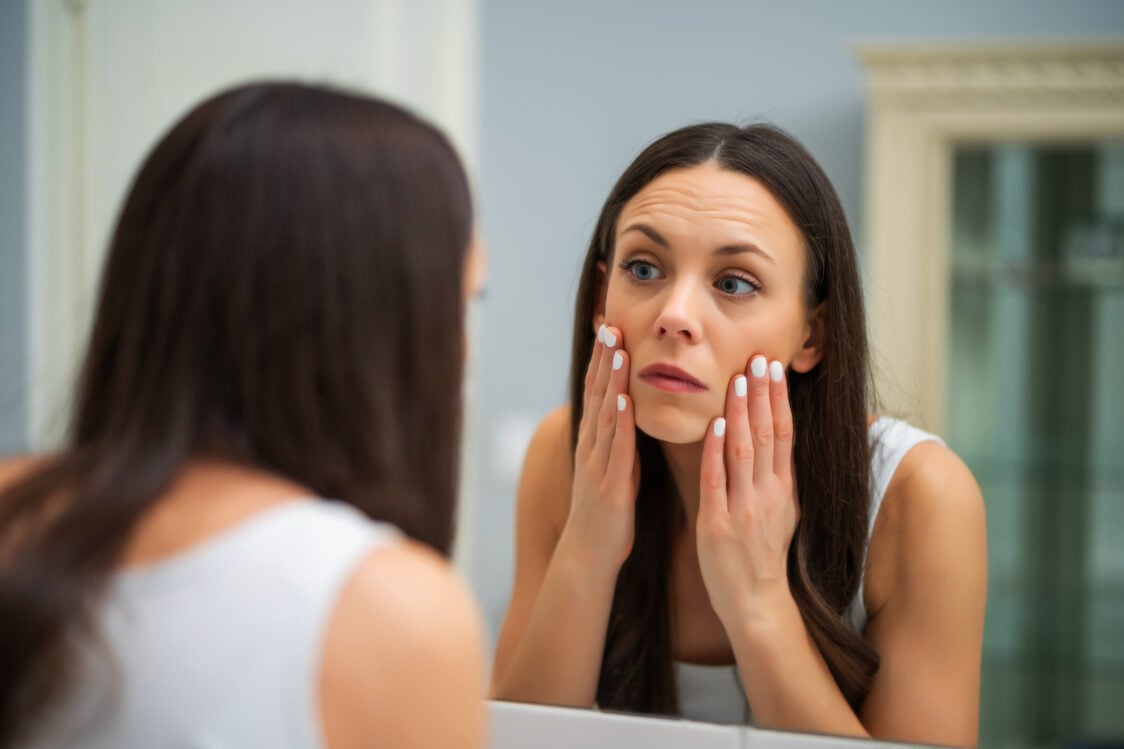
Do you wake up in the morning feeling like you have a swollen, tight face and look tired? You are not alone. This phenomenon has recently become a viral topic on social media under the name Cortisol Face, sparking numerous discussions about what is actually happening in the body.
Perhaps you have also noticed that the swelling tends to be more pronounced, especially after waking up and changes during the day. Is the stress hormone really behind it, or is it an internet myth? Today, we will look at what can cause morning water retention in the facial area and how to get rid of it.
What exactly is Cortisol Face?
Cortisol Face is a colloquial term for a round, swollen face that is supposedly caused by elevated levels of cortisol (the stress hormone). However, it is not an official medical diagnosis. This term originated on social media, particularly on TikTok, where it became a viral trend.
Influencers claim that chronic stress leads to permanently elevated cortisol, which causes the typical “puffy” face, most noticeable in the morning. The question, however, is: is it a real or a made-up problem? The truth is actually a bit more complex.
The idea is based on two real phenomena. Elevated cortisol can indeed lead to water accumulation in the body. At the same time, there is a clinical condition called moon face, which appears in Cushing’s syndrome—a disease associated with an excess of cortisol.
So, where do real physiological processes end and where does the internet muddle begin? Let’s set the record straight.
What is the difference between Cortisol Face and Moon Face?
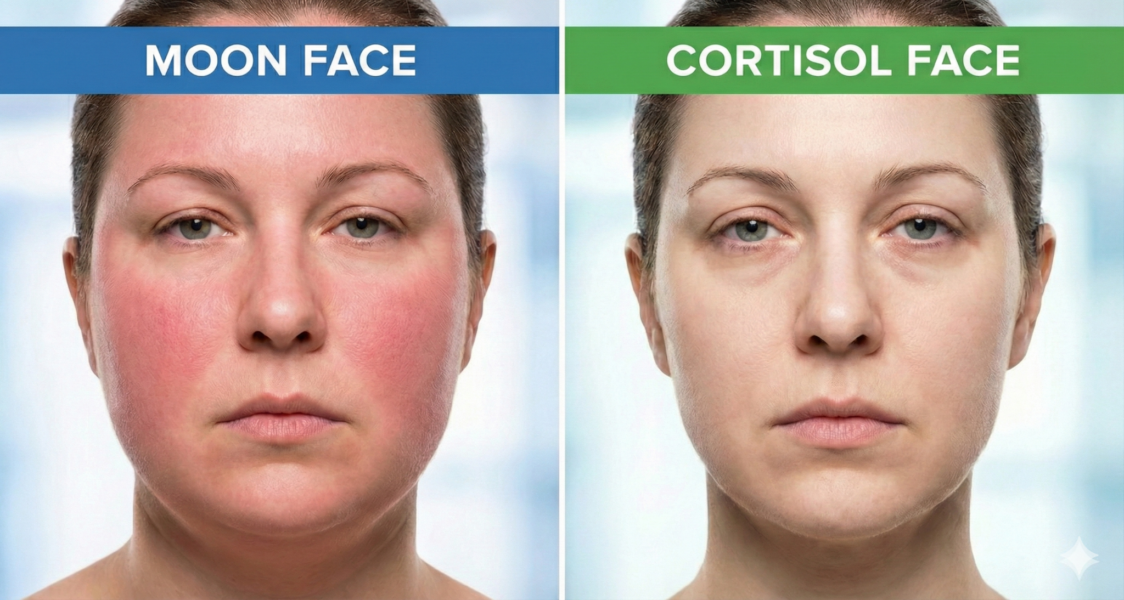
Although these terms are often used interchangeably, Cortisol Face and Moon Face are not the same thing. The difference lies in what causes them, what constitutes the swelling itself, and how serious the condition is.
1. Moon Face
Moon Face is a real clinical symptom known primarily in connection with Cushing’s syndrome—a disease in which there are elevated cortisol levels. This occurs, for example, as a result of an adrenal tumour or long-term use of corticosteroids. People with this syndrome typically have a round face caused by excessive fat deposition, which is firmer to the touch. Other symptoms may also appear, such as a buffalo hump (a fatty hump in the neck area), red cheeks, thin skin, or purple stretch marks. [11]
2. Cortisol Face
Cortisol Face is an unofficial term for temporary, soft facial swelling caused by water retention. The swelling usually changes during the day—it tends to be more pronounced in the morning and gradually subsides. In women, it may also fluctuate during the menstrual cycle. It is mainly related to diet, exercise, sleep, and overall lifestyle. [10]
The key difference, therefore, is that Moon Face is a symptom of a disease, while Cortisol Face is described more as a temporary state related to fluid regulation in the body.
Comparison of Moon Face and Cortisol Face
| Moon Face | Cortisol Face | |
|---|---|---|
| Cause | Tumour, long-term use of corticosteroids | Stress, salty food, alcohol, lack of sleep |
| Duration | Constant, gradually worsens | Fluctuates during the day (worse in the morning), and in women, also during the menstrual cycle |
| Character | Fat deposition (hard facial swelling) | Water retention (soft facial swelling) |
| Other symptoms | Buffalo hump, thin skin, stretch marks | Fatigue, irritability, brain fog |
So if it is not Cushing’s syndrome or permanent fat deposition, the question remains—what is happening in the body when you wake up in the morning with soft facial swelling?
Does stress cause swelling?
Short-term stress does not, but long-term (chronic) stress can. The problem arises when stress lasts too long. In such a case, the body remains in standby mode and releases more cortisol than is healthy.
Among other things, cortisol affects how the body manages sodium and water. If its level is high for a long time, it can promote the accumulation of sodium and, consequently, water.
The result can be mild, soft swelling and a feeling of water retention. According to scientists, the face is often more swollen in the morning because fluids naturally shift to that area during the night. During the day, the swelling is reduced by movement and normal activity. [6]

What causes facial swelling?
As we have explained, stress and elevated cortisol levels can affect fluid retention. However, they are not the only reason why you might wake up with a swollen face in the morning. Several factors usually contribute to this condition, collectively influencing how your body manages water during the night.
1. Chronic Stress and Lack of Sleep
When you are under pressure for a long time, the body operates in stress mode, which means more frequent elevated cortisol. If this state lasts too long, it can lead to excess fluids in the tissues. [7]
Lack of sleep acts similarly. Short or interrupted sleep disrupts hormonal balance, including cortisol regulation. The result can be a feeling of swelling and a heavier face immediately after waking up. [5]

2. Inappropriate Diet and Hydration
What you eat and drink during the day has a significant impact on how much water accumulates in your body.
What nutritional factors promote water retention?
High salt intake
Sodium, which is one of the two minerals in salt, is key to managing the amount of fluid in the body. If you consume more than is healthy, the kidneys respond by increasing the volume of water in the body to maintain electrolyte balance.
Lack of potassium
Potassium helps balance the effects of sodium, and both minerals work closely together. It helps pump water out of cells, while sodium pulls it in. If they are out of balance, it can lead to water retention.
Insufficient hydration
If you drink too little, the body may bind more water as a protective mechanism. Insufficient fluid intake activates hormonal systems that try to maintain a stable blood volume and internal environment.
For example, levels of vasopressin (antidiuretic hormone), which promotes water reabsorption in the kidneys, may increase. The result can be a feeling of puffiness, even though the cause is actually low fluid intake. [8]
You might be interested in these products:
3. Excessive Alcohol Consumption
Alcohol has a rather treacherous effect on the body. Initially, it acts as a diuretic, which is why you visit the restroom more often after drinking. Subsequently, however, the organism tries to compensate for this loss, leading to a so-called rebound effect. At that point, the body begins to secrete the hormone vasopressin (ADH), which promotes sodium and water retention to restore balance. After the dehydration phase, fluids conversely accumulate in the body. [3]
Furthermore, alcohol:
- worsens sleep quality
- can increase stress hormone levels
- promotes blood vessel dilation, which can accentuate the feeling of swelling
The result of this combination may be that you wake up in the morning with a puffy face. This is a temporary effect, but it can become more pronounced with regular consumption.
4. Overtraining
Although exercise is beneficial, it is still a form of stress for you. If you exercise too much and do not allow yourself sufficient recovery, it can lead to long-term elevated cortisol levels.
Intensive workouts without enough rest can also promote inflammatory processes and fluid retention. Your body may be signalling very clearly that you need to slow down.

How to get rid of a swollen face?
1. Follow a morning routine
If you regularly wake up with a swollen face, the first few minutes after waking can significantly improve how you look for the rest of the day. It is worth incorporating rituals into your daily routine that can help you feel better.
- Drink a glass of water to support hydration right from the morning.
- Use a Gua Sha (a massage tool in the form of a smooth stone) or a Face Roller. Since the lymphatic system does not have its own pump (like the heart for blood circulation), it needs muscle movement or massage to drain excess fluid from the face.
- Practice yoga or go for a short walk.
2. Reduce salt intake
If you have problems with swelling, look at the amount of salt in your diet. If you have too much sodium in your blood, the body tries to dilute it, which is why it retains fluids. If you have these problems and consume more than 5 g of salt daily, you should reduce your daily intake.
Limit salting itself, but pay particular attention to hidden salt in processed foods. Try tracking food labels for a few days to find out where too much of it is hidden.
Which foods contain a lot of salt?
| Food | Salt content |
|---|---|
| Ultra-processed foods | ↑↑* |
| Salty cheeses | ↑↑ |
| Baked goods | ↑ |
| Canned foods | ↑ |
| Processed meats | ↑↑ |
| Instant meals and convenience foods | ↑↑ |
| Salty and sweet snacks (bars, crackers, biscuits, chips, etc.) | ↑↑ |
*↑ = high content, ↑↑ = very high content
3. Increase potassium intake
Potassium plays an important role in regulating fluids in the body and supports proper kidney function. If you consume too little, the water balance in the organism can easily be disrupted. Therefore, it is worth consciously including foods rich in potassium.
Which foods are good sources of potassium?
| Food | Potassium content / 100g |
|---|---|
| Red kidney beans (raw) | 1,490 mg |
| Lentils (raw) | 949 mg |
| Dried apricots | 1,160 mg |
| Potatoes (raw) | 446 mg |
| Oranges | 166 mg |
| Avocado | 576 mg |
| Spinach | 558 mg |
[12]
You can read more about potassium, its sources, and effects in the article Potassium: Why Is It Important for Health and Performance and How Does Deficiency Manifest?

4. Maintain hydration
It may sound paradoxical, but if you drink too little, the body may conversely retain water. When it is not certain that there will be enough fluid, it tries to conserve it. A sufficient hydration regimen during the day thus supports proper kidney function and the natural excretion of excess fluids.
- drink continuously throughout the day
- choose mainly plain water
- limit sugary drinks and alcohol
5. Get enough sleep and follow sleep hygiene
Sleep is a fundamental part of recovery, and if you sleep too little or poorly, the body may remain in stress mode. Aim for 7–9 hours of sleep per day and ideally establish a regular sleep schedule. It is best to go to bed and wake up at approximately the same time and follow other beneficial rules of sleep hygiene.
How to get quality sleep?
- limit blue light at least an hour before bed
- avoid heavy meals and alcohol in the evening
- ventilate before sleeping and keep a cooler temperature in the bedroom
- sleep in as much darkness as possible
- fall asleep in silence—use earplugs if necessary
- try dietary supplements to support sleep

6. Use supplements
Once you have your diet, exercise, and sleep under control, you can further improve your routine with dietary supplements. Adaptogens, which help the body manage stress, can help, as can electrolytes to support electrolyte balance.
1. Ashwagandha
Ashwagandha is among the best-researched adaptogens. According to some studies, it helps reduce elevated cortisol levels by up to 23%. Thanks to this, it helps limit stress-induced water retention. [4]
2. Rhodiola Rosea
Rhodiola is known for helping to reduce fatigue and control the body’s stress responses throughout the day. It can thus help keep the organism’s hormonal response more balanced, which may manifest as a lower tendency for morning swelling. [2]
3. L-theanine
L-theanine is an amino acid naturally occurring in green tea. Studies show that it can help dampen the stress response without causing drowsiness and can mitigate high levels of cortisol during stress. [9]
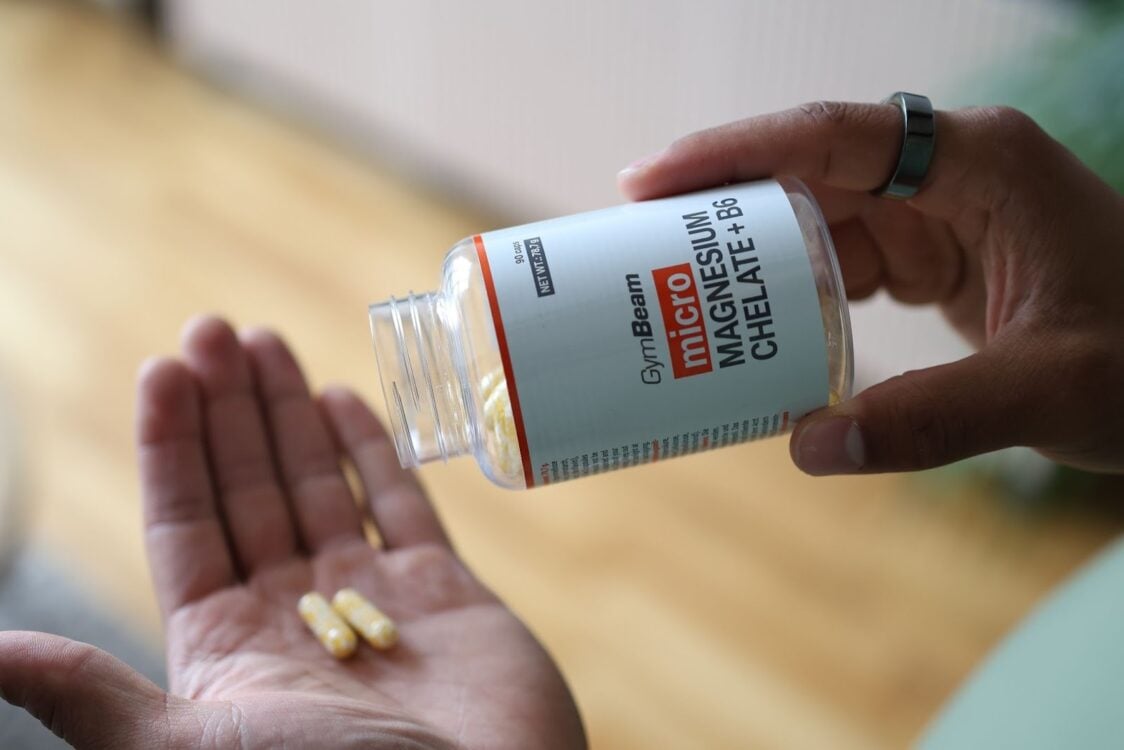
4. Magnesium
Magnesium is a mineral involved in more than 300 enzymatic processes in the body, including those that control blood pressure and the nervous system. At the same time, magnesium deficiency can lead to higher sensitivity to aldosterone—a hormone that promotes sodium retention. Sufficient magnesium intake can thus mitigate this accumulation.
5. Vitamin B6
Vitamin B6 is important for the production of neurotransmitters such as dopamine or GABA, and through themit also affects sodium and water retention. Its deficiency can disrupt sodium excretion and thus promote the development of swelling. [1]
When to see a doctor?
Morning facial swelling is harmless in most cases and related to lifestyle. However, if the swelling is long-term, significantly worsening, firm to the touch, or accompanied by other symptoms (e.g., rapid weight gain, high blood pressure, significant fatigue, skin changes, or swelling of the entire body), it is advisable to consult a doctor.
Also, seek a professional if you suspect a hormonal problem or are taking medications that may affect fluid retention. In such a case, it is better to be sure that it is not a medical condition that requires treatment.
Frequently Asked Questions (FAQ)
1. Can stress really cause me to have a swollen face?
Yes, stress can contribute to facial swelling. Long-term elevation of cortisol can affect sodium and water management, which may manifest as mild fluid retention. However, it is usually not the only cause; sleep, diet, or alcohol also play an important role.
2. How do I know if I have Cortisol Face or if it is Moon Face?
You can tell the difference mainly by the character and duration of the swelling. Cortisol Face tends to be soft, fluctuates during the day, and is often more pronounced in the morning. Moon Face is firmer, gradually worsens, and is usually associated with other symptoms that require medical examination.
3. Can Cortisol Face be eliminated without medication?
Yes, it can be eliminated without medication. If it is swelling related to lifestyle, improving sleep, adjusting diet, reducing stress, and regular exercise help. Medication is only necessary if the cause is a medical problem.
4. How quickly does facial swelling disappear when I reduce stress?
It depends on the cause, but you may notice changes within a few days to weeks. If you improve sleep, limit salt and alcohol, and support recovery, the body will recognise it relatively quickly.
5. Why is my face swollen mainly in the morning?
Because during the night, fluids naturally shift to the upper part of the body. When you lie down, water can accumulate more in the facial area. After moving around during the day, the swelling usually subsides.
6. Which dietary supplements reduce cortisol?
Among the best-known supplements that can help reduce cortisol are ashwagandha, rhodiola rosea, and L-theanine. Other adaptogens can also help. However, the foundation is always a healthy lifestyle.
7. Do sugary drinks and coffee promote water retention and facial swelling?
Coffee does not cause swelling. Sugary drinks can contribute to it through excessive intake of simple carbohydrates.
8. Can lack of sleep cause a swollen face?
Yes, it can contribute to it. Lack of sleep disrupts hormonal balance, including the regulation of stress hormones and fluids. If you sleep too little or poorly, the body may have a greater tendency to retain water.
9. How long does it take for the face to drain after alcohol or a salty dinner?
Usually 24 to 48 hours. If it is a one-time excess of alcohol or salt, the body adjusts relatively quickly after returning to a normal routine and sufficient hydration. With regular overeating or drinking, the swelling may be more long-term.
10. Is Cortisol Face a permanent condition, or can it be removed?
In most cases, it is not a permanent condition. If the cause is stress and lifestyle, the swelling can be significantly reduced or completely eliminated by adjusting habits. However, permanent swelling requires a medical examination.
What should you take from this?
Cortisol Face is not an official diagnosis, but a term for temporary facial swelling that is most often related to stress and lifestyle. The stress hormone cortisol may play a role, but it is usually a combination of lack of sleep, higher salt intake, alcohol, or overall overload of the organism. This is very good news, however, because you can influence this problem very easily. If you adjust your sleep, stress management, diet, and hydration, you can reduce morning facial swelling.
[1] EBRAHIMI, E. et al. Effects of Magnesium and Vitamin B6 on the Severity of Premenstrual Syndrome Symptoms. – https://pmc.ncbi.nlm.nih.gov/articles/PMC4161081/
[2] IVANOVA STOJCHEVA, E. - QUINTELA, J.C. The Effectiveness of Rhodiola rosea L. Preparations in Alleviating Various Aspects of Life-Stress Symptoms and Stress-Induced Conditions—Encouraging Clinical Evidence. – https://pmc.ncbi.nlm.nih.gov/articles/PMC9228580/
[3] KAWANO, Y. Physio-pathological effects of alcohol on the cardiovascular system: its role in hypertension and cardiovascular disease. – https://www.nature.com/articles/hr2009226
[4] LOPRESTI, A.L. et al. An investigation into the stress-relieving and pharmacological actions of an ashwagandha (Withania somnifera) extract. – https://pmc.ncbi.nlm.nih.gov/articles/PMC6750292/
[5] ROBILLARD, R. et al. Sleep Deprivation Increases Blood Pressure in Healthy Normotensive Elderly and Attenuates the Blood Pressure Response to Orthostatic Challenge. – https://pmc.ncbi.nlm.nih.gov/articles/PMC3041709/
[6] SEKIZUKA, H. Body fluid management as a treatment for obstructive sleep apnea: a new possibility for sodium-glucose cotransporter 2 inhibitors. – https://www.nature.com/articles/s41440-024-02063-1
[7] TSIGOS, C. - CHROUSOS, G.P. Hypothalamic-pituitary-adrenal axis, neuroendocrine factors and stress. – https://pubmed.ncbi.nlm.nih.gov/12377295/
[8] VERBALIS, J.G. Disorders of body water homeostasis. – https://pubmed.ncbi.nlm.nih.gov/14687585/
[9] WHITE, D.J. et al. Anti-Stress, Behavioural and Magnetoencephalography Effects of an l-Theanine-Based Nutrient Drink: A Randomised, Double-Blind, Placebo-Controlled, Crossover Trial. – https://pmc.ncbi.nlm.nih.gov/articles/PMC4728665/
[10] YADOLLAHI, A. et al. Relationship of Fluid Accumulation in the Neck to Sleep Structure in Men during Daytime Sleep. – https://pubmed.ncbi.nlm.nih.gov/27397662/
[11] Cushing’s Syndrome - NIDDK. – https://www.niddk.nih.gov/health-information/endocrine-diseases/cushings-syndrome
[12] Food Search | USDA FoodData Central. – https://fdc.nal.usda.gov/food-search?type=Foundation
Add a comment