
Table of Contents
You know that feeling. You have a tough presentation coming up, an exam at school, or you’re about to max out on a squat, and suddenly… a cramp. You have to run to the toilet. Or your stomach is so tight that you can’t get a bite to eat, even though you know you need energy. Those proverbial butterflies in your stomach are not just a poetic metaphor. It’s biological proof that there’s life down there.
For a long time, we thought that the brain was an invincible general who issued orders to the whole body from above. But the latest research shows that this is not entirely the case. Your brain has an equal partner – billions of bacteria in your gut. And if this crew is unhappy, it will start bombarding the general with alarm messages. The result? Anxiety, stress, and poor performance, whether at work or in the gym.
Welcome to the world of psychobiotics. Today, you will learn that probiotics are no longer just about healthy digestion or first aid after antibiotics. You will discover how specific strains of bacteria can reduce cortisol levels (the stress hormone), why a ‘leaky gut’ can sabotage your concentration, and how to mix the ultimate stack for mental resilience.
What are psychobiotics?
You probably know probiotics. You usually reach for them when you have digestive problems. Fine thing. But psychobiotics? That’s a level up.
Psychobiotics are special units among beneficial bacteria (specific strains) that, when you eat enough of them, demonstrably improve your mood, memory, or resistance to stress. To work to their full potential, they need their fuel, which is prebiotics. [1]
The difference is fundamental. If you buy ordinary Lactobacillus acidophilus, your digestion will thank you. But it probably won’t do anything for your anxiety or stress before the deadline for submitting an important project. Psychobiotics are specialists trained to communicate with the nervous system.
You might be interested in these products:
| Feature | Common probiotics | Psychobiotics |
|---|---|---|
| Main goal | Digestion, immunity, bloating | Mood, stress, anxiety, CNS regeneration |
| Mechanism | Gut colonisation, barrier | Neurotransmitter production, cortisol reduction |
| Example | Common yoghurt cultures | Bifidobacterium longum 1714 |
How does it work? (4 ways the gut controls the brain)
How can billions of microscopic inhabitants of your gut contribute to whether you’re depressed or want to break records in the gym? It works through the gut-brain axis, and it’s a truly fascinating connection.
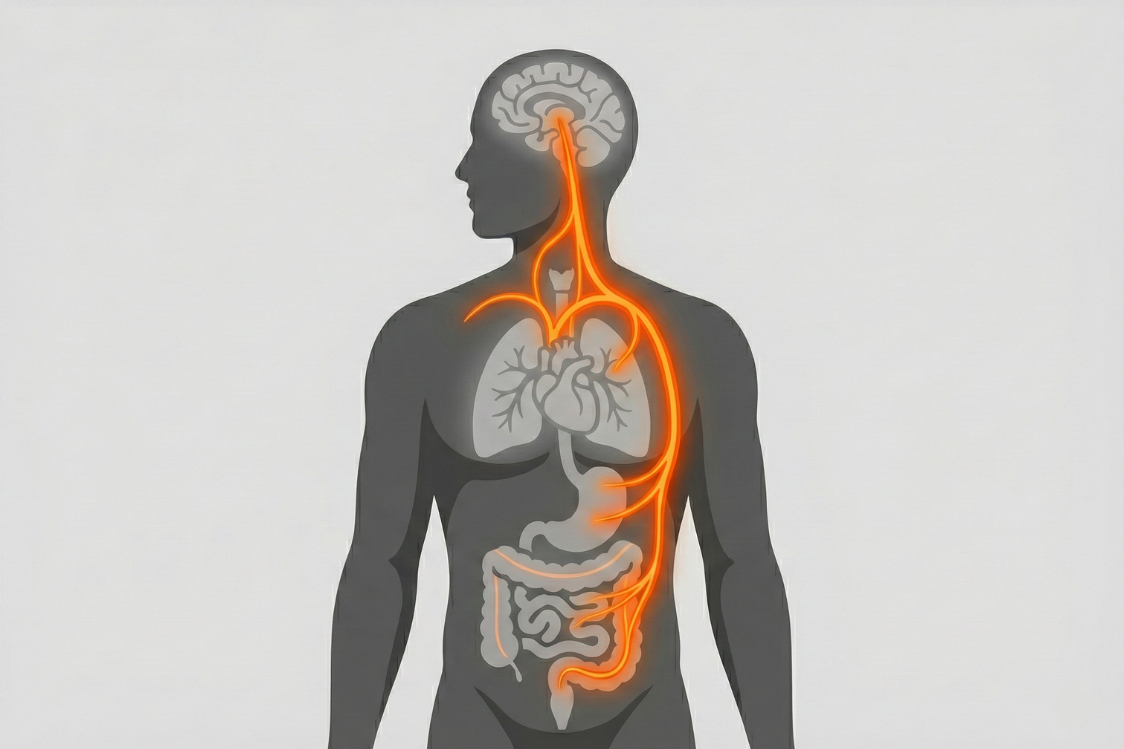
1. Hotline (Nervus Vagus): Imagine the vagus nerve as an optical cable between the gut and the brain. And what’s most interesting about it? 80–90% of the information runs upwards (from the gut to the brain). If you have a mess in your gut, the bacteria are heating up the wires and sending error messages to the brain. You then feel miserable without knowing why. [2]
2. Chemical factory of happiness: Up to 90% of serotonin (the happiness hormone) is found in the gut. Although this serotonin does not pass directly into the brain, bacteria communicate with the nervous system through it and also produce key building blocks (such as tryptophan), from which the brain makes happiness. Bacteria also produce GABA (a natural tranquillizer). [3]
3. Inflammation tamers: Depression and anxiety are often associated with hidden inflammation in the body. Psychobiotics act like firefighters, extinguishing this fire and literally clearing the head. [4]
4. Open gate (increased intestinal permeability): The intestinal wall is not an impenetrable armour, but rather a fine sieve. The cells in it are held together by so-called tight junctions. If you eat poorly, drink alcohol, or are under chronic stress, these junctions can loosen. The gut becomes leaky (Leaky Gut), and toxins and undigested food residues that don’t belong there can start to leak into the bloodstream. The immune system sounds the alarm, inflammation occurs, and it travels all the way to the brain. The result? Fatigue, lack of concentration, and brain fog.
- Biohacker tip: Cells of the intestinal lining use the amino acid L-glutamine as their main source of energy. Although it is not a miracle ‘glue’, enough of this fuel is essential for the intestinal barrier to regenerate naturally and fulfill its function. [5]
Why should you care (even if you’re not depressed)?
You might be saying, ‘Hey, I’m fine, I just want to lift heavy weights.’ That’s exactly why you should pay attention. Your head and muscles are more connected than you think.
- Regeneration is not just about muscles: Hard training is stress for the body. Psychobiotics help switch the nervous system from ‘fight or flight’ mode (stress) to ‘rest and digest’ mode (regeneration). Faster calming = faster growth.
- Cortisol – the silent thief of progress: Cortisol itself is not a villain – you need it during training to mobilise energy. The problem occurs when it remains permanently elevated (chronic stress). At that moment, it turns into a silent thief of your results, preventing regeneration and promoting fat storage. Specific strains of bacteria can help bring it back into balance.
- Motor learning (neuroplasticity): Want to learn the snatch technique or a new routine faster? A healthy microbiome supports brain plasticity – that is, the ability to learn new movements and adapt to stress.
Psychobiotic strains under the microscope: What science vs. practice says
This is where the rubber meets the road. Scientific studies often work with patented strains (the numbers after the name), which you won’t always find in a regular over-the-counter supplement. Does this mean that regular probiotics don’t work? Not at all. The biohacker knows that the key is diversity (diversity). The goal is to get strong representatives of a given family of bacteria (species) into the gut and support them with the right stack (combination of supplements).
1. Stress Manager: Bifidobacterium longum
According to scientific studies, the specific strain 1714 excels at reducing cortisol and managing acute stress.[6] In practice, however, look for products with a high representation of the species Bifidobacterium longum, which will help keep your intestinal environment resilient and prevent stress from decimating your gut microbiota. A great foundation is the comprehensive probiotic ProbioTen, which contains a wide spectrum of these strains.
However, if you want to deal with stress and high cortisol in a truly comprehensive way, don’t just bet on bacteria. Secure it with a combination for maximum well-being: add adaptogens such as ashwagandha (for example, the patented form KSM 66®), which directly targets stress, and magnesium for muscle tension relief.
2. Mood Expert: Lactobacillus rhamnosus
This type of bacteria is often referred to as the happy bacteria. Research on the HN001 strain has shown enormous potential in anxiety conditions, even in pregnant women.[7] In practice, therefore, look for products with a high representation of the species Lactobacillus rhamnosus.
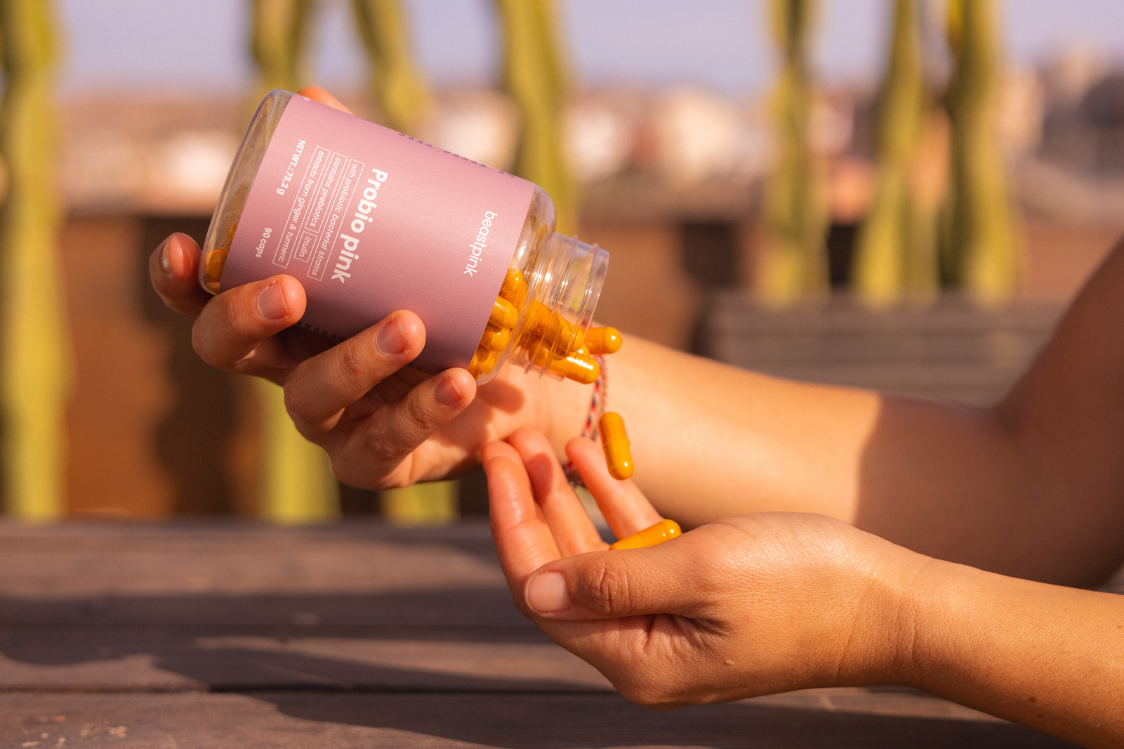
For women, ProbioPink is an ideal choice, cleverly combining probiotics with herbal extracts for hormonal balance. For an even better mood, add omega-3 fatty acids to your supplementation, which help reduce inflammation, and don’t forget vitamin D3.
3. Sleep Specialist: Lactobacillus helveticus
If your head is spinning at night and you can’t fall asleep, a restless gut-brain axis may be to blame. Clinical studies suggest that the R0052 strain, in combination with bifidobacteria, helps reduce mental tension and improve sleep quality.[8]
In practice, this means supporting the evening regeneration of the microbiome by taking probiotics with dinner. For the certainty of deep sleep, supplement them with a deep sleep stack in the form of ZMA (zinc and magnesium). While the bacteria will work on the long-term balance of your psyche, magnesium will contribute to the proper functioning of muscles and the nervous system.
How to start?
Imagine your microbiome as a carefully maintained garden. You can’t just blindly throw expensive seeds into it and hope that you’ll have a thriving ecosystem by morning. To make the good bacteria thrive and the bad ones not get a chance, you have to create the right ecosystem. It requires strategy, quality fertiliser, and regular care.
1. Step: Plant (fermented food)
The basis of a healthy microbiome is diversity. The more types of good bacteria you have in you, the more resilient your psyche is. Your best allies are fermented foods.
2. Step: Fertilise (prebiotics and SCFA)
You can swallow the most expensive probiotics in the world, but if you don’t feed them, they will starve and just pass through your body without benefit. Bacteria feed on fibre (prebiotics), which they ferment. In this process, short-chain fatty acids (SCFA) are formed, especially butyrate. Butyrate acts as a super-fuel that nourishes the intestinal wall and protects your brain from inflammation.
- Where to get fuel: You don’t have to look for specialities. The basis is a varied plant-based diet. Treat yourself to whole grains (flakes, sourdough bread), legumes (lentils, beans), fruits (apples, bananas, berries), vegetables, and nuts.
- Biohacker tip: If you have days when your diet is lacking, don’t let your bacteria starve. Sprinkle psyllium or inulin into your protein, oatmeal, or yoghurt in the morning. It’s a cheap and effective way to keep your inner garden in bloom.
3. Step: Water (polyphenols and omega-3)
This is your secret weapon that most people overlook. Bacteria literally adore polyphenols – powerful antioxidants that promote the growth of beneficial strains (especially Bifidobacteria). And the good news? You can find them in foods you love.
- Treat yourself to: Quality dark chocolate, green tea, freshly ground coffee, or extra virgin olive oil.
- Biohacker Tip: If you’re not a fan of bitter taste or want to be sure of the dosage, reach for concentrated power. Green tea extract or curcumin are substances that your bacteria love, and you don’t have to worry about calories from chocolate.
- Don’t forget fats: Omega-3 fatty acids also play a crucial role. They increase the diversity of the microbiome and reduce inflammation. If you don’t have fatty fish on your plate at least twice a week, reach for quality capsules or fish oil.
4. Step: Building material (tryptophan)
Don’t forget that bacteria are just workers. In order to produce serotonin (the happiness hormone), they need building material for it. This is the essential amino acid tryptophan. Without sufficient protein intake, the happiness factory will stop.
- Sources: Turkey and chicken meat, eggs, quality cheeses, or nuts.
- Supplementation: If you don’t have time to eat enough protein or want to support serotonin production directly, reach for L-Tryptophan in capsules. It is the most direct way to supply the body with material for the production of serotonin, especially if you have trouble falling asleep in the evening.
5. Step: When to reach for supplements?
A varied diet is the basis, but there are situations when food alone is not enough. Targeted probiotic supplementation is your insurance in the moment when:
- You are solving a specific problem (high stress, insomnia) and need a guaranteed dose of specific strains.
- You are on a strict diet or cutting phase, when you watch every calorie (kefir has a lot of them, capsules have zero).
- You are after treatment with antibiotics, which destroy harmful bacteria in the intestines, but unfortunately also plunder a large part of your cherished harvest with them.
Reality vs. hype (what to expect and what not)
We won’t lie to you or promise miracles right away. Psychobiotics do not work like a double espresso or a strong pre-workout, which kicks you in fifteen minutes and you immediately feel a surge of euphoria. It’s a deep biological change that doesn’t happen overnight. It takes the same discipline and consistency that you have in training.
- Patience: Rebuilding the microbiome is a process similar to gaining muscle. Relevant studies in humans show measurable results in mental well-being and cortisol reduction usually after 4 to 8 weeks of regular use.
- Dosage: Look for products that transparently state the amount of live cultures in billions of CFUs (Colony Forming Units).
- Correct expectations: Psychobiotics are a powerful tool for biohacking, prevention, and building resilience. However, if you suffer from severe clinical depression, probiotics will not replace professional treatment. However, they can function as a great and effective adjunct that supports your overall recovery.
Conclusion
Looking for mental well-being only in the head is like trying to drive a car without an engine. It just grinds. Your microbiome is the hidden engine that drives not only your digestion, but also your mood, motivation, and resistance to stress.
Today, you already know that butterflies in your stomach are not just a feeling, but a signal. A signal that your inner garden needs care. Whether you reach for kimchi, a quality probiotic, or ashwagandha, you’re doing more for your performance than you think. So, the next time you’re tuning your form for the gym or for work, remember: A strong head starts in a healthy gut.
Did you like the article? Don’t keep this information to yourself. If you have a training partner or a friend who is constantly stressed and has ‘nerves in a bucket’, share it with him. Maybe you will help him finally hack his well-being and performance.
[1] Sarkar A, Lehto SM, Harty S, et al. Psychobiotics and the Manipulation of Bacteria–Gut–Brain Signals. Trends Neurosci. 2016 – https://pubmed.ncbi.nlm.nih.gov/27793434/
[2] Breit S, Kupferberg A, Rogler G, Hasler G. Vagus Nerve as Modulator of the Brain-Gut Axis in Psychiatric and Inflammatory Disorders. Front Psychiatry. 2018 – https://www.ncbi.nlm.nih.gov/pmc/articles/PMC5859128/
[3] Strandwitz P. Neurotransmitter modulation by the gut microbiota. Brain Res. 2018 – https://www.ncbi.nlm.nih.gov/pmc/articles/PMC6005194/
[4] Kiecolt-Glaser JK, Derry HM, Fagundes CP. Inflammation: depression fans the flames and feasts on the heat. Am J Psychiatry. 2015 – https://www.ncbi.nlm.nih.gov/pmc/articles/PMC4629168/
[5] Rao R, Samak G. Role of Glutamine in Protection of Intestinal Epithelial Tight Junctions. J Epithel Biol Pharmacol. 2012 – https://www.ncbi.nlm.nih.gov/pmc/articles/PMC4369670/
[6] Allen AP, Hutch W, Borre YE, et al. Bifidobacterium longum 1714 as a translational psychobiotic: modulation of stress, electrophysiology and neurocognition in healthy volunteers. Transl Psychiatry. 2016 – https://pubmed.ncbi.nlm.nih.gov/27801892/
[7] Slykerman RF, Hood F, Wickens K, et al. Effect of Lactobacillus rhamnosus HN001 in Pregnancy on Postpartum Symptoms of Depression and Anxiety: A Randomised Double-blind Placebo-controlled Trial. EBioMedicine. 2017 – https://pubmed.ncbi.nlm.nih.gov/29032179/
[8] Messaoudi M, Lalonde R, Violle N, et al. Assessment of psychotropic-like properties of a probiotic formulation (Lactobacillus helveticus R0052 and Bifidobacterium longum R0175) in rats and human subjects. Br J Nutr. 2011 – https://pubmed.ncbi.nlm.nih.gov/20974015/
Add a comment