
Table of Contents
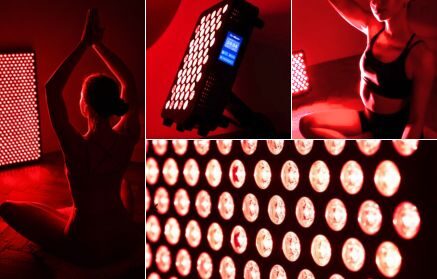
If you follow trends in elite sports or biohacking, you have likely noticed athletes spending time in front of panels emitting intense red light. This is not just bedroom lighting, but red light therapy, which is used to influence processes deep within our cells.
What NASA once developed for faster healing of astronauts and what was for years only available in expensive recovery centres, can now become a standard part of your home equipment. Today, we will discuss whether red light actually works, how it can push your body toward higher efficiency, and whether investing in a home panel is worth it. [4]
What Is Red Light Therapy?
Red Light Therapy is a non-invasive method that utilises red (600–700 nm) and near-infrared light (NIR, 780–1100 nm) to stimulate mitochondria in cells. In scientific literature, it is referred to as photobiomodulation (PBM) or low-level light therapy (LLLT). It supports cellular energy production (ATP), thereby accelerating muscle recovery, improving skin quality (collagen production), and reducing inflammation, all without the use of heat or harmful UV radiation. [1,2,3,4]
This therapy has its roots in the 1960s, when Hungarian physician Endre Mester investigated the effect of low-energy lasers on tissues. During his experiments, he noticed that light could promote wound healing. These findings were later built upon by NASA, which tested the technology to support cell regeneration and healing in astronauts. [1,4]
It then gradually began to be used in dermatology, but today it has a much broader range of applications. In addition to treating acne and psoriasis or supporting wound healing, it has gradually found its place in sports medicine and recovery. [1]
How Does Red Light Therapy Work?
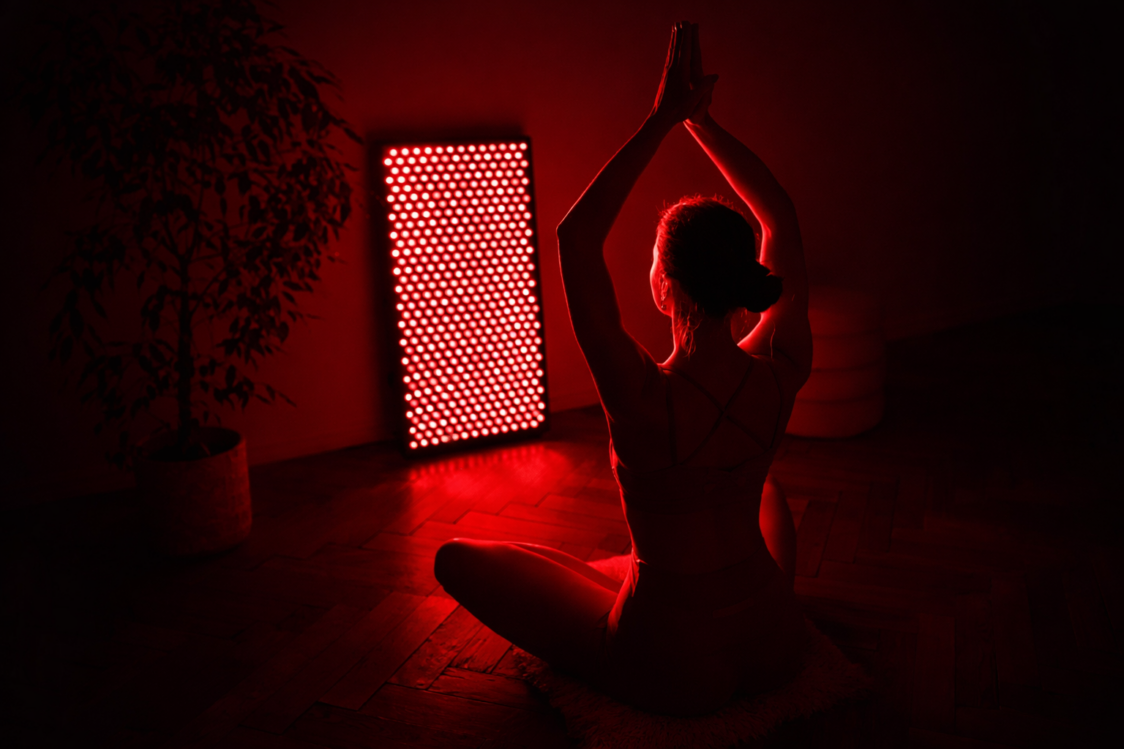
Red light therapy works by having light penetrate the cells and stimulate their energy centres – the mitochondria. Its effect is not based on heat, but on the principle of light energy. Unlike traditional infrared lamps that heat tissues, RLT works solely through light. The therapy uses a combination of red and near-infrared light, which differ in their depth of tissue penetration. [3,4]
Red and near-infrared light promote cellular energy production (ATP). When specific wavelengths penetrate the tissue, they are absorbed by the mitochondria, where they are captured by the enzyme cytochrome c oxidase. This is a molecule that helps cells convert nutrients into energy. These then increase the production of adenosine triphosphate (ATP), which is the fundamental energy molecule required for cell regeneration, repair, and proper function. [4,6,12]
The light also triggers mild and controlled oxidative stress, which acts as a positive biological signal and promotes cell growth, protein production, and the initiation of anti-inflammatory processes. [12]
The mechanism of action of photobiomodulation can be compared to photosynthesis in plants. Just as a plant converts light into energy, a human cell can receive a certain type of light and convert it into cellular energy. [3]

What Is the Difference Between Red and Near-Infrared Light?
The difference between red and near-infrared light lies primarily in the depth of penetration into the body.
- Red light (approximately 600–700 nm) acts mainly on the epidermis and the dermis (middle layer of the skin).
- Near-infrared light (780–1100 nm) penetrates deeper and can affect muscles, joints, tendons, and other parts of the body. [2,16]
| Type of Light | Wavelength | Penetration Depth | Main Purpose |
|---|---|---|---|
| Red | 600–700 nm | Superficial tissues (skin, subcutaneous tissue) | Supporting collagen production, wound healing, improving skin firmness and appearance |
| Near-Infrared | 780–1100 nm | Deeper tissues (muscles, joints, tendons) | Deep muscle recovery, reduction of inflammation and pain |
What Are the Effects of Red Light Therapy?
1. Supports Collagen Production and Skin Health
Red light therapy can help improve the quality of your skin and support skin rejuvenation. It acts on fibroblasts, the cells that produce collagen and elastin. These proteins determine whether the skin is firm, elastic, and smooth. In a study by French scientists published in the journal Skin Research & Technology, which followed 20 people with signs of skin ageing and wrinkles, a reduction in wrinkle depth in the eye area of approximately 38% was recorded after 3 months of regular use. An increase in skin density and overall improvement in elasticity were also observed. [2]
In addition to wrinkles, RLT can help with acne, oily skin, or skin healing. In tested women, for example, pore size was reduced by approximately one-third and sebum production dropped by up to 70%. This can be useful if you have problematic oily skin. Thanks to these effects, it is also a great tool for supporting anti-ageing and healthy ageing. [2]
You might be interested in these products:
2. Helps Reduce Inflammation
Red Light Therapy can also help suppress inflammatory processes in your body. It participates in lowering the levels of pro-inflammatory cytokines (substances that promote inflammation) while supporting the production of anti-inflammatory mediators (substances that reduce inflammation).
At the same time, it influences the behaviour of immune cells by promoting a switch from an inflammatory environment to a regenerative mode. In practice, this means better healing and faster tissue regeneration. [1,6,12]
3. Supports Circulation and Tissue Oxygenation
A red light panel can also support tissue blood flow. When light is applied, nitric oxide (NO) is released, which dilates blood vessels (vasodilation). As a result, more oxygen and nutrients reach the muscles and other tissues, supporting recovery after sports performance or injury. [4,12]

4. Helps with Muscle and Tendon Recovery
If you exercise, RLT can help accelerate your post-workout recovery. Improved blood flow helps remove inflammatory substances and lactate more quickly after physical exertion. This results in less fatigue and a faster return to performance, which is especially appreciated by athletes with demanding training schedules. [12]
Effects are also observed in tendon pain and overuse. Therapy can help with tendinopathies such as tennis elbow or Achilles tendon problems. However, it is not as effective on its own as when combined with targeted rehabilitation exercises. [14]
5. Helps Relieve DOMS – Muscle Soreness from Training
It appears that regular exposure of muscles to red light can also help relieve muscle fatigue (DOMS – Delayed Onset Muscle Soreness) and accelerate recovery after intense training. Research shows that RLT reduces perceived pain, particularly 72 to 96 hours after exertion, which is the period when muscle soreness is usually most intense.
A positive influence is even evident at the level of muscle damage. Scientists recorded lower levels of creatine kinase (CK) and blood lactate after using RLT, suggesting support for cellular repair, not just pain suppression. For the best possible recovery, it may also be suitable to combine red light therapy with other recovery methods, such as cold water therapy or sauna sessions. [15]

6. Improves Joint Health
Red light therapy can also be useful for joint pain and cartilage issues. For example, there is evidence of its benefits in osteoarthritis, where researchers noted a reduction in pain. [13]
7. Supports Hair Growth
Studies show that RLT can even support hair growth, including in cases of androgenetic alopecia. Red light helps increase hair density and stimulate dormant hair follicles, likely due to improved blood circulation in the scalp. [4,6,13]
8. Optimises Sleep
Red light therapy can also support your natural biorhythm. Evening exposure to red light can improve relaxation and sleep quality by enhancing blood flow to the brain, its metabolic activity, or the production of the sleep hormone melatonin. [8,10,11,12]

Is Red Light Therapy Effective?
Yes, research shows that red light therapy has measurable effects. However, correct dosage is crucial. A dose that is too weak may do almost nothing, but overdoing it with red light can reduce or completely cancel out the effect. Extremely long sessions in front of the panel can paradoxically fatigue the cells instead of supporting them.
The key to results is the correct intensity, duration, and especially regularity. If you want to get the most out of RLT, consistency and adherence to the recommended usage time are important. [2]
What Is the Difference Between Professional and Home Red Light Therapy?
Professionals in clinics often use expensive full-body beds or powerful lasers with a precisely defined dose of light. Today’s modern red light therapy panels for home use already achieve sufficient power and optimal wavelengths, allowing you to achieve clinical results, such as healing support or fatigue reduction, in the comfort of your living room. This is why more and more people are trying red light therapy at home, where they can use it regularly as part of their routine. [5,9]
For example, GymBeam panels, which combine red and near-infrared light and have five or eight wavelengths, are suitable for regular home use. In addition to panels, there are smaller devices, such as LED face masks, which use the same light principle and are primarily used for skin care.
If you want to treat a larger part of the body at once (for example, the back or legs after training), a full-body panel is more suitable. For targeted treatment of smaller areas, such as the face, knee, or neck, a more compact mini panel may suffice.

How to Choose the Right Red Light Therapy Panel?
When deciding how to choose a red light panel, it is important to monitor the device’s parameters. The best red light for therapy is one that combines the correct wavelengths and sufficient power.
| Parameter | What to Look for When Choosing a Panel? |
|---|---|
| Wavelengths | Combination of 600–700 nm (red light) and 780–1100 nm (near-infrared light) |
| Power (Irradiance) | Minimum 100 mW/cm2 |
| Flicker | Flicker-free panel |
Most high-quality home panels, including models available at GymBeam, are designed to meet these recommendations.
How to Use the Panel Correctly and Safely?
To ensure that red light panel therapy is both effective and safe, you should follow several rules.
- Distance: Stay roughly 15–30 cm from the panel, which will ensure sufficient irradiation intensity.
- Time: The ideal time for one area is 10–20 minutes. [9]
- Frequency: Be consistent. It is recommended to use the panel 3 to 5 times per week. [9]
- Time of Day: Use the panel in the morning when you want to charge yourself with energy for the new day. In the evening, use it when you want to relax and prepare for sleep. [11]
- Clothing: The light must shine directly onto bare skin. Clothing prevents light penetration and cancels out its effect.
- Eye Protection: Intense red light can be very uncomfortable or even risky for the eyes. Therefore, it is important to wear special glasses to block it. In the case of high-quality RLT panels, these are usually included in the package.

Does Red Light Therapy Have Side Effects?
Red light therapy is considered safe. Side effects are rare and usually involve only mild and temporary issues, such as slight redness, temporary fatigue, or a mild headache if used for too long. These symptoms will subside on their own after a while. [1]
Who Is Red Light Therapy Suitable For?
Red light therapy is particularly suitable for people who want to support recovery, reduce pain, or improve sleep quality. It is most commonly used by:
- athletes looking to accelerate recovery after training or injury
- people with skin problems (e.g., acne)
- individuals interested in healthy ageing and anti-ageing approaches
- people with chronic joint and muscle pain
- biohackers and individuals optimising sleep
- people seeking non-invasive support for long-term inflammatory conditions [1,3]
Who Should Avoid Red Light Therapy?
Although red light therapy is generally considered safe, there are situations where you should avoid it or use it only after consulting a doctor.
Contraindications for Red Light Therapy
- active cancer
- fresh burns – especially during the first 24–48 hours after injury
- thyroid disorders (especially hyperthyroidism) – do not apply light directly to the neck without a doctor’s recommendation
- epilepsy – light can trigger a seizure in sensitive individuals
- pregnancy
- eye diseases – do not use light directly on the eyes without the consent of an ophthalmologist
- light sensitivity (photosensitivity) or diseases associated with a reaction to light
- fever or acute infection
- use of medications that increase sensitivity to light (photosensitising drugs)
If you are unsure whether the therapy is suitable for you, the safest course of action is to consult a doctor before using it. [1,3]

FAQ
No, you cannot get a tan from red light therapy because the panels do not emit any UV radiation. Red and near-infrared light act on a cellular level purely for regeneration and have nothing to do with tanning in a solarium or in the sun.
The difference between an infrared lamp and a red light panel is that an infrared lamp (infrared therapy) uses mid and long-wave infrared radiation to heat tissues, while an RLT panel stimulates cells with light without producing heat. Red light therapy (photobiomodulation) works by transferring light energy to the mitochondria, not by overheating.
No, for maximum effect, red light must fall directly onto exposed skin. Clothing (even thin clothing) absorbs or reflects a large portion of the light, making the therapy practically ineffective.
First results usually appear after 2 to 4 weeks of regular use (3–5 times per week). Pain relief or better muscle recovery may come after just a few days, while visible changes to the skin (collagen production) require more time.
Red light is safe for the eyes, but with powerful panels featuring the near-infrared (NIR) spectrum, you should use protective glasses. Strong invisible NIR light can heat the eye, so protect your vision, especially if the light is directed straight at your face.
Yes, you can safely use red light therapy on a daily basis. To achieve optimal results, most protocols recommend exposure 3 to 5 times per week for 10 to 20 minutes per area.
Yes, RLT involves a so-called biphasic response. Paradoxically, exposure that is too long can fatigue the cells and reduce the benefits of the therapy. Therefore, it is crucial to follow the recommended time (10–20 minutes) and not overdo it in the belief that more is better.
What should you take away from this?
Red light therapy is an interesting tool that can support the natural regenerative processes in your body. Scientific studies show that it can help reduce inflammation, accelerate muscle recovery, support collagen production, or improve sleep quality. The key to results is primarily the correct dose of light and regularity of use.
The good news is that today you no longer have to visit specialised centres for these benefits. Modern home panels can offer sufficient power and the correct wavelengths, allowing you to incorporate therapy into your daily routine right at home. If you are looking for a practical tool to support recovery, performance, and health, a red light panel can be an interesting addition to your lifestyle.
[1] AL BALAH, O.F. et al. Immunomodulatory effects of photobiomodulation: a comprehensive review. – https://pmc.ncbi.nlm.nih.gov/articles/PMC11991943/
[2] COUTURAUD, V. et al. Reverse skin aging signs by red light photobiomodulation. – https://pmc.ncbi.nlm.nih.gov/articles/PMC10311288/
[3] DE OLIVEIRA, M.F. et al. Low-intensity LASER and LED (photobiomodulation therapy) for pain control of the most common musculoskeletal conditions. – https://pubmed.ncbi.nlm.nih.gov/34913330/
[4] DOMPE, C. et al. Photobiomodulation—Underlying Mechanism and Clinical Applications. – https://pmc.ncbi.nlm.nih.gov/articles/PMC7356229/
[5] FERREIRA, L.M.A. et al. Photobiomodulation in chronic pain: a systematic review of randomized clinical trials. – https://pmc.ncbi.nlm.nih.gov/articles/PMC12909510/
[6] HAMBLIN, M.R. Mechanisms and applications of the anti-inflammatory effects of photobiomodulation. – https://pmc.ncbi.nlm.nih.gov/articles/PMC5523874/
[7] HUANG, Z. et al. Red light irradiation as an intervention for myopia. – https://pmc.ncbi.nlm.nih.gov/articles/PMC9675534/
[8] JUNG, J. - KIM, T. Photobiomodulation and Its Therapeutic Potential in Sleep Disturbances. – http://www.sleepmedres.org/journal/view.php?doi=10.17241/smr.2024.02593
[9] NAVARRO-LEDESMA, S. et al. Short-Term Effects of Whole-Body Photobiomodulation on Pain, Quality of Life and Psychological Factors in a Population Suffering from Fibromyalgia: A Triple-Blinded Randomised Clinical Trial. – https://pmc.ncbi.nlm.nih.gov/articles/PMC9845459/
[10] PAN, R. et al. Effects of red light on sleep and mood in healthy subjects and individuals with insomnia disorder. – https://www.frontiersin.org/journals/psychiatry/articles/10.3389/fpsyt.2023.1200350/full
[11] SANCHEZ-CANO, A. et al. Comparative Effects of Red and Blue LED Light on Melatonin Levels During Three-Hour Exposure in Healthy Adults. – https://pmc.ncbi.nlm.nih.gov/articles/PMC12113466/
[12] SHIVAPPA, P. et al. From light to healing: photobiomodulation therapy in medical disciplines. – https://pmc.ncbi.nlm.nih.gov/articles/PMC12751248/
[13] SON, Y. et al. Effects of photobiomodulation on multiple health outcomes: an umbrella review of randomized clinical trials. – https://pmc.ncbi.nlm.nih.gov/articles/PMC12326686/
[14] TRIPODI, N. et al. The effect of low-level red and near-infrared photobiomodulation on pain and function in tendinopathy: a systematic review and meta-analysis of randomized control trials. – https://pmc.ncbi.nlm.nih.gov/articles/PMC8364035/
[15] TSOU, Y.-A. et al. Effects of Photomodulation Therapy for Delayed Onset Muscle Soreness: A Systematic Review and Meta-Analysis. – https://pmc.ncbi.nlm.nih.gov/articles/PMC12286287/
Add a comment