
Table of Contents
The ever-growing gaming industry now enjoys an audience of millions around the world. Whether you play for fun or at a professional e-sports level, gaming provides great relaxation and various unforgettable experiences in virtual worlds. At the same time, it faces frequent prejudices from the surrounding environment, with many people perceiving gaming as a waste of time. Or as something that will never do anyone any good. However, this is only one view and it mostly comes from those who do not know how to play games or whose last game was Super Mario on an old Vietnamese console twenty years ago. Since then, the gaming world has made tremendous strides, offering more than ever before. It is not just entertainment; it can also be a source of income and various benefits.
In this article, you will learn about the benefits of playing games in the following areas:
We will support these mentioned benefits with scientific opinions in the form of various studies. So, sit back comfortably, press START, and let yourself be carried away on the wave of this playful article.
At what level does healthy gaming begin and end?
Before we begin, it must be said that not all gaming is the same. Not every session in front of a computer or console brings benefits that you can’t live without. It’s more a case of whether playing games recharges or drains your health bar, as it depends on the individual approach of the player themselves. This can be either healthy or unhealthy, where gaming leads to neglecting other aspects of life. When the metaphorical gamepad is held from the wrong end, a player can fall into a gaming addiction. They then neglect responsibilities, forget about other hobbies, or have problems at school or work, the source of which is excessive time spent gaming. They only think about when they will finally defeat that tough boss, reach level 20, accumulate enough XP, get to the next checkpoint, or unlock a dream weapon with which they will dominate every virtual battle. [1]
In this article, we will focus on the benefits of gaming that result from a healthy approach. With a healthy approach, instead of getting constantly hit, you can find some interesting loot or gain some extra mana. In real life, this means gaming is just one of many aspects of your life, leaving you plenty of time to do other things. This way, gaming can be a positive habit that doesn’t negatively affect your health, personal life, or work. [2]
Gaming can even have an educational character. This is a specific segment of games that are used, for example, by students or employees in certain professions, such as police officers, medics, or firefighters. The role of these games is to teach players specific things in an interactive way. A good example is a driving simulator in a driving school. This virtually gives driving course participants their first, most basic experience behind the wheel before they get into a real car. Educational games also include the popular Duolingo app, designed for learning various languages such as English, Italian, or French. In the case of children, Dragon Box, for example, is popular, as it immerses them in the world of geometry in a fun way. [3]
- If you are interested in what gaming can look like on a more serious level, read our article What Is eSports and What Does the World of Virtual Athletes Look Like?
- If the topic of gaming approaches intrigues you further, don’t miss our article on Healthy and Unhealthy Gaming Approaches: What Sets a Regular Player Apart from an E-Sports Player?
Benefits of Playing Games
You can, however, find many more educational games with different focuses, which are regularly used by pilots, for example. This is not just about flight simulators, but also other commercial games for regular players that bring them better reflexes and various other benefits. We will discuss these below.
1. Increased Gray Matter Volume
The wider public often unfairly perceives players as clumsy geeks in greasy glasses with acne on their faces. This makes the gaming community all the more pleased by a 2015 study published on the Scientific Reports platform. Researchers from the University of Electronic Science and Technology of China and Macquarie University in Sydney looked at gamers using magnetic resonance imaging (MRI) scans. Specifically, they analysed the brains of 27 professional e-sports players who have successes from championships in League of Legends or DOTA2 under their belt.
They compared the scans with the brain activity of casual gamers, i.e., recreational players. The result is that regular competitive gaming at a professional level increases the amount of gray matter in the brain. Gray matter is responsible for controlling muscles, sensory perception, intelligence, planning, emotions, decision-making, and other cognitive functions. Having more gray matter can make these functions sharper compared to a group of non-gamers. [4] [20]
You might be interested in these products:
2. Improved Sensory-Motor Skills
We use sensory-motor skills when coordination between our vision and our motor skills is necessary. Typical examples include cycling or writing. Sensory-motor skills also influence muscle tone and the ability to perceive our body in relation to other objects in space. Increasing levels of sensory-motor skills can elevate us from a basic level to an expert level in a specific area. It also reflects how effectively we can perform specific tasks, perhaps even without having to think about them for long.
Well, one of the things that can support sensorimotor skills turns out to be playing games. Specifically, action games such as Call of Duty or Counter-Strike. A study led by psychologists from the University of Toronto followed two groups of players. The first played first-person shooter games for six months, for at least 2 hours every day. The second group consisted of people who don’t play games, or only do so very rarely.
Participants in the study were instructed to keep a small green cursor in the centre of a white square that moved repetitively across the screen. This task required good coordination between vision and hand movement. By the end of the study, the gamers achieved better results and were significantly more accurate in keeping the cursor within the target area. [5]

3. Enhancing Manual Skills through Fine Motor Skills
Most games are controlled using a joystick, keyboard, or mouse. Players gradually learn the order of actions and when to press specific keys. This activity has proven to be beneficial for manual dexterity. In a 2007 study, young aspiring surgeons who played video games regularly or at least 3 hours per week were compared to their non-gaming or “noob” colleagues.
Both groups were evaluated in laparoscopic surgery and suturing. The results showed that surgeons who played games for at least 3 hours per week made 37% fewer errors and were 27% faster in procedures. For regular gamers, the results were even better, with a 47% lower error rate and a 39% increase in speed.
Video games can be an interesting and practical tool that can help develop laparoscopic surgical skills. The support of fine motor skills or manual dexterity can also be appreciated in other professions such as auto mechanics, hairdressers, tailors, and more. In everyday life, it can come in handy when you need to thread a needle, assemble small LEGO pieces, play games on a small mobile screen without using a gamepad, or fasten a minimalist necklace to your partner. [6]
4. Improved Contrast Sensitivity
Modern 3D games often require good orientation in the surrounding environment, which can gradually level up players’ spatial awareness in real life. This assertion is supported by a study from the University of Rochester, claiming that first-person shooter games enhance the spatial vision of players in the real world. Gamers also exhibit better contrast sensitivity, which determines how well a person sees. The study participants were divided into two groups.
The first group played Unreal Tournament 2004 and Call of Duty 2, while the second dedicated themselves to The Sims. The volunteers played for 50 hours over 9 weeks. At the end, it was shown that the action game players were 43% better at distinguishing subtle shades of grey. In the case of The Sims, the research participants did not show any improvement. Despite many concerns that playing games worsens eyesight, this activity does not necessarily have to be harmful and also has its advantages. If you would like to do a similar test yourself, you can try
5. Promoting Physical Fitness
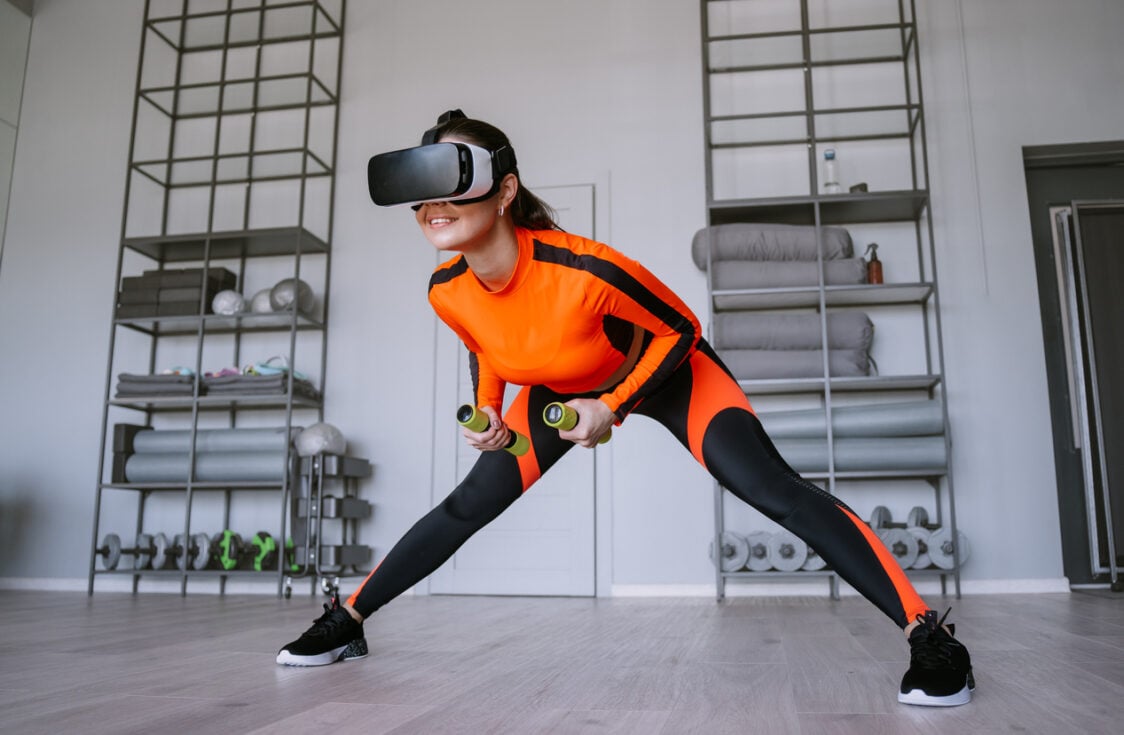
You might be raising an eyebrow at this point. After all, when players are sprawled on the couch or hunched over a computer during gaming, how can it support fitness? In this case, we’re referring to a specific active genre of games that involves camera tracking or VR setups. The advantage of this kind of gaming is that you can’t really sit down and it involves the movement of the whole body.
Another plus is wide availability. You can play them on PC, consoles, or even standalone VR headsets like the Oculus Quest. You have a wide range of titles to choose from, including combat, simulators, sports or rhythm games. Modern VR innovations thus don’t necessarily have to fall into the sports genre to get you moving.
A great example is the action-adventure game “Horizon Call of the Mountain” on PlayStation VR2, where climbing mountains with your hands is a central part of the experience. Thanks to this, you can enjoy a lot of movement and stretching while focusing on beautiful mountain views, the story, and exciting action in a post-apocalyptic world dominated by machines. Active gaming could even be significant for the elderly, who often engage in the least physical activity among all age groups.
A review of studies from 2020 showed that active video games can improve mobility and activity levels among adolescents. In some cases, they might work even better than traditional methods like “stand up and take a few steps.” During active gaming, attention is directed to other aspects, and movement becomes somewhat subconscious, making time pass more quickly. [8]
6. Mental Health Support
Games can be a great way to take a break from everyday duties, unwind and relax in the virtual world while having fun. Additionally, they can provide you with a chance to process your day or recharge your health bar after a challenging day at school or work. Thanks to this, games have significant potential as a source of mental well-being, a claim supported by research published in the 2021 journal JMIR Serious Games.
This research examined the impact of commercial video games on depression, anxiety, and other mental health issues. It demonstrated that gaming can be beneficial in promoting mental health, especially for people who may not have access to other forms of treatment, perhaps due to cost barriers. The study also indicated that commercially available video games were effective in reducing symptoms of depression, including the loss of pleasure when doing activities. Additionally, titles like Minecraft or Animal Crossing: New Horizons facilitate social connections and reduce feelings of loneliness. It’s worth noting, though, that video games should not replace traditional therapy and are better viewed as an alternative supplement to support mental health. [9]
Coping with challenging life periods can also be aided by adaptogens, which you can learn more about in our article Adaptogens: Natural Substances That Help Manage Stress.
7. Positive Effect on Cognitive Functions
Ďalším z dobrých aspektov hrania môže byť aj pozitívny vplyv na kognitívne funkcie. Sú to tie, vďaka ktorým môžeme vnímať okolitý svet. Príkladom je pozornosť, schopnosť vytvárať úsudok alebo riešiť problémy, myslenie, pamäť či používanie reči. V súvislosti s kognitívnymi funkciami a hraním videohier máme k dispozícii celý rad rôznych štúdií, ktoré podporujú pozitívny efekt a hovoria, že [10 – 14]:
- Playing modern 3D games can enhance spatial memory
- Action games can reduce reaction time without compromising accuracy
- First-person shooters can improve mental flexibility, which aids in adapting to change, multitasking, and switching between tasks more efficiently
- Fast-paced action games can enhance visual processing ability, enabling better identification of important information while ignoring irrelevant distractions
- Action games can improve the ability to shift attention visually and auditorily to different objects, a skill valuable during activities such as reading or information processing
These findings challenge the “boss” called stereotype which suggests that gamers are just some clumsy geeks with big glasses and greasy hair. In reality, some of the most famous gamers include individuals like Superman actor Henry Cavill, Olympic swimmer Michael Phelps, 007 Agent Daniel Craig, seasoned Hollywood actor Samuel L. Jackson, or Captain Marvel herself, Brie Larson. None of these names fit the stereotypical profile. [17]
8. Enhanced Reaction Time
Reaction time is crucial in various everyday situations. It allows us to respond appropriately, like hitting the brakes when a pedestrian suddenly appears in front of our car. It’s also valuable when preparing for a job interview, where quick and assertive responses may be required. People with better reaction times have an advantage, whether it’s swatting away a fast-moving mosquito or grabbing a falling cup in the nick of time.
The good news is that this skill can be trained, and action-packed games like Call of Duty, God of War, GTA, Halo, or DOOM can help. These games are filled with dynamic sequences and scenarios that require players to react much faster than they typically would in everyday activities. As a result, they can develop and improve this skill even outside of gaming. A meta-analysis of 80 studies comparing the reaction times of gamers and non-gamers in various conditions demonstrated that, on average, gamers can react about 12% faster and more accurately than non-gamers.
Specifically, e-sport performance can also be improved by the best dietary supplements for gamers and e-sports athletes.

9. Support for Problem Solving
Another superpower of video games is their ability to foster creativity and problem-solving skills. This fact is fundamental to games and might not require scientific studies to back it up. It’s based on the idea that practice makes perfect. If you’ve played a particular game for an extended period of time, you know how you gradually get better at it. The same principle applies if you’re a fan of hardcore “souls” games, where defeating tough bosses is the goal. I’m sure you’ll recall numerous situations where you had to strategize and rethink your approach, all in pursuit of overcoming that challenging obstacle, just to arrive at the GAME OVER screen anyway.
However, such challenges don’t deter an experienced gamer. Instead, you’ve learnt from your mistakes, tried different strategies, and devised new tactics until you successfully overcame the obstacle that stood in your way of progressing to the next level. The variety of games available today is vast, with modern titles becoming increasingly more complex. It’s no longer just about games like Tetris or Super Mario. Today’s games require players to gradually master their mechanics, learn, and acquire a broader range of skills that lead them to victory. These claims are supported by researchers at the University of South Carolina, who found that games stimulate how players perceive and process the world around them. By being accustomed to solving various problems in virtual worlds, players are more likely to apply the skills and strategies they’ve developed within the game to real-life situations. [16]
10. Socialising and Teamwork Development
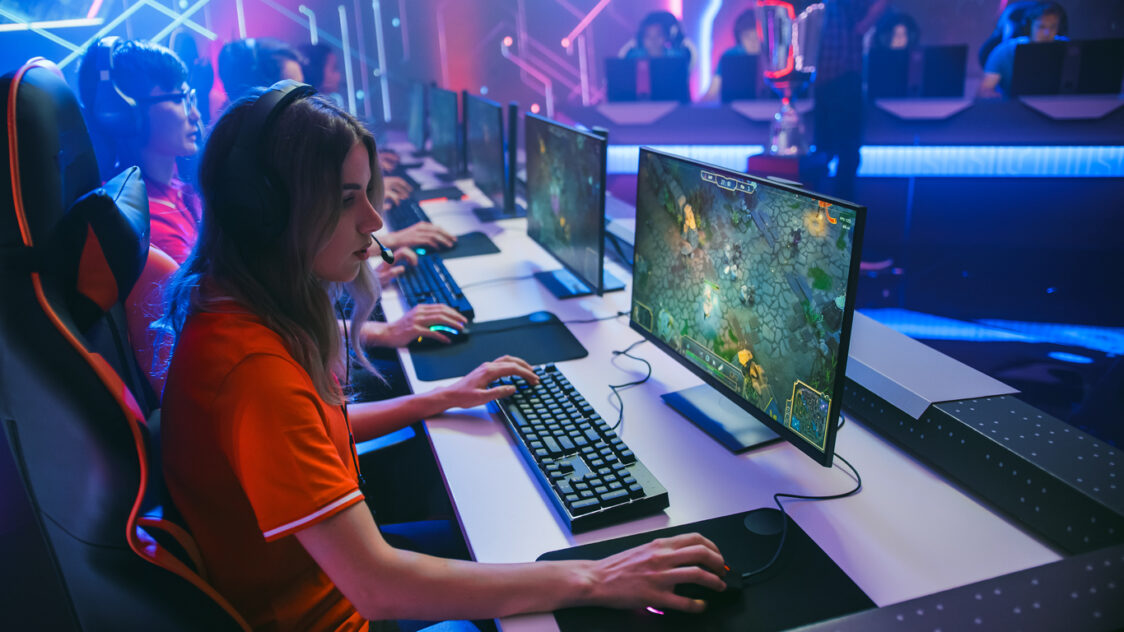
Society often holds biases against gamers, perceiving them as people who spend days in front of a computer or console, having few friends and minimal social interaction. While there might be some gamers who fit this stereotype, the reality is different. Did you know that video games can contribute to socialization? According to IGI Global statistics, more than 70% of people play games with their friends.
During gaming, they are connected through headsets and often engage in conversations. This social interaction can even extend beyond the virtual world and continue on community forums or chats. Furthermore, various community events and e-sports tournaments, where players meet either online or in person, are not uncommon. All of these interactions have a positive impact on socialization.
Gaming doesn’t have to be solely competitive either. There are numerous cooperative games on the market, such as Minecraft, Diablo IV, or It Takes Two, where players’ success relies on teamwork. There are also multiplayer shooters like Call of Duty, Battlefield, or Counter-Strike 2, which require coordination between at least two teams to defeat the opponent. This style of gaming can help develop the ability to work in a team, as confirmed by a study from Brigham Young University that observed 80 newly formed teams. The study concluded that people who played games together were 20% more productive as a team compared to those who used traditional team-building activities to foster collaboration. [18]
Conclusion
Video games are no longer just a childhood activity focused on pressing two buttons. The gaming industry has evolved into a multi-billion-dollar business, offering titles that can positively impact various aspects of your life. These claims are often supported by scientific studies, which have shown several interesting benefits. Examples include improved spatial vision, support for mental health, and reduced reaction time, which can be appreciated not only while driving. Additionally, gaming can be a great tool for training various professions, such as surgeons or pilots. All of this makes video games an activity that can enrich your life positively at any age.
If someone stubbornly claims that gaming is strictly for children or a waste of time, share this article with them to convince them otherwise. Also, don’t forget to tell us in the comments which games you like the most.
[1] Smitha Bandari - Is Video Game Addiction Real? – https://www.webmd.com/mental-health/addiction/video-game-addiction
[2] Cam Adair - Healthy Gaming Habits for Kids, Teens and Adults – https://gamequitters.com/healthy-gaming-habits/
[3] Why your children really should play videogames – https://www.iberdrola.com/talent/benefits-video-games-learning
[4] Diankun Gong, Hui He, Dongbo Liu, Weiyi Ma, Li Dong, Cheng Luo & Dezhong Yao - Enhanced functional connectivity and increased gray matter volume of insula related to action video game playing – https://www.nature.com/articles/srep09763
[5] Davood G Gozli, Daphne Bavelier, Jay Pratt - The effect of action video game playing on sensorimotor learning: Evidence from a movement tracking task – https://pubmed.ncbi.nlm.nih.gov/25318081/
[6] James C Rosser Jr, Paul J Lynch, Laurie Cuddihy, Douglas A Gentile, Jonathan Klonsky, Ronald Merrell - The impact of video games on training surgeons in the 21st century – https://pubmed.ncbi.nlm.nih.gov/17309970/
[7] Action Video Games Improve Vision, New Research Shows – https://www.sciencedaily.com/releases/2009/03/090329143326.htm
[8] Wanda M. Williams, Cynthia G. Ayres - Can Active Video Games Improve Physical Activity in Adolescents? A Review of RCT – https://www.ncbi.nlm.nih.gov/pmc/articles/PMC7013707/
[9] Magdalena Kowal, Eoin Conroy, Niall Ramsbottom, Tim Smithies, Adam Toth, Mark Campbell - Gaming Your Mental Health: A Narrative Review on Mitigating Symptoms of Depression and Anxiety Using Commercial Video Games – https://pubmed.ncbi.nlm.nih.gov/34132648/
[10] Gregory D. Clemenson and Craig E.L. Stark - Behavioral/Cognitive Virtual Environmental Enrichment through Video Games Improves Hippocampal-Associated Memory – https://www.jneurosci.org/content/35/49/16116
[11] Matthew W.G. Dye, C. Shawn Green, and Daphne Bavelier - Increasing Speed of Processing With Action Video Games – https://journals.sagepub.com/doi/10.1111/j.1467-8721.2009.01660.x
[12] Lorenza S. Colzato, Wery P. M. van den Wildenberg & Bernhard Hommel - Cognitive control and the COMT Val Met polymorphism: genetic modulation of videogame training and transfer to task-switching efficiency – https://link.springer.com/article/10.1007/s00426-013-0514-8
[13] C.S. Green, D. Bavelier - Action-Video-Game Experience Alters the Spatial Resolution of Vision – https://journals.sagepub.com/doi/10.1111/j.1467-9280.2007.01853.x
[14] Sandro Franceschini, Piergiorgio Trevisan, Luca Ronconi, Sara Bertoni, Susan Colmar, Kit Double, Andrea Facoetti & Simone Gori - Action video games improve reading abilities and visual-to-auditory attentional shifting in English-speaking children with dyslexia – https://www.nature.com/articles/s41598-017-05826-8
[15] The Effects of Video Games on Reaction Times – http://i-rep.emu.edu.tr:8080/xmlui/bitstream/handle/11129/5251/Aktuutku.pdf?sequence=1
[16] David Corso - A Review of Video Game Effects and Uses – https://sc.edu/about/offices_and_divisions/research/news_and_pubs/caravel/archive/2014/2014-caravel-video-games.php
[17] Mark Griffiths, Daria J. Kuss, Angelica B. Ortiz de Gortari - Videogames as Therapy: A Review of the Medical and Psychological Literature – https://www.igi-global.com/chapter/videogames-therapy-review-medical-psychological/78017
[18] Mark J. Keith - Team Video Gaming for T eam Video Gaming for Team Building: E eam Building: Effects on T ects on Team Performance – https://aisel.aisnet.org/cgi/viewcontent.cgi?article=1115&context=thci
[19] HARJIT KEANU SINGH - 10 Celebrities You Didn't Know Were Gamers – https://www.thegamer.com/celebrities-that-are-gamers-list/#brie-larson-39-s-favourite-is-legend-of-zelda-breath-of-the-wild
[20] Anthony A. Mercadante; Prasanna Tadi - Neuroanatomy, Gray Matter – https://www.ncbi.nlm.nih.gov/books/NBK553239/
Add a comment