Magnesium chelate bisglycinate is among the best absorbed forms of magnesium on the market. One of our doses contains 225 mg of pure magnesium with laboratory-verified purity. Magnesium contributes to reducing fatigue and exhaustion, normal muscle and nervous system function, and electrolyte balance. The product is vegan, allergen-free and GMO-free, and we make it in our own production.
Magnesium chelate bisglycinate is a mineral bound to two molecules of the amino acid glycine, creating a stable chelate complex different from free inorganic forms such as magnesium oxide. This chelate bond belongs among forms of magnesium that are better tolerated by the digestive tract and therefore excellently absorbed. One dose provides the body with 225 mg of elemental, fully usable pure magnesium, which corresponds to 60 % of the reference intake value.¹ We make it in our own production and regularly test it in independent German laboratories for heavy metals and microbiology, as well as for the amount of active substances.



The essential difference lies in the absorption mechanism. Common inorganic forms such as magnesium oxide have very low bioavailability. The body therefore cannot use most of the substance, which may unnecessarily irritate the digestive tract.
In chelate form, the mineral is firmly bound to the amino acid glycine. The body does not recognize this stable complex as an ordinary ion, but absorbs it similarly to proteins. Magnesium therefore gains a “priority entry” into the body, does not have to compete for absorption with other minerals and is gentler on digestion. The result is excellent usability of every dose.
With dietary supplements, safety and transparency of the whole process play a key role, from raw material selection to the final capsule. Here are 8 points that GymBeam does differently:
- Magnesium chelate bisglycinate is created by chemical synthesis, in which the mineral molecule binds to two glycine molecules.
- The production process does not use any solvent, so the final raw material contains no solvent residues.
- The supplied form contains at least 98 % magnesium bisglycinate and at least 13.5 % elemental magnesium in dry matter.
- Raw material production is covered by ISO 9001 certification for quality management, ISO 22000 and FSSC 22000 for food safety based on HACCP principles. The raw material is also Halal certified.
- Every batch undergoes heavy metal content control (lead, arsenic, cadmium, mercury), pesticide residues and ethylene oxide. The monitored values are below the specified limits or below the detection limit. Microbiological parameters meet strict limits.
- The raw material is not irradiated during production or storage and contains no nanoparticles.
- The final product is completely GMO-free and contains none of the 14 main allergens.
- We make the product in our own production.

Magnesium is a mineral involved in more than 300 enzymatic reactions in the body. It contributes to reducing fatigue and exhaustion, supports normal muscle and nervous system function and contributes to normal psychological function.¹˒⁵
In addition, it is involved in protein synthesis and contributes to maintaining healthy bones.¹ It also participates in the process of cell division and contributes to electrolyte balance, meaning the maintenance of the correct level of important ions such as sodium, potassium and magnesium itself.¹
Who is magnesium chelate (bisglycinate) suitable for?
- Athletes and physically active individuals who appreciate support for normal muscle function during regular training.
- Endurance athletes, runners and HYROX participants whose intense sweating increases the need to replenish electrolytes including magnesium.
- People with demanding work or study loads who appreciate help with reducing fatigue and exhaustion as well as support for normal psychological function. During periods of increased mental stress, the body naturally loses more magnesium through increased urinary excretion.⁷
- People with one-sided or restricted diets who do not cover the recommended magnesium intake from common sources such as whole grains, legumes or nuts.
- Users of GLP-1 medicines (Ozempic, Wegovy, Mounjaro) who, during changes in eating habits, are looking for an easy way to supplement magnesium intake.

When to take magnesium chelate?
You can take the capsules at any time during the day, according to your own needs, because the choice of time is more a matter of personal habit than necessity. Some people prefer taking them in the evening hours, after daily activities, when magnesium contributes to normal muscle and nervous system function.¹
Taking magnesium chelate with food
You can take the capsules on an empty stomach or together with food. Bisglycinate belongs among organic forms of magnesium that tend to be gentler on digestion thanks to their chelate structure, so it does not have to be taken exclusively with food. If you are more sensitive, divide the dose into several parts during the day or take it together with food.⁶
Taking magnesium chelate together with other minerals and medicines
At higher doses, magnesium can compete for absorption with calcium because both minerals use similar transport pathways in the intestine.⁹ If you take antibiotics from the tetracycline or quinolone group, keep a gap of at least two hours before taking them, or four to six hours after, because they can form complexes with magnesium that reduce medicine absorption.⁸ Use similar caution with bisphosphonates used in osteoporosis treatment.⁸ If you take any regular medication, consult a doctor or pharmacist about magnesium supplementation in advance.
Long-term use of magnesium chelate
Take magnesium long term, ideally for several weeks, so that the benefits mentioned above can appear. The body replenishes its magnesium stores gradually, so the full benefit of supplementation does not appear immediately after the first dose.

Nutrition facts table
| Nutritional values | 3 capsules | *RI |
|---|---|---|
| Magnesium bisglycinate | 1875 mg | - |
| - of which magnesium | 225 mg | 60 % |
*Reference intake value for an average adult (8400 kJ/ 2000 kcal).
Sources and scientific background
- Commission Regulation (EU) No. 432/2012 on the list of approved health claims relating to foods, other than those referring to the reduction of disease risk and to children's development and health. EUR-Lex.
- EFSA Panel on Dietetic Products, Nutrition and Allergies (NDA). Published: Scientific Opinion on the substantiation of health claims related to magnesium. EFSA Journal 2010;8(10):1807.
- EFSA NDA Panel. Published: Scientific Opinion on Dietary Reference Values for magnesium. EFSA Journal 2015;13(7):4186.
- Regulation (EU) No. 1169/2011 of the European Parliament and of the Council on the provision of food information to consumers. EUR-Lex.
- Schwalfenberg, G. K., & Genuis, S. J. The Importance of Magnesium in Clinical Healthcare. Published in Scientifica, 2017.
- Matek Sarić, M. et al. Magnesium: Health Effects, Deficiency Burden, and Future Public Health Directions. Published in Nutrients 2025, 17(22), 3626.
- Pickering, G., Mazur, A., Trousselard, M., et al. Magnesium Status and Stress: The Vicious Circle Concept Revisited. Published in Nutrients 2020, 12(12), 3672.
- Elgar, K. Magnesium: A Review of Clinical Use and Efficacy. Published in Nutr Med J., 2021, 1(1): 79–99.
- Chen, F., Wang, J., Cheng, Y., Li, R., Wang, Y., Chen, Y., Scott, T.M., Tucker, K.L. Magnesium and Cognitive Health in Adults: A Systematic Review and Meta-Analysis. Published in Advances in Nutrition, 2024.
Have you tried Magnesium Chelate (Bisglycinate) - GymBeam? Share your experience with us and our community by adding a review for Magnesium Chelate (Bisglycinate) - GymBeam.
If you have any questions concerning this product, ask right here.
Discover other products with the highest number of customer reviews in the the best from category of Minerals category. Don't miss the most frequently rated products from the the best from category of Magnesium category or from the the best from category of Sports Nutrition category.
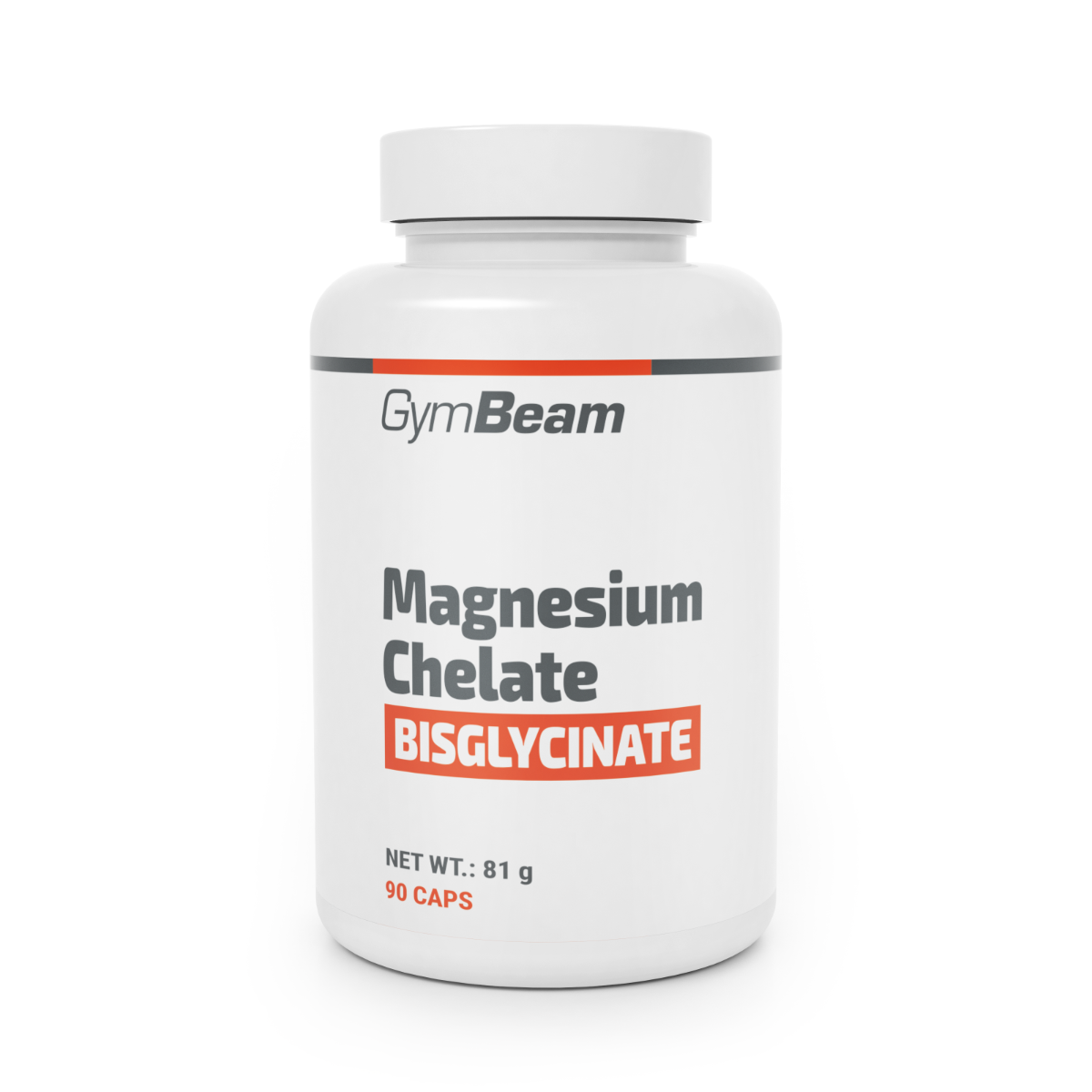 Magnézium chelát (bisglycinát) Magnézium chelát (bisglycinát) |  Triple Magnesium Triple Magnesium | 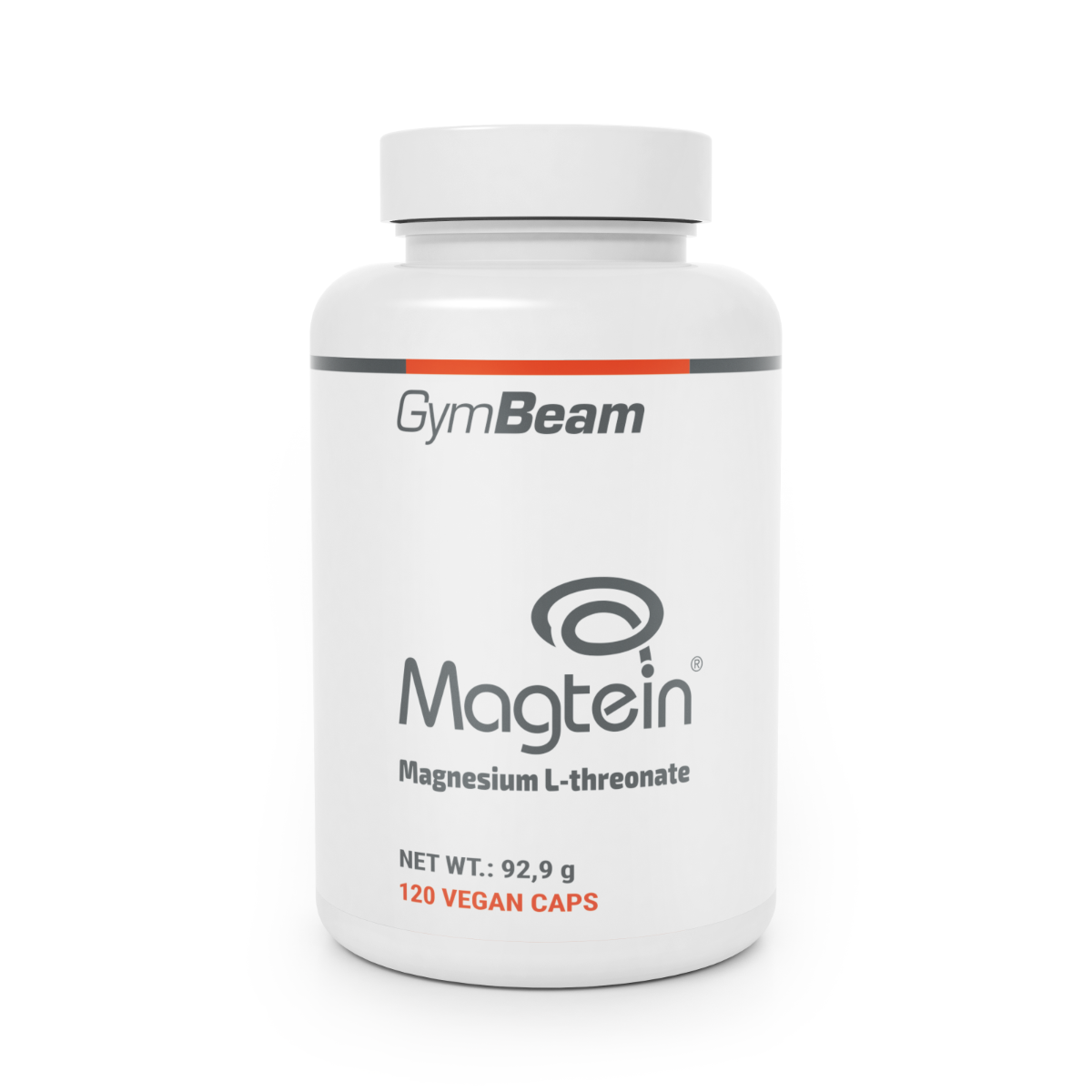 Magtein® (Magnézium L-treonát) Magtein® (Magnézium L-treonát) | 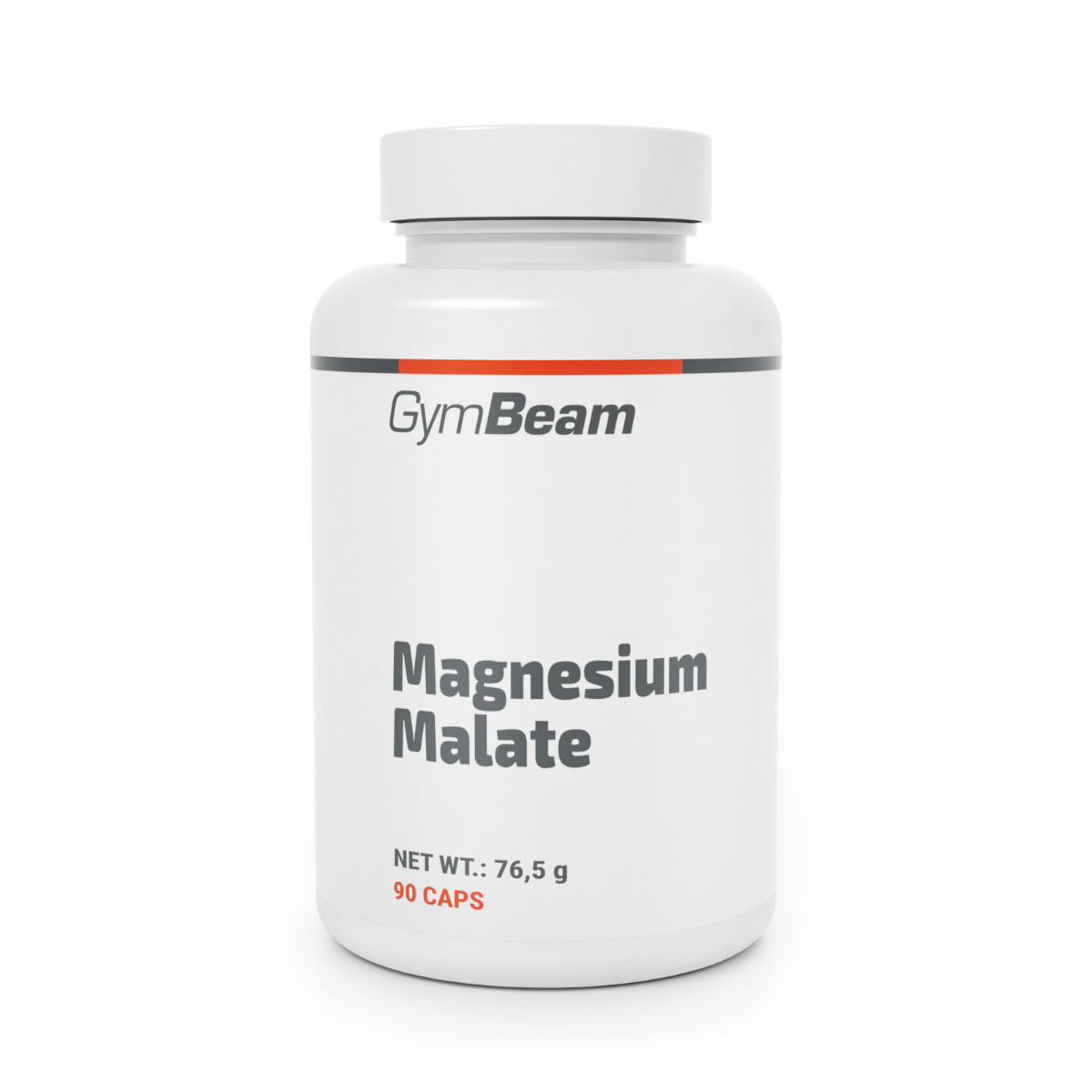 Magnézium malát Magnézium malát | |
|---|---|---|---|---|
| Form of magnesium | magnesium bisglycinate | magnesium lactate, oxide and bisglycinate | Magtein® magnesium L-threonate | magnesium malate |
| Bond type | organic | organic and inorganic | organic (patented raw material developed at MIT) | organic |
| Magnesium / dose | 225 mg | 375 mg | 144 mg | 200 mg |
| % NRV | 60 % | 100 % | 38,4 % | 53 % |
| Daily dose | 3 capsules | 2 capsules | 3 capsules | 2 capsules (1+1) |
| Price per day dosage | 0,23 € | 0,19 € | 0,97 € | 0,17 € |
| Suitable for vegans | Yes | Yes | Yes | Yes |
| For whom | Universal form for everyday supplementation. | Highest elemental magnesium content per dose. | Popular form for people with high mental and physical load. | Popular choice for athletes. |


Magnesium chelate bisglycinate is a mineral bound to two molecules of the amino acid glycine, creating a stable chelate complex different from free inorganic forms such as magnesium oxide. This chelate bond belongs among forms of magnesium that are better tolerated by the digestive tract and therefore excellently absorbed. One dose provides the body with 225 mg of elemental, fully usable pure magnesium, which corresponds to 60 % of the reference intake value.¹ We make it in our own production and regularly test it in independent German laboratories for heavy metals and microbiology, as well as for the amount of active substances.
The essential difference lies in the absorption mechanism. Common inorganic forms such as magnesium oxide have very low bioavailability. The body therefore cannot use most of the substance, which may unnecessarily irritate the digestive tract.
In chelate form, the mineral is firmly bound to the amino acid glycine. The body does not recognize this stable complex as an ordinary ion, but absorbs it similarly to proteins. Magnesium therefore gains a “priority entry” into the body, does not have to compete for absorption with other minerals and is gentler on digestion. The result is excellent usability of every dose.
With dietary supplements, safety and transparency of the whole process play a key role, from raw material selection to the final capsule. Here are 8 points that GymBeam does differently:
- Magnesium chelate bisglycinate is created by chemical synthesis, in which the mineral molecule binds to two glycine molecules.
- The production process does not use any solvent, so the final raw material contains no solvent residues.
- The supplied form contains at least 98 % magnesium bisglycinate and at least 13.5 % elemental magnesium in dry matter.
- Raw material production is covered by ISO 9001 certification for quality management, ISO 22000 and FSSC 22000 for food safety based on HACCP principles. The raw material is also Halal certified.
- Every batch undergoes heavy metal content control (lead, arsenic, cadmium, mercury), pesticide residues and ethylene oxide. The monitored values are below the specified limits or below the detection limit. Microbiological parameters meet strict limits.
- The raw material is not irradiated during production or storage and contains no nanoparticles.
- The final product is completely GMO-free and contains none of the 14 main allergens.
- We make the product in our own production.
Magnesium is a mineral involved in more than 300 enzymatic reactions in the body. It contributes to reducing fatigue and exhaustion, supports normal muscle and nervous system function and contributes to normal psychological function.¹˒⁵
In addition, it is involved in protein synthesis and contributes to maintaining healthy bones.¹ It also participates in the process of cell division and contributes to electrolyte balance, meaning the maintenance of the correct level of important ions such as sodium, potassium and magnesium itself.¹
Who is magnesium chelate (bisglycinate) suitable for?
- Athletes and physically active individuals who appreciate support for normal muscle function during regular training.
- Endurance athletes, runners and HYROX participants whose intense sweating increases the need to replenish electrolytes including magnesium.
- People with demanding work or study loads who appreciate help with reducing fatigue and exhaustion as well as support for normal psychological function. During periods of increased mental stress, the body naturally loses more magnesium through increased urinary excretion.⁷
- People with one-sided or restricted diets who do not cover the recommended magnesium intake from common sources such as whole grains, legumes or nuts.
- Users of GLP-1 medicines (Ozempic, Wegovy, Mounjaro) who, during changes in eating habits, are looking for an easy way to supplement magnesium intake.
When to take magnesium chelate?
You can take the capsules at any time during the day, according to your own needs, because the choice of time is more a matter of personal habit than necessity. Some people prefer taking them in the evening hours, after daily activities, when magnesium contributes to normal muscle and nervous system function.¹
Taking magnesium chelate with food
You can take the capsules on an empty stomach or together with food. Bisglycinate belongs among organic forms of magnesium that tend to be gentler on digestion thanks to their chelate structure, so it does not have to be taken exclusively with food. If you are more sensitive, divide the dose into several parts during the day or take it together with food.⁶
Taking magnesium chelate together with other minerals and medicines
At higher doses, magnesium can compete for absorption with calcium because both minerals use similar transport pathways in the intestine.⁹ If you take antibiotics from the tetracycline or quinolone group, keep a gap of at least two hours before taking them, or four to six hours after, because they can form complexes with magnesium that reduce medicine absorption.⁸ Use similar caution with bisphosphonates used in osteoporosis treatment.⁸ If you take any regular medication, consult a doctor or pharmacist about magnesium supplementation in advance.
Long-term use of magnesium chelate
Take magnesium long term, ideally for several weeks, so that the benefits mentioned above can appear. The body replenishes its magnesium stores gradually, so the full benefit of supplementation does not appear immediately after the first dose.
Nutrition facts table
| Nutritional values | 3 capsules | *RI |
|---|---|---|
| Magnesium bisglycinate | 1875 mg | - |
| - of which magnesium | 225 mg | 60 % |
*Reference intake value for an average adult (8400 kJ/ 2000 kcal).
Sources and scientific background
- Commission Regulation (EU) No. 432/2012 on the list of approved health claims relating to foods, other than those referring to the reduction of disease risk and to children's development and health. EUR-Lex.
- EFSA Panel on Dietetic Products, Nutrition and Allergies (NDA). Published: Scientific Opinion on the substantiation of health claims related to magnesium. EFSA Journal 2010;8(10):1807.
- EFSA NDA Panel. Published: Scientific Opinion on Dietary Reference Values for magnesium. EFSA Journal 2015;13(7):4186.
- Regulation (EU) No. 1169/2011 of the European Parliament and of the Council on the provision of food information to consumers. EUR-Lex.
- Schwalfenberg, G. K., & Genuis, S. J. The Importance of Magnesium in Clinical Healthcare. Published in Scientifica, 2017.
- Matek Sarić, M. et al. Magnesium: Health Effects, Deficiency Burden, and Future Public Health Directions. Published in Nutrients 2025, 17(22), 3626.
- Pickering, G., Mazur, A., Trousselard, M., et al. Magnesium Status and Stress: The Vicious Circle Concept Revisited. Published in Nutrients 2020, 12(12), 3672.
- Elgar, K. Magnesium: A Review of Clinical Use and Efficacy. Published in Nutr Med J., 2021, 1(1): 79–99.
- Chen, F., Wang, J., Cheng, Y., Li, R., Wang, Y., Chen, Y., Scott, T.M., Tucker, K.L. Magnesium and Cognitive Health in Adults: A Systematic Review and Meta-Analysis. Published in Advances in Nutrition, 2024.
Have you tried Magnesium Chelate (Bisglycinate) - GymBeam? Share your experience with us and our community by adding a review for Magnesium Chelate (Bisglycinate) - GymBeam.
If you have any questions concerning this product, ask right here.
Discover other products with the highest number of customer reviews in the the best from category of Minerals category. Don't miss the most frequently rated products from the the best from category of Magnesium category or from the the best from category of Sports Nutrition category.
| Magnézium chelát (bisglycinát) | Triple Magnesium | Magtein® (Magnézium L-treonát) | Magnézium malát | |
|---|---|---|---|---|
| Form of magnesium | magnesium bisglycinate | magnesium lactate, oxide and bisglycinate | Magtein® magnesium L-threonate | magnesium malate |
| Bond type | organic | organic and inorganic | organic (patented raw material developed at MIT) | organic |
| Magnesium / dose | 225 mg | 375 mg | 144 mg | 200 mg |
| % NRV | 60 % | 100 % | 38,4 % | 53 % |
| Daily dose | 3 capsules | 2 capsules | 3 capsules | 2 capsules (1+1) |
| Price per day dosage | 0,23 € | 0,19 € | 0,97 € | 0,17 € |
| Suitable for vegans | Yes | Yes | Yes | Yes |
| For whom | Universal form for everyday supplementation. | Highest elemental magnesium content per dose. | Popular form for people with high mental and physical load. | Popular choice for athletes. |
Customers also bought